
Few writers have explored the human mind as fearlessly as Fyodor Dostoevsky. His novels enter places that many authors prefer to observe from a safe distance: guilt after a crime, faith confronted by innocent suffering, intelligence corrupted by pride, loneliness transformed into resentment, and the frightening possibility that human beings may deliberately act against their own interests.
Dostoevsky’s life was almost as dramatic as his fiction. He achieved literary fame while still a young man, became involved with a group that discussed politically forbidden ideas, was arrested by the Russian government, and stood before a firing squad believing that he was about to die. His sentence was changed at the last moment, after which he endured years of hard labor in Siberia and compulsory military service.
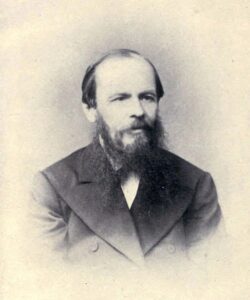
He later returned to Saint Petersburg, rebuilt his literary career, struggled with epilepsy, accumulated enormous debts, developed a destructive attachment to roulette, lost several members of his family, and produced some of the most influential novels ever written. These experiences helped shape the extraordinary psychological conflicts found in Notes from Underground, Crime and Punishment, The Idiot, Demons, and The Brothers Karamazov.
However, the story of the Crime and Punishment author should not be reduced to a heroic tale about suffering creating genius. Dostoevsky was brilliant, compassionate, contradictory, politically controversial, and capable of expressing prejudices that modern readers should examine critically. Understanding those contradictions makes his books more interesting, not less.
This biography explores the life, major books, beliefs, literary style, personal struggles, and lasting influence of one of the central figures in Russian literature.
Who Was Fyodor Dostoevsky?
Fyodor Mikhailovich Dostoevsky was a Russian novelist, short-story writer, essayist, editor, and journalist born in Moscow in 1821. He is best known for psychologically intense works that explore morality, religion, social inequality, crime, freedom, political radicalism, and the hidden contradictions of human behavior.
Although Dostoevsky is sometimes described as a philosopher, he did not create a systematic philosophy in the manner of a traditional academic thinker. His ideas emerge through fictional situations and competing characters. Rather than presenting a single argument and proving it step by step, he places different beliefs inside people who must live with their consequences.
Fyodor Dostoevsky at a Glance
- Full name: Fyodor Mikhailovich Dostoevsky
- Born: November 11, 1821, in Moscow, Russian Empire
- Died: February 9, 1881, in Saint Petersburg, Russian Empire
- Nationality: Russian
- Occupations: Novelist, journalist, essayist, editor, and short-story writer
- Most famous books: Crime and Punishment, The Brothers Karamazov, The Idiot, Demons, and Notes from Underground
- Important subjects: Guilt, faith, freedom, suffering, poverty, responsibility, alienation, and redemption
- Literary period: Nineteenth-century Russian literature
- Burial place: Tikhvin Cemetery at the Alexander Nevsky Monastery in Saint Petersburg
Dostoevsky, Dostoyevsky, or Dostoievski?
Readers may encounter several English spellings of the author’s surname, including Dostoevsky, Dostoyevsky, and Dostoievsky. Other languages use forms such as Dostoiévski, Dostojewski, or Dostoievski.
These variations exist because his Russian name, Достоевский, must be transliterated from the Cyrillic alphabet. Different languages and publishing traditions use different systems for representing Russian sounds. The spellings refer to the same writer. “Fyodor Dostoevsky” is currently one of the most common forms in English-language publishing.
Early Life and Family in Moscow
Childhood Near the Mariinsky Hospital for the Poor
Fyodor Dostoevsky was born on November 11, 1821, according to the modern calendar. His father, Mikhail Andreevich Dostoevsky, was a physician associated with Moscow’s Mariinsky Hospital for the Poor. The family lived in an apartment on the hospital grounds, placing the young Dostoevsky near an environment of illness, poverty, and social inequality.
Biographers should be careful not to turn this setting into an overly simple explanation for everything he later wrote. Nevertheless, it is striking that a child who regularly saw impoverished patients would become an author intensely concerned with people living in cramped rooms, surviving on little money, and enduring humiliating dependence on others.
Dostoevsky’s father has frequently been portrayed as severe and authoritarian, while his mother, Maria Fyodorovna Nechayeva, is generally remembered as affectionate and religious. The family belonged to the lower ranks of the Russian nobility but did not possess the effortless wealth associated with the greatest aristocratic families.
Books, Religion, and Family Storytelling
Literature entered Dostoevsky’s life early. The family read religious texts, Russian writers, European fiction, history, poetry, and popular stories. Among the authors who influenced his imagination were Alexander Pushkin, Nikolai Gogol, Friedrich Schiller, E. T. A. Hoffmann, Walter Scott, and Miguel de Cervantes.
The religious education of his childhood also remained important throughout his life. The Bible, particularly the Gospels, became a central reference point in his mature writing. Yet religion in Dostoevsky is rarely presented as an easy collection of comforting answers. His novels repeatedly allow doubt, rebellion, atheism, and moral outrage to challenge religious belief at their strongest.
His Mother’s Death and the Move to Saint Petersburg
Dostoevsky’s mother died in 1837, probably from tuberculosis. Soon afterward, Fyodor and his older brother Mikhail were sent to Saint Petersburg to prepare for military engineering studies. Fyodor entered the Nikolaev Military Engineering Institute, commonly known in English as the Military Engineering Academy.
His father died in 1839. A famous story claimed that he had been murdered by peasants on his estate, but the circumstances remain uncertain, and later scholars have questioned whether the alleged murder occurred. It is therefore safer to say that his father’s death became surrounded by conflicting accounts rather than repeat the most dramatic version as established fact.
From Military Engineer to Young Literary Sensation
The Military Engineering Academy
Dostoevsky did not naturally fit the disciplined world of military education. He completed his training and briefly worked as an engineering draftsman, but mathematics, regulations, and military routine did not attract him as powerfully as literature.
During these years, he read widely and began imagining a life as a writer. Saint Petersburg itself would become essential to his fiction. Its crowded streets, rented rooms, bridges, canals, bureaucratic offices, wealthy avenues, and impoverished neighborhoods supplied the setting for many of his most memorable stories.
Leaving the Military for Literature
In 1844, Dostoevsky resigned from military service to pursue literature. This was a financially dangerous decision. Writing offered no guarantee of stability, and his relationship with money would remain troubled throughout his life.
Before establishing himself through original fiction, he worked on translations. His best-known early translation was Honoré de Balzac’s Eugénie Grandet. Balzac’s attention to money, ambition, social status, and emotional manipulation had obvious relevance for the young Russian writer.
Poor Folk and the Arrival of a New Literary Talent
Dostoevsky’s first novel, Poor Folk, was published in 1846. Written through letters exchanged between two impoverished characters, the book portrays poverty not merely as a lack of money but as a condition that damages privacy, dignity, confidence, and personal relationships.
The manuscript reached the influential critic Vissarion Belinsky, who initially welcomed Dostoevsky as an important new voice. The success was sudden and overwhelming. For a young writer who had abandoned a secure career, the response appeared to confirm that he had made the correct decision.
The Double and Early Critical Disappointment
Success did not continue smoothly. The Double, also published in 1846, follows a minor civil servant whose life is disrupted by the appearance of another man who looks exactly like him but possesses the confidence and social ability he lacks.
Although the novella is now admired for its treatment of fractured identity, humiliation, paranoia, and bureaucracy, its early reception disappointed Dostoevsky. His relationships with important literary figures deteriorated, and the young author became increasingly isolated from circles that had briefly celebrated him.
This early rise and fall taught him something that appears throughout his fiction: admiration can become ridicule with astonishing speed, and the desire for social recognition can make a person painfully vulnerable.
Arrest, Mock Execution, and Siberian Exile
The Petrashevsky Circle
During the late 1840s, Dostoevsky attended meetings associated with the Petrashevsky Circle. The group gathered to discuss literature, social reform, serfdom, European political thought, and works restricted by the government of Tsar Nicholas I.
The members did not all share the same beliefs or plans. Some were moderate reformers, while others supported more radical action. Dostoevsky’s involvement included reading and circulating politically sensitive material, including Belinsky’s famous critical letter to Nikolai Gogol.
The revolutions that spread across Europe in 1848 had made the Russian government especially suspicious of intellectual groups. Even discussions that did not immediately produce an organized revolutionary movement could be treated as a threat.
Arrest and Imprisonment
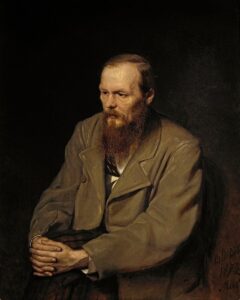
Dostoevsky was arrested in April 1849 and imprisoned in the Peter and Paul Fortress in Saint Petersburg. He spent months under investigation, separated from ordinary life and uncertain of his future.
He and other defendants were eventually convicted of political offenses. The punishment initially announced was death by firing squad.
The Death Sentence and Last-Minute Reprieve
On December 22, 1849, Dostoevsky and several fellow prisoners were taken to Semyonovsky Square. The ceremony was arranged like a real execution. The men were divided into groups, dressed for death, and confronted with the apparent certainty that they had only minutes left to live.
Only at the final moment was a message delivered announcing that the death sentences had been commuted. The reprieve had been decided earlier; the terrifying ceremony was designed as part of the punishment.
Dostoevsky later drew upon the experience in his fiction. In The Idiot, Prince Myshkin describes the thoughts of a condemned man approaching execution, particularly the unbearable awareness that life is about to end at a precisely known moment.
The incident should not be romanticized as a useful lesson created for an artist. It was deliberate psychological cruelty. Nevertheless, it permanently altered Dostoevsky’s understanding of time, mortality, gratitude, terror, and the value contained in an apparently ordinary minute of life.
Four Years of Hard Labor in Omsk
Instead of execution, Dostoevsky was sent to a prison camp in Omsk, Siberia, where he spent four years performing hard labor. Conditions were severe. Prisoners lived in overcrowded quarters with little privacy, limited cleanliness, extreme temperatures, illness, insects, physical punishment, and constant tension.
As a political prisoner and educated nobleman, Dostoevsky initially found himself separated from many of the other convicts by class, background, and mutual suspicion. He lived beside people convicted of violent crimes as well as prisoners shaped by poverty, military discipline, desperation, and the brutality of the legal system.
The experience destroyed any easy theory that divided humanity into completely innocent and completely evil categories. Dostoevsky encountered cruelty, generosity, violence, humor, religious devotion, pride, tenderness, and self-deception within the same confined community.
Military Service in Semipalatinsk
After leaving the prison camp in 1854, Dostoevsky was required to serve as a soldier in Semipalatinsk, now Semey in Kazakhstan. His position gradually improved, and he was eventually restored to officer rank.
These years marked a slow return to intellectual and literary life. He formed new friendships, resumed writing, and developed a more conservative religious and political outlook than the one associated with his youth.
How Siberia Transformed Dostoevsky’s Writing
Prisoners, Suffering, and Human Contradiction
The years in Siberia gave Dostoevsky direct experience of institutional punishment and forced coexistence. His mature fiction rarely treats criminals as abstract examples. Even when characters commit terrible acts, the novels investigate how pride, humiliation, ideology, poverty, desire, fear, and resentment interact within them.
This does not mean that Dostoevsky excuses every crime. On the contrary, he is deeply concerned with responsibility. His distinctive achievement is to examine responsibility without pretending that a person can be completely explained by a single motive.
Faith After Exile: A Complicated Transformation
Dostoevsky’s religious beliefs deepened during and after his imprisonment. A copy of the New Testament was among the few books available to him in the prison camp, and Christian ideas became increasingly central to his vision of moral freedom and redemption.
Yet describing this transformation as a simple conversion from doubt to certainty would misrepresent his work. Some of Dostoevsky’s most powerful characters challenge Christianity with extraordinary intelligence. Ivan Karamazov’s revolt against a world containing the suffering of children is not a weak objection placed in the novel merely to be dismissed.
Dostoevsky’s faith mattered partly because it existed beside doubt. His novels show belief being tested by suffering, injustice, freedom, and the apparent silence of God.
The House of the Dead
Dostoevsky transformed memories of imprisonment into The House of the Dead, published in the early 1860s. The book combines fiction, observation, memoir-like material, and portraits of prison life.
Rather than presenting the prisoners as a single group, it emphasizes their individual personalities and social relationships. The work helped Russian readers confront conditions inside the Siberian penal system while also developing the author’s mature interest in voices that cannot be reduced to a simple moral label.
Return to Saint Petersburg: Journalism, Loss, and a New Voice
Vremya and Epokha
Dostoevsky was eventually permitted to return to Saint Petersburg. Together with his brother Mikhail, he became involved in publishing the journals Vremya, meaning “Time,” and later Epokha, meaning “Epoch.”
The journals allowed him to publish fiction, criticism, political commentary, and discussions about Russia’s relationship with European culture. They also placed him at the center of intellectual debates that would influence later works such as Demons and A Writer’s Diary.
First Marriage and Family Responsibilities
In 1857, Dostoevsky married Maria Dmitrievna Isaeva, whom he had met during his years in Siberia. Their relationship was difficult, affected by illness, financial instability, jealousy, and emotional strain.
Dostoevsky also assumed responsibilities toward Maria’s son from her previous marriage. Throughout his life, relatives, dependents, publishers, creditors, and personal obligations placed additional pressure on his finances.
The Deaths of Maria and Mikhail
Maria died in 1864 after a long illness. That same year, Dostoevsky’s brother Mikhail also died. The losses affected him emotionally and financially, since he attempted to support members of his brother’s family and deal with debts connected to their publishing activities.
The idea that great suffering automatically produces great literature is too neat. Grief and debt threatened Dostoevsky’s ability to work. His achievements emerged not because hardship was beneficial, but because he continued writing while his circumstances repeatedly made writing more difficult.
Notes from Underground as a Turning Point
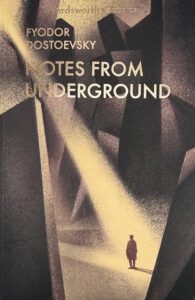
Published in 1864, Notes from Underground marks a major transition in the development of Dostoevsky’s literary style. Its unnamed narrator is intelligent, humiliated, spiteful, self-aware, dishonest, and trapped inside endless analysis.
The Underground Man attacks theories suggesting that human behavior can be scientifically calculated and reorganized for maximum happiness. He insists that people may choose pain, irrationality, and destruction simply to prove that they remain free.
The narrator’s arguments can sound persuasive, but his behavior demonstrates the danger of transforming freedom into an excuse for cruelty and isolation. Readers interested in this strange and influential work can explore our complete discussion of whether Notes from Underground is good and which audiences are most likely to appreciate it.
Anna Grigoryevna, The Gambler, and the Years Abroad
Writing The Gambler Under an Impossible Deadline
By 1866, Dostoevsky was under intense financial pressure. He had accepted a dangerous publishing contract that could have cost him control over future work if he failed to deliver a new manuscript by a strict deadline.
To finish the book in time, he hired the young stenographer Anna Grigoryevna Snitkina. Dostoevsky dictated The Gambler while also working on Crime and Punishment. Anna transcribed and organized the material, enabling him to meet the deadline.
The Gambler was closely connected to Dostoevsky’s own experience with roulette. Its protagonist repeatedly imagines that one more bold decision will solve everything, only to become more dependent on the game. The novel understands gambling as a mixture of hope, pride, risk, humiliation, and the fantasy of escaping ordinary limitations through a single miraculous victory.
Marriage to Anna and Their Literary Partnership
Dostoevsky and Anna married in 1867. She was twenty-five years younger than he was, but it would be misleading to remember her only as a young assistant who married a famous author.
Anna became his closest practical partner. She managed finances, dealt with publishers, learned the publishing business, protected his manuscripts, organized family life, and later preserved his literary legacy. Her memoirs and records became essential sources for understanding Dostoevsky’s final years.
Roulette, Debt, and Life in Europe
Soon after their marriage, the couple left Russia and spent several years in Europe. Part of the reason was to escape creditors, but the journey did not immediately solve their problems. Dostoevsky continued gambling in cities where roulette was available, repeatedly losing money that the family could not afford to lose.
His letters from the period reveal promises to stop, renewed temptation, despair after losses, and the belief that a different system or final attempt might recover everything. He eventually abandoned gambling, but not before it had caused serious financial and emotional damage.
The European years were nevertheless extraordinarily productive. During this period, he wrote or completed major works including The Idiot and began developing the material that would become Demons.
Children and Family Life
Fyodor and Anna had four children. Their first daughter, Sofia, died in infancy in Geneva. Their daughter Lyubov was born in Dresden, while their sons Fyodor and Alexey were born after the family’s return to Russia.
Alexey died in 1878 after a seizure. The loss devastated the family and deepened Dostoevsky’s engagement with grief, childhood suffering, parental responsibility, and religious consolation during the period in which he was developing The Brothers Karamazov.
The Major Books of Fyodor Dostoevsky
Dostoevsky’s books vary considerably in length, style, and difficulty. Some are short and emotionally accessible, while others combine family drama, crime, political argument, religious debate, comedy, and tragedy across hundreds of pages.
Poor Folk
Poor Folk established Dostoevsky’s reputation through its compassionate portrayal of two vulnerable people attempting to preserve affection and dignity under poverty. Its letter-based structure allows readers to see how the characters understand themselves and how carefully they conceal pain from one another.
White Nights
White Nights is one of Dostoevsky’s most approachable stories. It follows a lonely dreamer who briefly forms an emotional connection with a young woman in Saint Petersburg.
The story is romantic, melancholic, and much gentler than the author’s darkest novels. It is often a good introduction for readers who want to experience his interest in loneliness and idealized love without immediately entering a long philosophical work.
Notes from Underground
Notes from Underground is short but demanding. Its narrator attacks rational utopian theories while exposing his own resentment, vanity, and inability to form healthy relationships.
The book became enormously influential because the Underground Man feels recognizably modern. He is painfully self-conscious, capable of analyzing every emotion, and still unable to transform knowledge into action.
Crime and Punishment
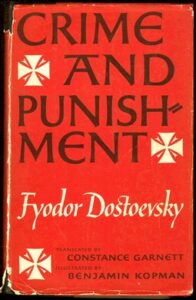
Published in 1866, Crime and Punishment follows Rodion Raskolnikov, an impoverished former student who attempts to justify murder through a theory about extraordinary individuals transcending ordinary moral rules.
The crime occurs relatively early. The real suspense comes from watching Raskolnikov’s theory collapse under guilt, fear, illness, pride, and isolation. The novel combines psychological fiction with crime narrative, social criticism, philosophical argument, and spiritual drama.
For many readers, it offers the best balance between Dostoevsky’s ideas and his ability to create tension. Our detailed review answers the question Is Crime and Punishment good? while examining its themes, difficulty, strengths, and possible weaknesses.
The Idiot
In The Idiot, Dostoevsky attempted to portray a genuinely compassionate and morally beautiful person. Prince Lev Myshkin returns to Russia after receiving treatment in Switzerland and enters a society governed by money, desire, jealousy, vanity, and competition.
Myshkin’s honesty does not simply heal the people around him. His goodness can be misunderstood as foolishness, passivity, weakness, or social incompetence. The novel asks whether innocence can survive inside a world that constantly converts affection into possession.
Demons
Demons, also translated as The Possessed or Devils, is Dostoevsky’s great political novel. It examines a provincial community destabilized by manipulation, revolutionary organization, ideological extremism, scandal, and murder.
The book satirizes political types, but it is not merely a simple attack on everyone seeking social change. Its deepest concern is the transformation of human beings into instruments of an abstract cause. Characters begin treating cruelty as acceptable when it appears to serve a supposedly inevitable future.
The Adolescent
The Adolescent, sometimes translated as A Raw Youth, follows Arkady Dolgoruky, a young man preoccupied with independence, money, social recognition, and his difficult relationship with his biological father.
The novel receives less attention than Dostoevsky’s other mature works, but it develops central themes involving fractured families, illegitimacy, pride, generational conflict, and the desire to become powerful enough to avoid humiliation.
The Brothers Karamazov
Published near the end of Dostoevsky’s life, The Brothers Karamazov is commonly regarded as his most ambitious novel. It centers on the corrupt landowner Fyodor Pavlovich Karamazov and his sons, whose competing personalities embody different emotional, intellectual, and spiritual possibilities.
Dmitri is passionate and impulsive. Ivan is intellectual, skeptical, and tormented by the problem of innocent suffering. Alyosha is a religious novice attempting to practice active love. Smerdyakov, the father’s servant and possible illegitimate son, occupies a darker position within the family.
The plot develops around hatred, money, rivalry, inheritance, and the murder of Fyodor Pavlovich. However, the novel’s true subject is responsibility. Can someone be morally involved in an action without physically committing it? Do ideas become dangerous when another person acts upon them? Is everyone partly responsible for everyone else?
The novel contains some of Dostoevsky’s most famous philosophical episodes, including Ivan’s rebellion against divine order and the story of the Grand Inquisitor. Yet these chapters remain connected to the family tragedy rather than existing as detached philosophical essays.
The House of the Dead and The Gambler
The House of the Dead and The Gambler are particularly valuable for readers interested in the relationship between Dostoevsky’s life and fiction. The first draws upon imprisonment; the second transforms his experience of gambling into a study of compulsion and self-deception.
Readers seeking a concise overview of his essential works can visit our selection of the best Fyodor Dostoevsky books.
What Makes Dostoevsky’s Writing Unique?
Psychological Realism Before Modern Psychology
Dostoevsky wrote before psychology became established in its modern scientific and clinical forms, yet his characters display an extraordinary degree of psychological complexity.
They rarely possess a single clear motive. Raskolnikov commits his crime for intellectual, financial, emotional, and egotistical reasons that he cannot fully organize. The Underground Man desires connection but deliberately humiliates people who approach him. Dmitri Karamazov can be generous and violent within the same emotional storm.
This complexity explains why readers continue to debate the characters. Dostoevsky does not treat personality as a fixed list of traits. His people are unstable, responsive to humiliation, capable of surprising themselves, and always attempting to create stories that justify their behavior.
Polyphony: Characters With Independent Voices
The literary theorist Mikhail Bakhtin famously described Dostoevsky’s major novels as polyphonic. The word comes from music and refers to the presence of multiple independent voices.
In a conventional novel, characters may express different opinions, but the author’s final judgment clearly controls the discussion. In Dostoevsky, major characters often seem to possess intellectual lives that cannot be reduced to a lesson imposed from outside.
Ivan Karamazov’s objections to religious explanations of suffering remain powerful even though Dostoevsky was a Christian. The Underground Man is neither a simple hero of freedom nor a simple fool whose arguments can be ignored. Each voice must be confronted seriously.
Polyphony does not mean that Dostoevsky had no beliefs. It means that he gave opposing ideas enough freedom to become genuine forces within the novel.
Ideas Turned Into Human Drama
Dostoevsky’s characters do not merely discuss ideas; they build identities around them. A theory about extraordinary people becomes part of Raskolnikov’s attempt to prove his superiority. Ivan’s intellectual rebellion becomes entangled with resentment toward his father and responsibility for his family. Political theory in Demons becomes secrecy, manipulation, and violence.
This is one reason the novels remain readable even when their philosophical debates are difficult. Ideas acquire emotional consequences. A belief can destroy a friendship, justify a crime, conceal shame, or offer someone a reason to continue living.
Feverish Prose, Dark Humor, and Scandal
Dostoevsky’s novels are often described as dark, but they are also filled with strange comedy. Characters misunderstand social situations, deliver speeches at the worst possible moment, become offended by imaginary insults, and create public disasters while trying to protect their dignity.
His humor is frequently uncomfortable because it exists beside desperation. A ridiculous scene can suddenly become cruel, and a tragic scene can reveal absurd vanity. This emotional instability gives the novels their feverish atmosphere.
Serialization, Deadlines, and Narrative Urgency
Many nineteenth-century novels were published in installments, and Dostoevsky frequently wrote under intense financial pressure. Serialization encouraged dramatic scenes, unanswered questions, sudden entrances, scandals, and chapter endings designed to preserve attention.
These conditions sometimes contributed to repetition or structural disorder. They also produced a distinctive sense that events are moving faster than the characters can understand them. Dostoevsky’s imperfections are often inseparable from his energy.
Major Themes in Dostoevsky’s Work
Guilt and Moral Responsibility
In Dostoevsky, guilt is not identical to legal guilt. A character may avoid conviction while remaining psychologically trapped, or be legally accused while the moral situation remains more complicated.
His novels distinguish among committing an act, desiring it, encouraging it, creating an idea that makes it possible, and refusing to prevent it. Responsibility spreads through families and communities rather than ending with the person who physically performs the crime.
Free Will Versus Rational Systems
Dostoevsky was suspicious of theories claiming that human behavior could be perfectly explained and reorganized. The Underground Man attacks the idea that people will automatically choose whatever reason proves to be beneficial.
Human beings sometimes reject advantage because they resent being treated as predictable objects. Yet Dostoevsky does not glorify every irrational choice. Freedom can produce generosity and repentance, but it can also produce cruelty, self-destruction, and domination.
Faith, Doubt, and the Problem of Evil
One of the greatest conflicts in Dostoevsky’s philosophy concerns whether faith can survive confrontation with unjust suffering. Children are especially important within this question because their pain cannot easily be explained as punishment for personal wrongdoing.
Dostoevsky’s religious characters often respond through humility, forgiveness, and active love rather than through a complete logical solution. His skeptical characters demand intellectual honesty and refuse consolation purchased by ignoring the victims.
The novels preserve the tension. Faith is not presented as the absence of doubt but as something that must exist in dialogue with doubt.
Suffering, Compassion, and Redemption
Dostoevsky is sometimes accused of suggesting that suffering automatically purifies people. His fiction is more complicated. Suffering can make a person compassionate, but it can also make someone bitter, violent, manipulative, or emotionally numb.
Redemption becomes possible when suffering produces recognition of another person’s humanity and acceptance of responsibility. Pain alone is not enough.
Poverty, Alienation, and the Modern City
Saint Petersburg is more than a background in Dostoevsky’s fiction. It can feel like a psychological machine: crowded yet lonely, modern yet oppressive, filled with bureaucratic hierarchies and invisible social boundaries.
Characters live in rented corners, overheated rooms, taverns, stairways, and streets where private crises become public humiliations. Poverty prevents rest and forces people into degrading dependence. Money is never merely economic; it determines who can speak confidently, leave a harmful situation, receive treatment, or maintain dignity.
Nihilism, Revolution, and Political Extremism
Dostoevsky’s mature fiction is deeply concerned with political radicalism. He feared that movements promising universal liberation could become destructive when leaders treated present human beings as expendable material for a future ideal.
Demons explores how small groups can use secrecy, loyalty tests, scandal, and shared guilt to control their members. The novel remains disturbing because it understands extremism not only as a collection of ideas but as a social and psychological structure.
Was Dostoevsky an Existentialist?
Notes from Underground and Modern Existentialism
Dostoevsky lived before existentialism emerged as a formally recognized philosophical movement. Nevertheless, Notes from Underground and his later novels anticipate many questions associated with existential thought: freedom, responsibility, alienation, anxiety, irrationality, identity, and the difficulty of finding meaning.
The Underground Man especially resembles later existential characters because he rejects deterministic explanations while suffering from the burden of his own freedom.
His Influence on Nietzsche, Freud, Camus, and Sartre
Dostoevsky influenced or fascinated later writers and thinkers including Friedrich Nietzsche, Sigmund Freud, Albert Camus, Jean-Paul Sartre, Franz Kafka, and many others. The relationship differs in each case and should not be reduced to simple agreement.
Later thinkers often admired Dostoevsky’s psychological insight while rejecting his religious conclusions. Readers interested in alienation and absurdism can explore our recommendations for books like The Stranger, which include Notes from Underground.
Why Calling Him Only an Existentialist Is Incomplete
Calling Dostoevsky an early existentialist can be useful, but the label becomes misleading when it erases his Russian Orthodox Christianity, journalism, nationalism, social criticism, and specific engagement with nineteenth-century Russian politics.
He is best understood as a writer whose fiction helped create conditions in which later existential questions could be explored with new intensity.
Dostoevsky’s Epilepsy and Its Place in His Fiction
What Is Historically Documented
Dostoevsky experienced recurrent seizures that affected his health, memory, work, travel, and family life. His epilepsy was not merely a later rumor. It was observed by relatives and acquaintances and described in his correspondence and family records.
Why the Exact Diagnosis Remains Debated
Modern medical researchers have proposed different classifications for Dostoevsky’s seizures. Some have emphasized temporal-lobe or temporolimbic epilepsy and the ecstatic sensations he sometimes reportedly experienced before a seizure. Others have offered different interpretations.
Because he lived before modern neurological examinations, electroencephalography, and contemporary diagnostic standards, no retrospective classification can possess the certainty of a diagnosis made with complete clinical evidence.
Epileptic Experience in The Idiot and Other Works
Epilepsy appears in several Dostoevsky characters, most famously Prince Myshkin in The Idiot. Myshkin describes an extraordinary intensification of consciousness immediately before a seizure, when a brief moment appears filled with harmony and complete understanding.
Dostoevsky also portrays confusion, physical danger, vulnerability, social stigma, and the consequences seizures have for witnesses and family members. His fiction does not treat epilepsy as a decorative symbol detached from bodily experience.
Dostoevsky’s Political and Religious Beliefs
From Utopian Socialism to Orthodox Conservatism
As a young man, Dostoevsky was attracted to discussions of social reform and utopian socialism. He opposed serfdom and participated in intellectual circles critical of Russian conditions.
After prison and exile, his politics shifted toward a conservative position emphasizing Russian Orthodoxy, national identity, and distrust of revolutionary movements influenced by Western European theories.
This transformation should not be described as a movement from foolish youth to unquestionable wisdom. Both periods reflected real concerns and limitations. His later criticism of authoritarian revolutionary methods could be perceptive, while his nationalism could become exclusionary and idealized.
Pochvennichestvo, Russia, and the West
Dostoevsky became associated with pochvennichestvo, a movement whose name is related to the Russian word for “soil.” It called for educated Russians to reconnect with the traditions and spiritual life of the Russian people rather than imitate European culture uncritically.
His relationship with Europe remained contradictory. He admired European literature and spent years living abroad, yet he frequently attacked what he considered European materialism, Catholicism, individualism, and rationalism.
Christianity, Doubt, and Moral Freedom
Dostoevsky’s mature worldview centered on Christ, moral freedom, compassion, and the possibility of spiritual renewal. However, his fiction rarely behaves like simple religious propaganda.
His Christian characters can fail, misunderstand others, and hide behind religious language. His unbelieving characters can express genuine moral outrage. The novels ask whether faith is meaningful without freedom and whether goodness is possible when imposed through force.
Nationalism, Antisemitism, and Critical Reading
A responsible biography must acknowledge that Dostoevsky expressed antisemitic stereotypes and hostile generalizations, particularly in some journalistic writing. Scholars continue to debate the sources, development, and contradictions of these views, but their presence should not be denied.
Historical context can explain how prejudices circulated in nineteenth-century Russian and European society, but context does not excuse them. Modern readers can recognize Dostoevsky’s literary brilliance while criticizing dehumanizing statements and examining how nationalism creates distorted images of entire groups.
This critical approach is more useful than either pretending the problem does not exist or concluding that every sentence spoken by every fictional character directly represents the author’s personal opinion.
Dostoevsky and Don Quixote
Cervantes’ Influence on The Idiot
Miguel de Cervantes was one of Dostoevsky’s most important literary predecessors. Don Quixote demonstrated how an apparently ridiculous character could also become morally beautiful, emotionally profound, and tragically misunderstood.
When developing The Idiot, Dostoevsky confronted a related problem: how can a novelist portray a genuinely good person without making him lifeless, sentimental, or unbelievable?

Prince Myshkin as a Tragic Quixotic Figure
Like Don Quixote, Prince Myshkin enters social situations with values that appear incompatible with the surrounding world. Other characters cannot decide whether he is wise, foolish, ill, innocent, or dangerous to their arrangements.
Their similarities should not erase their differences. Don Quixote creates a heroic interpretation of reality through books of chivalry, while Myshkin’s compassion is connected to Christian love, vulnerability, and his experience of illness.
What Happens When Goodness Meets a Corrupt Society?
Both Cervantes and Dostoevsky explore the painful distance between moral ideals and ordinary society. Goodness does not automatically succeed merely because it is good. It can be mocked, manipulated, or transformed into spectacle.
Readers interested in Dostoevsky’s greatest literary predecessor can read our evaluation of whether Don Quixote is a good book and discover additional books like Don Quixote that share its philosophical and narrative spirit.
Final Years, Public Fame, and Death
A Writer’s Diary
During the 1870s, Dostoevsky published A Writer’s Diary, an unusual project combining journalism, autobiography, political commentary, literary criticism, responses to current events, and short fiction.
The work gave readers more direct access to his opinions than the novels did. It increased his public influence but also revealed the nationalism, political hostility, religious convictions, and prejudices that make his legacy complicated.
The Pushkin Speech
In June 1880, Dostoevsky delivered a celebrated speech during ceremonies honoring Alexander Pushkin in Moscow. He presented Pushkin as a uniquely Russian writer capable of understanding other peoples and imagined Russia as possessing a universal mission of reconciliation.
The speech received an emotional response and represented one of the highest points of Dostoevsky’s public reputation. It also expressed the national and spiritual ideals that had become central to his later worldview.
The Brothers Karamazov as His Final Novel
The Brothers Karamazov appeared in serialized form between 1879 and 1880. Dostoevsky apparently imagined further developments involving some of its characters, but he did not live to complete another novel.
The book therefore became his final great statement on family, belief, doubt, crime, freedom, and shared responsibility.
Death, Funeral, and Burial
Dostoevsky died in Saint Petersburg on February 9, 1881, following a pulmonary hemorrhage. He was fifty-nine years old.
His funeral attracted an enormous public procession that included readers, students, writers, religious figures, and representatives of different social groups. Accounts vary regarding the precise size of the crowd, but the event demonstrated how completely the once-condemned prisoner had become a national literary figure.
He was buried at Tikhvin Cemetery in the Alexander Nevsky Monastery, near other important Russian artists and writers.
Why Fyodor Dostoevsky Still Matters Today
Influence on Modern Literature
Dostoevsky helped expand what the novel could do. Psychological fiction, existential literature, crime novels, courtroom dramas, political thrillers, and stories built around unreliable narrators continue to draw upon techniques that he developed with exceptional intensity.
His influence appears not only in writers who resemble him stylistically but in any fiction that treats a crime as the beginning of a psychological investigation rather than the end of a mystery.
Influence on Philosophy and Psychology
Philosophers and psychologists have repeatedly turned to Dostoevsky because his characters test theories against lived behavior. They show that a person can understand a moral principle without following it, desire happiness while sabotaging it, or adopt an intellectual theory to conceal an emotional wound.
His novels do not replace philosophical argument or psychological research. Their value lies in representing the unstable experience of being a person whose motives remain partly hidden even from himself.
Dostoevsky in Film, Theater, and Popular Culture
His novels have been adapted for theater, film, television, radio, opera, and graphic narratives in many countries. Characters such as Raskolnikov, Ivan Karamazov, Prince Myshkin, and the Underground Man have become recognizable cultural figures beyond their original books.
Adaptation can be difficult because much of Dostoevsky’s drama occurs through thought, argument, and prolonged conversation. Yet the intensity of his conflicts continues attracting directors and performers.
Why Modern Readers Recognize Themselves in His Characters
Dostoevsky’s world is historically distant, but his characters experience emotions that feel remarkably current: social anxiety, obsessive comparison, financial insecurity, isolation, resentment, intellectual pride, fear of failure, and the desire to be understood without becoming vulnerable.
The Underground Man resembles someone who analyzes every interaction until action becomes impossible. Raskolnikov resembles someone who constructs an elaborate theory to protect a wounded sense of superiority. The Karamazov family demonstrates how unresolved resentment passes between generations.
Dostoevsky remains relevant because he understood that intelligence does not automatically produce self-knowledge and that people often defend the very habits that make them unhappy.
Where Should You Start Reading Dostoevsky?
The best starting point depends on what you want from the author. There is no single reading order that works for everyone.
- Start with White Nights for a short emotional story. It introduces Dostoevsky’s interest in loneliness, imagination, and unreturned love without requiring a major commitment.
- Choose Notes from Underground for philosophy and psychological discomfort. It is brief, but its argumentative first half can be challenging.
- Read Crime and Punishment for the best overall introduction. It combines a strong plot with psychological tension, moral conflict, and social criticism.
- Choose The Gambler for something fast and personal. Its treatment of compulsion is closely connected to Dostoevsky’s life.
- Read Demons for political extremism and ideological conflict. It is more complex and benefits from some knowledge of nineteenth-century Russian debates.
- Save The Brothers Karamazov for his most ambitious work. It is long, philosophically demanding, and deeply rewarding.
For a more detailed reading route, visit our guide to the best books to start reading Fyodor Dostoevsky.
What to Read After Dostoevsky
Readers who finish Dostoevsky often search for books containing moral conflict, psychological intensity, philosophical ideas, unreliable narrators, and characters trapped by guilt or alienation.
No recommendation can reproduce Dostoevsky completely. Similarity may come from a shared concern with criminal psychology, social injustice, existential isolation, ideological obsession, or the consequences of self-deception.
Our list of books like Crime and Punishment recommends works by Ernesto Sábato, Richard Wright, Albert Camus, Joseph Conrad, and Donna Tartt that explore different aspects of this tradition.
Frequently Asked Questions About Fyodor Dostoevsky
What Is Fyodor Dostoevsky Best Known For?
Fyodor Dostoevsky is best known for psychologically intense novels examining guilt, morality, faith, freedom, crime, suffering, and human contradiction. His most famous books include Crime and Punishment, The Brothers Karamazov, The Idiot, Demons, and Notes from Underground.
What Was Dostoevsky’s First Novel?
Dostoevsky’s first published novel was Poor Folk, released in 1846. Its compassionate portrayal of poverty initially earned him enthusiastic recognition within Russian literary circles.
Why Was Dostoevsky Sent to Siberia?
Dostoevsky was arrested because of his involvement with the Petrashevsky Circle and his participation in discussions and circulation of politically forbidden material. The government of Nicholas I treated such intellectual activity as a potential revolutionary threat.
Did Dostoevsky Really Face Execution?
Yes. Dostoevsky was taken to Semyonovsky Square in December 1849 and subjected to a staged execution ceremony. He believed he was about to be shot before the commutation of his sentence was announced.
Was Dostoevsky Religious?
Yes. Russian Orthodox Christianity became central to Dostoevsky’s mature worldview. However, his religious life included doubt, conflict, and intense engagement with objections to faith. His novels give skeptical and atheistic characters powerful arguments rather than presenting belief as intellectually effortless.
Did Dostoevsky Have Epilepsy?
Yes. Dostoevsky experienced recurrent seizures throughout much of his adult life. Modern researchers disagree about the exact medical classification of every reported symptom, but the existence of a serious seizure disorder is well documented.
What Is Dostoevsky’s Greatest Book?
The Brothers Karamazov is frequently described as Dostoevsky’s greatest and most ambitious work. However, Crime and Punishment is often considered more accessible and may be the better introduction for most readers.
How Many Novels Did Dostoevsky Write?
The answer varies depending on whether shorter works such as The Double, White Nights, and Notes from Underground are classified as novels, novellas, or short fiction. Dostoevsky produced eleven commonly recognized full-length novels, in addition to novellas, short stories, journalism, essays, and other writings.
Is Dostoevsky Difficult to Read?
Dostoevsky can be difficult because his novels contain large casts, Russian naming conventions, philosophical conversations, emotional repetition, and references to nineteenth-century politics and religion.
However, the books also contain crime, family conflict, romance, scandal, humor, courtroom drama, and suspense. Choosing an accessible translation and beginning with the right book can make the experience much easier.
Which Dostoevsky Book Should Beginners Read First?
Crime and Punishment is the best first Dostoevsky novel for most readers because it combines a compelling plot with the author’s major psychological, social, and philosophical concerns.
Readers wanting something shorter may begin with White Nights, The Gambler, or Notes from Underground, although the last of these is more abstract than its length suggests.
Final Thoughts on Fyodor Dostoevsky
Fyodor Dostoevsky remains one of literature’s greatest observers of inner conflict. His characters do not behave like tidy examples created to illustrate moral lessons. They change their explanations, misunderstand their motives, injure the people they love, and sometimes discover responsibility only after exhausting every method of escape.
His personal history helps explain the urgency of his work: early fame, public humiliation, political arrest, a staged execution, Siberian imprisonment, epilepsy, grief, debt, gambling, religious struggle, and eventual national recognition. Yet biography alone cannot account for his achievement. Many people suffer without producing Crime and Punishment or The Brothers Karamazov.
Dostoevsky’s greatness came from his ability to transform experience into complex dramatic voices. He could defend faith without silencing doubt, condemn crime without treating criminals as simple monsters, and portray freedom as both humanity’s greatest possibility and one of its most dangerous burdens.
Admiring his work does not require ignoring his political limitations or prejudices. A mature reading recognizes both the extraordinary depth of his fiction and the historical contradictions of the man who created it.
More than a century after his death, Dostoevsky continues to challenge readers because the questions inside his novels remain unresolved. How free are we? What do we owe one another? Can guilt lead to transformation? Is faith possible after innocent suffering? Why do intelligent people sabotage themselves? And can a person ever understand the full truth about his own motives?
Dostoevsky did not make these questions comfortable. That is precisely why readers continue returning to him.
References
- Fyodor Dostoevsky — Wikipedia
- Anna Dostoevskaya — Wikipedia
- Petrashevsky Circle — Wikipedia
- Poor Folk — Wikipedia
- The House of the Dead — Wikipedia
- Notes from Underground — Wikipedia
- Crime and Punishment — Wikipedia
- The Idiot — Wikipedia
- Demons — Wikipedia
- The Adolescent — Wikipedia
- The Brothers Karamazov — Wikipedia
- A Writer’s Diary — Wikipedia
- Problems of Dostoevsky’s Poetics — Wikipedia
- Polyphony in Literature — Wikipedia

Leave a Reply