
Choosing the best Agatha Christie books is not as simple as selecting the novels with the most famous titles. Christie wrote mysteries in several distinct styles: carefully constructed puzzles featuring Hercule Poirot, quiet village investigations led by Miss Marple, psychological thrillers, family dramas, travel mysteries, and dark standalone stories in which no familiar detective arrives to reassure the reader.
That variety is one reason her work remains so enjoyable. A reader who loves the elegant interrogations of Murder on the Orient Express may have a completely different favorite from someone drawn to the tension of And Then There Were None or the unsettling atmosphere of Endless Night.
This ranking considers plot construction, originality, characterization, atmosphere, influence, reread value, and accessibility for modern readers. It also includes different stages of Christie’s career and avoids filling every position with Hercule Poirot novels, however tempting that might be.
Most importantly, this is a spoiler-free guide. The solutions, culprits, decisive clues, and final revelations will remain undisclosed. You can use the list to choose your next mystery without having its greatest surprises ruined.
For readers seeking one immediate recommendation, And Then There Were None is the best Agatha Christie book overall. It is tense, accessible, brilliantly controlled, and independent from any recurring detective series. However, readers specifically interested in Poirot, Miss Marple, psychological suspense, or traditional clue-based mysteries may find an even better personal starting point farther down this list.
Quick Answer: What Is the Best Agatha Christie Book?
And Then There Were None is generally the strongest choice for the title of Agatha Christie’s best book. Its isolated setting, escalating tension, unforgettable premise, and disciplined structure demonstrate her ability to create suspense without relying on Hercule Poirot or Miss Marple.
Nevertheless, different readers may prefer different books:
- Best Agatha Christie book overall: And Then There Were None
- Best Hercule Poirot novel: The Murder of Roger Ackroyd
- Best Miss Marple novel: A Murder Is Announced
- Best closed-circle mystery: Murder on the Orient Express
- Best travel mystery: Death on the Nile
- Best psychological mystery: Five Little Pigs
- Best dark family mystery: Crooked House
- Best gothic Agatha Christie novel: Endless Night
If you have never read Christie and do not yet know which detective or style you prefer, begin with And Then There Were None. If you specifically want to meet Poirot, begin with The Murder of Roger Ackroyd or Murder on the Orient Express. For Miss Marple, A Murder Is Announced offers an excellent introduction.
How We Ranked the Best Agatha Christie Books
A ranking of the best Agatha Christie novels should involve more than counting sales, film adaptations, or online ratings. Popularity matters because it reveals which stories continue to attract readers, but fame alone does not explain why one mystery is more accomplished than another.
Plot Construction and Fair Clues
Christie belonged to the tradition of the puzzle mystery, in which readers are encouraged to examine testimony, behavior, timing, and physical evidence alongside the detective. Her finest stories provide enough information to make the solution feel logical while still disguising the significance of crucial details.
This does not mean that every reader will solve the mystery. Christie was exceptionally skilled at directing attention toward the wrong question. A clue may be visible, accurately described, and still overlooked because the reader has accepted an incorrect assumption.
The highest-ranking books use that technique without making the conclusion feel arbitrary. Once the case is explained, earlier scenes should gain new meaning.
Originality and Influence
Many mystery writers can create an appealing detective or an atmospheric crime scene. Christie repeatedly did something more difficult: she found new ways to reshape the rules of the genre.
Some of her novels experiment with setting. Others alter the relationship between narrator, detective, suspects, and reader. A few transform familiar conventions so thoroughly that later writers have spent decades adapting, imitating, or responding to them.
Originality therefore plays a major role in this ranking. A technically satisfying mystery becomes even more important when it changes what readers believe a detective story can do.
Characters, Atmosphere, and Psychological Depth
A clever solution cannot sustain an entire novel by itself. Christie’s strongest books surround the puzzle with memorable personalities, social tensions, emotional motives, and distinctive environments.
Her characters are sometimes introduced through a few carefully chosen traits rather than lengthy psychological biographies. Yet those details often reveal class anxiety, romantic jealousy, financial dependence, professional ambition, or fear of scandal.
The best books on this list create the impression that the crime has emerged from a recognizable human conflict rather than from a mechanical collection of clues.
Accessibility for Modern Readers
Christie’s direct prose makes much of her work approachable even for readers who rarely choose classic literature. Her chapters are usually concise, her central questions appear early, and her dialogue moves investigations forward efficiently.
Some books are still easier starting points than others. A large cast, older British expressions, or a complicated sequence of testimony may require additional concentration. Accessibility was considered without treating simplicity as the same thing as quality.
Variety Across Christie’s Career
A list made entirely of Poirot novels would exclude important parts of Christie’s achievement. This ranking therefore includes:
- Hercule Poirot investigations;
- a major Miss Marple mystery;
- standalone novels;
- closed-circle puzzles;
- family mysteries;
- psychological suspense;
- works from different stages of her career.
The result is not merely a ranking of her most famous detective stories. It is a broader guide to the range of experiences found within the best Agatha Christie books.
Why Agatha Christie’s Best Books Still Work Today
Agatha Christie’s novels were shaped by the social customs, technologies, and class structures of twentieth-century Britain, but her strongest mysteries do not survive merely as historical curiosities. They remain readable because the central mechanisms of deception are closely connected to ordinary human behavior.
The Reader Becomes Part of the Investigation
In many Christie novels, the reader is invited to participate. We hear the testimony, observe the room, learn the sequence of events, and meet the people who might be lying.
This tradition is sometimes described as the fair-play mystery. The author does not simply conceal the answer behind unavailable information. Instead, the necessary facts are presented in forms that are easy to misunderstand.
That participation gives the books unusual reread value. During a first reading, a sentence may appear insignificant. During a second, it can seem astonishingly precise.
Closed Settings Create Immediate Suspense
Christie repeatedly placed groups of people inside environments where escape, privacy, and outside assistance were limited. Islands, trains, ships, country houses, hotels, archaeological sites, and small villages become controlled stages on which every movement matters.
A closed setting reduces the number of plausible suspects, but it increases psychological pressure. The guilty person may still be present. Every meal, conversation, delay, and change of room can acquire threatening importance.
This structure remains influential in modern novels, films, television series, and games because it creates an immediate promise: the answer exists somewhere inside a limited collection of people and facts.
Her Mysteries Depend on Human Behavior
Hercule Poirot often emphasizes psychology rather than dramatic physical action. Miss Marple compares new situations with patterns she has previously observed in village life. Even Christie’s standalone mysteries frequently depend on the ways people perform innocence, respectability, grief, affection, or fear.
Her recurring subjects include:
- money and inheritance;
- romantic obsession;
- social reputation;
- family resentment;
- hidden identities;
- memories distorted by time;
- the difference between public behavior and private desire.
Those motives remain understandable even when the surrounding customs have changed.
Simple Prose Hides Complex Construction
Christie’s language is usually clear rather than decorative. She rarely interrupts a mystery to display elaborate prose for its own sake. That apparent simplicity allows information to move rapidly while hiding how carefully each chapter has been arranged.
A casual remark may establish a timeline. A joke may reveal prejudice. A description of clothing may redirect attention. A character who seems included for atmosphere may later become essential to understanding the social structure of the case.
Readers interested in Christie’s life, career, detectives, and remarkable influence on crime fiction can also explore our complete guide to Agatha Christie and her literary legacy.
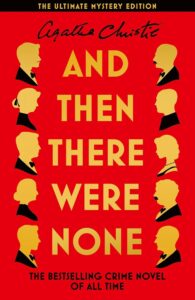
1. And Then There Were None — Best Agatha Christie Book Overall
Published in 1939, And Then There Were None is the strongest overall demonstration of Christie’s control over suspense, structure, and reader expectation. It is also an ideal starting point because it stands independently from Poirot, Miss Marple, and her other recurring characters.
What Is And Then There Were None About?
Ten strangers receive invitations or offers that bring them to an isolated island off the English coast. Their backgrounds, professions, ages, and personalities differ, and several of them are uncertain about the identity or intentions of their host.
After arriving, they discover that their situation is not what it appeared to be. An accusation connects each guest to a troubling event from the past, and the island gradually becomes a place of suspicion, fear, and diminishing safety.
There is no familiar detective standing outside the group to impose order. The characters must interpret events while questioning one another and confronting the possibility that someone among them knows far more than they admit.
Why It Ranks First
And Then There Were None ranks first because nearly every part of the novel contributes to its central effect. The isolated island removes easy escape. The limited cast keeps suspicion concentrated. The absence of a traditional investigator prevents the reader from feeling protected by superior authority.
Christie also maintains an exceptional balance between speed and clarity. The story moves rapidly, but the reader has enough time to form opinions about the guests, reconsider those opinions, and notice how fear changes their behavior.
The novel is darker than the comfortable image sometimes associated with Golden Age mysteries. Its setting may initially resemble an elegant social gathering, but the atmosphere becomes increasingly severe. Order gives way to panic, alliances become unstable, and private guilt affects how each person responds to danger.
Another reason the novel remains so effective is its independence from a series. New readers do not need to understand Poirot’s habits, Miss Marple’s village connections, or any previous case. The premise is immediate and complete.
It also represents Christie’s talent for designing a story that can be appreciated on different levels. It works as a fast suspense novel, a formal puzzle, a study of guilt, and an experiment in controlling a group of characters inside a closed environment.
Who Should Read It?
Read And Then There Were None if you enjoy:
- isolated settings;
- psychological suspense;
- large groups of suspects;
- rapidly escalating tension;
- dark mysteries without a recurring detective;
- stories in which trust becomes increasingly difficult.
Readers who usually prefer modern thrillers may find this the easiest entry into Christie’s work. It possesses the clarity of a classic detective novel but creates pressure with an intensity that still feels contemporary.
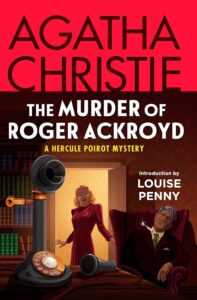
2. The Murder of Roger Ackroyd — Christie’s Most Ingenious Poirot Mystery
The Murder of Roger Ackroyd, published in 1926, is one of the most discussed detective novels ever written. Its reputation comes not only from the identity of the culprit but from the way Christie organizes the entire act of reading.
What Is The Murder of Roger Ackroyd About?
The story takes place in the English village of King’s Abbot, where gossip travels quickly and apparently private events rarely remain private for long.
Roger Ackroyd is a wealthy man connected to a recent death and a troubling secret. When he is found murdered, the case produces a familiar Christie arrangement: a country house, a limited group of possible suspects, complicated financial and emotional relationships, and numerous details that do not fit comfortably together.
Hercule Poirot, who has attempted to withdraw from professional life, becomes involved in the investigation. His methods are observed by Dr. James Sheppard, a local physician whose practical manner provides the narrative with much of its tone.
Why It Changed Detective Fiction
It is difficult to explain the full importance of The Murder of Roger Ackroyd without revealing the exact technique that made it famous. The safest description is that Christie examined conventions readers had learned to trust and asked whether those conventions could be used against them.
The novel does not merely hide evidence. It encourages the reader to interpret accurately presented information through a misleading framework. That distinction is crucial. Christie’s best deceptions often depend less on false statements than on the confidence with which readers complete unfinished ideas.
The book is also an excellent Poirot novel. His investigation involves conversations, experiments, observations, and deliberate pressure placed on suspects. He pays attention not only to what happened but to why different people describe events in particular ways.
His personality is already fully recognizable: proud, theatrical, meticulous, and convinced that apparent confusion can be transformed into order through disciplined thought.
On a second reading, the novel becomes a different experience. Scenes that initially appeared ordinary reveal their technical precision. The language often says exactly what it needs to say while allowing the reader to assume something else.
Who Should Read It?
The Murder of Roger Ackroyd is ideal for readers who appreciate:
- ingenious narrative construction;
- country-house mysteries;
- village gossip and hidden relationships;
- books that reward rereading;
- Hercule Poirot at his most analytical;
- stories that challenge assumptions about narration.
It is one of the best introductions to Poirot, although readers who want the most visually iconic version of his world may prefer to begin with Murder on the Orient Express.
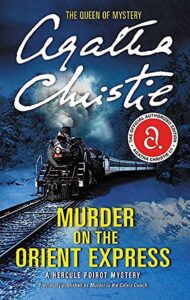
3. Murder on the Orient Express — The Most Iconic Closed-Circle Mystery
Few mystery settings are as instantly recognizable as the luxurious train in Murder on the Orient Express. Published in 1934, the novel combines movement and confinement: the passengers have traveled across borders, yet a sudden interruption leaves them trapped within a narrow collection of carriages.
What Is Murder on the Orient Express About?
Hercule Poirot boards the Orient Express during a journey back to Europe. The train carries passengers of different nationalities, professions, social positions, and temperaments. Their presence initially seems accidental, the temporary result of a shared route.
During the journey, a passenger is murdered. The train has been stopped by heavy snow, sharply limiting the possibility that an outsider entered or escaped.
Poirot must therefore examine the passengers, their possessions, their statements, and the curious collection of evidence surrounding the crime. Nearly everyone appears to possess an explanation, but the explanations do not form a simple or harmonious picture.
Why the Setting Works So Well
The train functions as more than an attractive background. It determines the structure of the mystery.
Every suspect occupies a known space. Movements between compartments can be discussed and compared. No one can easily disappear into a city. The weather creates a temporary world in which Poirot, the passengers, and the solution are contained together.
The international cast also allows Christie to play with social expectations. Characters are quickly categorized by nationality, profession, accent, clothing, and manners. Those categories may help the investigation, but they may also encourage oversimplification.
Poirot’s task is therefore not simply to collect facts. He must determine whether the identities presented by the passengers accurately represent their histories and relationships.
The novel is also memorable because its final explanation extends beyond mechanical cleverness. It raises questions about justice, punishment, responsibility, and the difference between legal judgment and moral judgment.
Those ideas are not explored through long philosophical speeches. They emerge naturally from the design of the case.
Who Should Read It?
Choose Murder on the Orient Express if you enjoy:
- closed-circle mysteries;
- luxurious historical settings;
- large international casts;
- interrogation-based investigations;
- carefully arranged timelines;
- moral questions connected to crime and justice.
It is an especially good choice for readers who want the classic image of Hercule Poirot: impeccably dressed, surrounded by contradictions, and patiently turning a crowded collection of details into a single explanation.
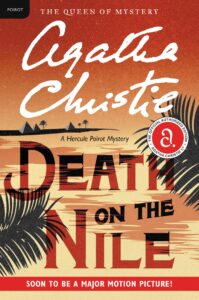
4. Death on the Nile — Christie’s Best Travel Mystery
Death on the Nile, published in 1937, combines a glamorous journey through Egypt with a story driven by intimacy, jealousy, resentment, and money. The scenery is expansive, but the emotional conflict is intensely personal.
What Is Death on the Nile About?
Linnet Ridgeway is young, wealthy, beautiful, and accustomed to attracting attention. Her marriage creates a painful conflict involving Jacqueline de Bellefort, whose presence transforms what should have been a romantic journey into an increasingly uncomfortable public drama.
Hercule Poirot encounters the central figures in Egypt and recognizes the emotional danger surrounding them. The tension follows the group onto a Nile steamer carrying travelers with their own secrets, motives, financial concerns, and private connections.
When a murder occurs, the apparently open world of international travel becomes another controlled Christie environment. The people who matter are gathered aboard the same vessel, and personal history becomes inseparable from physical evidence.
Why It Is More Than an Exotic Mystery
The Egyptian setting gives the novel visual distinction, but Death on the Nile would not be one of the best Hercule Poirot books if it depended only on scenery.
Its strength comes from the relationship between motive and performance. Love, envy, humiliation, greed, loyalty, and social ambition affect how characters behave before and after the crime.
Christie takes time to establish these tensions. The murder does not feel like an isolated event inserted merely to begin a puzzle. It emerges from relationships that have already become dangerous.
The book also demonstrates her ability to manage a large cast. Several passengers might initially seem secondary, yet their observations and personal concerns gradually contribute to the larger structure.
Poirot’s role is both analytical and emotional. He understands that intense desire can produce self-deception as well as deception directed toward others. His warnings and reflections give the story a more tragic atmosphere than some of his lighter investigations.
Who Should Read It?
Death on the Nile is recommended for readers who enjoy:
- travel mysteries;
- romantic and emotional conflict;
- glamorous locations;
- large casts with interconnected secrets;
- murder cases shaped by jealousy and wealth;
- adaptations with strong visual possibilities.
It is also an excellent second or third Christie novel, particularly after a reader has already encountered Poirot in a more compact English setting.
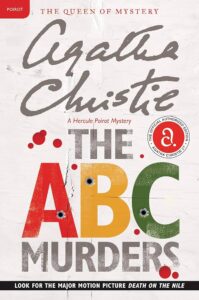
5. The ABC Murders — Poirot’s Most Unusual Investigation
Published in 1936, The ABC Murders expands the usual geography of a Poirot investigation. Rather than concentrating entirely on one household or one group of travelers, the case appears to move across different English towns according to an alphabetical pattern.
What Is The ABC Murders About?
Poirot receives a letter warning him that a crime will take place in a location beginning with the letter A. The message seems to challenge him personally, but the warning does not prevent the crime.
Another letter follows. Then another location, another victim, and another stage in an apparent sequence. An ABC railway guide becomes associated with the crimes, strengthening the impression that Poirot is confronting a methodical killer who has designed a public contest of intelligence.
Captain Hastings assists Poirot, giving the novel the familiar energy of their partnership while the case itself feels larger and more mobile than many earlier investigations.
How Christie Expands the Traditional Mystery
The apparent pattern creates urgency. Poirot is not merely reconstructing a completed crime inside a stable environment. He seems to be responding to an ongoing sequence in which another event may occur.
Christie also varies the narrative perspective, allowing the reader to observe information beyond the ordinary limits of Hastings’s account. This broadens the story while creating new uncertainties about what kind of mystery is actually unfolding.
The central achievement of The ABC Murders is the relationship between scale and motive. The crimes appear impersonal, organized according to letters, towns, and names. Poirot, however, remains convinced that human psychology must exist beneath the pattern.
This tension between an abstract design and an individual motive gives the novel its distinctive character. It resembles a serial-killer thriller in certain respects, yet it remains firmly grounded in Christie’s interest in misdirection and personal relationships.
Who Should Read It?
Choose The ABC Murders if you prefer:
- a faster and more urgent investigation;
- multiple locations;
- the partnership between Poirot and Hastings;
- an apparent battle between detective and killer;
- mysteries involving patterns and sequences;
- a structure that differs from the traditional country-house case.
Readers who believe Christie always wrote quiet murders in elegant drawing rooms may be surprised by its energy and reach.
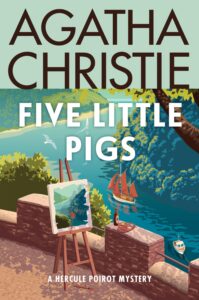
6. Five Little Pigs — The Best Mystery About Memory and the Past
Five Little Pigs, published in 1942, is one of Christie’s most psychologically sophisticated novels. The crime occurred many years before Poirot begins his investigation, so there is no fresh crime scene to examine and no immediate physical evidence waiting to be collected.
What Is Five Little Pigs About?
Carla Lemarchant approaches Poirot with a request connected to the murder of her father, the painter Amyas Crale. Carla’s mother was convicted of the crime and died in prison, but she left behind a message declaring her innocence.
Carla wants the truth before beginning a new stage of her own life. Poirot agrees to reconstruct the case by contacting the people who were present during the final period of Amyas Crale’s life.
Five central witnesses provide their memories of the same personalities, conversations, tensions, and events. Their accounts overlap, contradict, and interpret one another.
Why Memory Becomes the Central Puzzle
Most detective stories ask whether a suspect is lying. Five Little Pigs asks a more complicated question: what happens when people honestly remember the same event differently?
Memory is influenced by affection, resentment, embarrassment, pride, self-protection, and the stories people have repeated to themselves over many years. A witness may sincerely believe an interpretation that was never objectively true.
Poirot cannot depend on fingerprints, immediate medical observations, or an untouched room. Instead, he studies personality and language. He compares the witnesses’ written accounts and spoken recollections, searching for the point at which subjective memory reveals an objective fact.
This structure gives the novel unusual emotional depth. The people involved have continued living after the conviction, but the past has shaped their identities. Poirot’s investigation does not merely reopen a legal question. It disrupts the versions of themselves they have learned to accept.
The result is less physically dramatic than And Then There Were None or The ABC Murders, but it is richer in perspective and character interpretation.
Who Should Read It?
Five Little Pigs is one of the best Agatha Christie mysteries for readers who value:
- psychological characterization;
- unreliable memory;
- different accounts of the same event;
- cold-case investigations;
- quiet but intellectually demanding mysteries;
- Poirot’s understanding of human behavior.
It is not necessarily the fastest Christie novel, but it is among the most rewarding for readers interested in how detective fiction can explore perception and the passage of time.
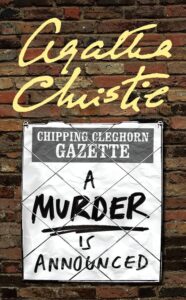
7. A Murder Is Announced — The Best Miss Marple Novel
Published in 1950, A Murder Is Announced offers one of the finest combinations of village atmosphere, social observation, hidden identity, and fair-play detection in Christie’s work.
What Is A Murder Is Announced About?
The residents of Chipping Cleghorn notice an unusual announcement in the local newspaper. It states that a murder will occur at a particular house at a particular time.
Some villagers assume the announcement describes a game or social entertainment. Curiosity brings several of them to the house, where the evening develops into something far more serious.
The resulting investigation reveals uncertainty about names, histories, relationships, and the social changes that have affected village life. Miss Marple eventually becomes involved, recognizing that ordinary behavior may provide the most useful guide through an extraordinary situation.
Why Miss Marple Is the Perfect Detective for This Case
Hercule Poirot often arranges interviews formally, emphasizes method, and draws attention to the disciplined activity of his “little grey cells.” Miss Marple appears less threatening.
She may seem like an elderly woman interested in gardening, conversation, and village news. That appearance encourages people to underestimate her.
Her great strength is analogy. She has observed selfishness, vanity, jealousy, dishonesty, and generosity within a small community. When she meets a new person, she often recognizes a familiar type of behavior beneath unfamiliar circumstances.
A Murder Is Announced is particularly suited to this method because the mystery depends on community knowledge. People believe they know their neighbors, but wartime disruption and social mobility have made identity less stable than it once seemed.
The novel uses a cozy setting without becoming emotionally harmless. Beneath the tea, gardens, newspapers, and village visits are loneliness, financial anxiety, fear, and the dangerous consequences of being mistaken for someone else.
Who Should Read It?
Read A Murder Is Announced if you enjoy:
- Miss Marple’s quiet intelligence;
- English village mysteries;
- large casts connected through local gossip;
- hidden histories and uncertain identities;
- cozy settings with serious consequences;
- detectives who understand behavior better than technology.
It is the best choice for readers who want to understand why Miss Marple is much more than a gentle alternative to Poirot.
8. Crooked House — Christie’s Darkest Family Mystery
Crooked House, published in 1949, is a standalone novel without Poirot or Miss Marple. Christie reportedly regarded it as one of her personal favorites, and it is easy to understand why. The book places an entire family under suspicion while creating an atmosphere in which affection and danger are difficult to separate.
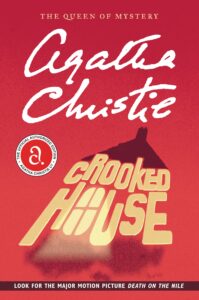
What Is Crooked House About?
Charles Hayward returns to England and renews his relationship with Sophia Leonides. Their plans are complicated by the death of Sophia’s wealthy grandfather, Aristide Leonides.
The Leonides family lives together in a large and unusual house. Several generations remain connected to Aristide’s fortune, authority, and expectations. When his death is revealed to be suspicious, the family becomes the center of an investigation.
Charles enters the household hoping to understand what happened. Instead, he encounters conflicting loyalties, financial dependence, romantic tensions, theatrical personalities, and the disturbing possibility that the guilty person belongs to the family Sophia wants him to join.
Why the Family Is More Important Than the Detective
Crooked House is not primarily a showcase for an eccentric investigator. Its most important character is arguably the Leonides family as a collective organism.
Each individual has developed in relation to Aristide. Some benefited from his generosity. Some resented his influence. Some failed to become independent because his wealth protected them from consequences.
The house concentrates those relationships in one place. Its unusual structure reflects the emotional imbalance of the people living within it.
Christie avoids presenting the family as a simple collection of greedy heirs. Money matters, but so do pride, dependency, parental behavior, personal disappointment, and the ways families excuse conduct they would condemn in strangers.
The novel’s darkness comes from the instability of trust within the home. A family is supposed to provide safety and familiarity. Here, intimacy gives a potential murderer greater access and makes objective judgment more difficult.
Who Should Read It?
Crooked House is highly recommended for fans of:
- standalone mysteries;
- dysfunctional family dramas;
- inheritance conflicts;
- psychologically unsettling stories;
- country-house investigations without a series detective;
- darker conclusions and moral discomfort.
Readers who consider Christie too gentle or predictable should include this novel in their reading plans.
9. Peril at End House — A Masterclass in Clues and Misdirection
Published in 1932, Peril at End House demonstrates how Christie could construct a highly traditional Poirot investigation while repeatedly encouraging readers to organize the evidence incorrectly.
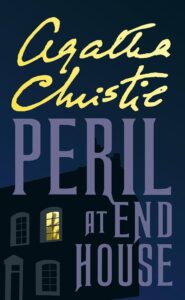
What Is Peril at End House About?
While staying near the Cornish coast, Poirot and Captain Hastings meet Nick Buckley, the young owner of End House.
Nick casually describes a series of recent accidents and narrow escapes. Poirot soon notices evidence suggesting that at least one incident was not accidental.
Convinced that someone is attempting to kill Nick, Poirot investigates the people around her. The challenge differs from a conventional murder case because he initially hopes to prevent a death rather than explain one.
Why It Rewards Attentive Readers
Peril at End House is built around interpretation. The facts may appear to point in one direction, but Poirot repeatedly warns that a reasonable conclusion can still be wrong if it begins from an untested assumption.
The book makes excellent use of small objects, apparently casual conversations, family relationships, and the difference between what a character sees and what that character believes has happened.
Hastings plays an important role in the reading experience. His reactions are understandable and often mirror the conclusions a reader is likely to reach. Poirot’s corrections therefore become lessons in how easily an intelligent observer can be guided by appearances.
The novel is less culturally famous than Murder on the Orient Express, but as a pure demonstration of clue placement and misdirection, it deserves a position among the best Agatha Christie books ranked.
Who Should Read It?
Choose Peril at End House if you enjoy:
- trying to solve the case before Poirot;
- traditional clue-based mysteries;
- the friendship between Poirot and Hastings;
- plots involving attempted murder;
- coastal and country-house settings;
- stories that transform familiar facts through a final explanation.
It is particularly rewarding for readers who treat a mystery as a competitive intellectual game.
10. Endless Night — Christie’s Best Psychological and Gothic Novel
Published in 1967, Endless Night belongs to a later period of Christie’s career and feels noticeably different from the polished social machinery of many Poirot and Miss Marple mysteries.
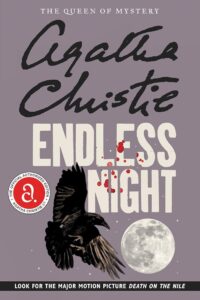
What Is Endless Night About?
Michael Rogers is a young man with expensive dreams and limited resources. He becomes fascinated by a piece of land known as Gipsy’s Acre, a beautiful location associated with local warnings and an atmosphere of misfortune.
Michael meets Ellie, a wealthy young woman, and the possibility of building a life together seems capable of transforming his future. A modern house, designed for them by an ambitious architect, becomes part of that vision.
Yet the relationship between desire, money, place, and superstition creates an increasingly uneasy atmosphere. The novel unfolds through Michael’s perspective, drawing readers into his ambitions and interpretations.
Why It Feels Different from Traditional Christie Novels
Endless Night does not begin with a gathering of suspects waiting for a famous detective to identify a killer. It is slower, more intimate, and more interested in the development of unease.
The first-person narration creates closeness while also limiting the reader to one personality and one understanding of events. The landscape carries symbolic weight, and warnings that might appear superstitious contribute to the novel’s fatalistic tone.
Gothic elements are present in the threatened property, the uncertain future of a romantic couple, the influence of wealth, and the suggestion that a dream home can become a place of danger.
The book also examines ambition. Michael does not merely want comfort. He wants a life transformed by beauty, freedom, architecture, and money. That desire gives the story energy while making the reader question what sacrifices might be hidden beneath an ideal future.
Because the structure differs from Christie’s most famous formulas, some readers may find it less immediately recognizable. Others will consider that difference its greatest strength.
Who Should Read It?
Endless Night is a strong choice for readers who prefer:
- psychological suspense;
- gothic atmosphere;
- first-person narration;
- slow-building unease;
- standalone novels;
- stories about ambition, love, wealth, and self-deception.
It is not the best first Christie novel for someone seeking a typical Poirot puzzle, but it is essential for understanding the full range of her fiction.
Best Agatha Christie Books by Category
Not every reader wants the same kind of mystery. The following guide makes it easier to choose according to atmosphere, detective, structure, or reading experience.
- Best Agatha Christie book overall: And Then There Were None
- Best Hercule Poirot book: The Murder of Roger Ackroyd
- Best Miss Marple book: A Murder Is Announced
- Best closed-circle mystery: Murder on the Orient Express
- Best travel mystery: Death on the Nile
- Best mystery about memory: Five Little Pigs
- Best family mystery: Crooked House
- Best fast-paced Poirot mystery: The ABC Murders
- Best traditional puzzle: Peril at End House
- Best psychological and gothic novel: Endless Night
- Best book for modern thriller readers: And Then There Were None
- Best book to reread: The Murder of Roger Ackroyd
- Best book for readers who enjoy moral questions: Murder on the Orient Express
- Best cozy village setting: A Murder Is Announced
This variety is what makes a single definitive ranking difficult. And Then There Were None may be the most complete recommendation, but a reader who loves character testimony could reasonably prefer Five Little Pigs, while a devoted Miss Marple fan might place A Murder Is Announced first.
Which Agatha Christie Book Should You Read First?
The best starting point depends on what you already enjoy. Christie did not write one unchanging type of mystery, so choosing according to your preferences is more useful than beginning randomly.
Start with And Then There Were None for Maximum Suspense
This is the safest general recommendation. It requires no knowledge of recurring characters, begins with an irresistible premise, and moves rapidly.
Readers of contemporary thrillers will recognize the appeal of an isolated group, increasing danger, uncertain alliances, and psychological pressure.
Start with Murder on the Orient Express for Classic Poirot
Choose this book if your image of Agatha Christie includes elegant travel, formal interviews, a controlled group of suspects, and Hercule Poirot transforming contradictions into order.
It is famous for good reason and provides one of the clearest examples of the closed-circle mystery.
Start with A Murder Is Announced for Miss Marple
This is the ideal introduction for readers who prefer village life, social behavior, quiet observation, and an investigator whose apparent harmlessness conceals a remarkably sharp understanding of people.
The book also demonstrates how Christie combines a cozy environment with questions of identity, loneliness, and postwar social change.
Start with The Mysterious Affair at Styles to Read Historically
Readers who want to experience Poirot’s published career from its beginning should start with The Mysterious Affair at Styles.
It introduces Poirot, Captain Hastings, and several features that would become associated with Christie’s detective fiction. The mystery is enjoyable in its own right, though it is not as polished or surprising as the very best later novels.
Start with Endless Night for Psychological Suspense
Readers who rarely enjoy traditional detective puzzles but love gothic fiction, ambiguous narrators, and slow psychological tension may respond more strongly to Endless Night.
It does not represent the typical Poirot or Miss Marple experience, but it can reveal a side of Christie that many new readers do not expect.
Honorable Mentions: More Great Agatha Christie Books
Limiting a list to ten novels inevitably excludes excellent books. The following titles did not replace the main selections, but each deserves attention.
The Mysterious Affair at Styles
Christie’s first published novel introduced Hercule Poirot through a country-house mystery involving family tension, inheritance, medicine, and apparently contradictory evidence.
It is the natural beginning for readers who want to follow Poirot chronologically. The book also shows that many of Christie’s central interests were present from the start: controlled suspect groups, misleading appearances, and the importance of precise timing.
The Body in the Library
A body discovered in the library of Colonel and Mrs. Bantry creates exactly the kind of scandal that can dominate village conversation. Miss Marple becomes involved as the investigation moves beyond the respectable household in which the discovery was made.
The novel is accessible, relatively concise, and filled with the contrast between respectable appearances and less respectable realities.
Towards Zero
Towards Zero begins from the idea that a murder should not be considered the starting point of a story. It is the moment toward which personalities, resentments, decisions, and coincidences have been moving.
This concept gives the book a distinctive structure. Readers spend time observing relationships before fully understanding which conflict will become central.
Ordeal by Innocence
A man convicted of murdering his mother dies in prison, but new information later challenges the certainty of his guilt.
The surviving family members do not all welcome the possibility that the case may be reopened. If the convicted man was innocent, the actual murderer may still belong to the household.
It is an excellent choice for readers who enjoyed the family tension of Crooked House and the retrospective investigation of Five Little Pigs.
The Moving Finger
Anonymous letters disturb a small community, spreading suspicion and revealing how quickly private fears can become public accusations.
Miss Marple’s role is not as extensive as some readers may expect, but the novel succeeds as a study of village tension and malicious communication.
Curtain
Curtain is Poirot’s final case and carries emotional importance for readers familiar with his long career.
It should not be the first Poirot book you read. Although the mystery can be understood independently, its atmosphere and significance become much stronger after you have spent time with Poirot and Hastings in earlier investigations.
Do You Need to Read Agatha Christie’s Books in Order?
No. Most Agatha Christie novels can be read independently.
Hercule Poirot and Miss Marple return across multiple books, but their investigations are usually self-contained. A reader can begin with Death on the Nile, continue with The Murder of Roger Ackroyd, and then move backward to The Mysterious Affair at Styles without losing the central plots.
There are occasional references to previous cases, friendships, aging, and personal history, but these details rarely prevent understanding.
A few recommendations can improve the experience:
- Read The Mysterious Affair at Styles first if you want Poirot’s publication order.
- Do not begin Poirot’s career with Curtain.
- Choose The Murder at the Vicarage if you want Miss Marple’s first full-length novel.
- Read the standalone mysteries whenever their premises interest you.
- Alternate Poirot, Miss Marple, and independent novels to experience Christie’s range.
For most readers, thematic order is more enjoyable than strict chronology. You might begin with a closed-circle mystery, continue with a village case, and then try one of the darker psychological novels.
Who Was Agatha Christie?
Agatha Mary Clarissa Christie was born on September 15, 1890, in Torquay, Devon, England. She became one of the most influential and widely read authors in the history of detective fiction.
Her first published novel, The Mysterious Affair at Styles, introduced Hercule Poirot, the Belgian detective recognized for his precise appearance, confidence, theatrical manner, and faith in psychological reasoning.
Christie later created Miss Jane Marple, an elderly amateur detective whose knowledge of village life gives her an extraordinary ability to recognize patterns of human behavior. Although Poirot and Marple are her most famous investigators, Christie also wrote stories featuring Tommy and Tuppence, Parker Pyne, Harley Quin, Superintendent Battle, and other recurring characters.
Her work is closely associated with the Golden Age of Detective Fiction, a period in which authors developed elaborate puzzles, limited groups of suspects, and stories that challenged readers to interpret clues alongside the investigator.
Christie’s knowledge of medicines and poisons was strengthened by her experience working in hospital dispensaries during wartime. This background gave several of her fictional cases an unusual degree of pharmaceutical accuracy, although her novels generally remain focused on motive and deception rather than technical explanation.
She also traveled extensively, particularly after her marriage to archaeologist Max Mallowan. Those journeys influenced the settings of novels involving the Middle East, archaeological expeditions, hotels, trains, ships, and international groups of travelers.
Beyond detective fiction, Christie wrote romantic and psychological novels under the name Mary Westmacott. She was also a successful playwright, and The Mousetrap became one of the most famous long-running theatrical productions in history.
Christie died on January 12, 1976, leaving a body of work that includes dozens of detective novels, numerous short-story collections, plays, and some of the most recognizable fictional investigators ever created.
For a more complete account of her childhood, marriages, mysterious disappearance, travels, detectives, plays, and publishing career, read our article About Agatha Christie.
What to Read After Agatha Christie
Discover More Classic and Modern Mystery Writers
After reading several of the best Agatha Christie novels, you may want mysteries that preserve some of her most appealing elements without simply copying her formulas.
Other writers have explored:
- closed groups of suspects;
- apparently impossible crimes;
- village secrets;
- family inheritance disputes;
- amateur detectives;
- fair-play clue construction;
- psychological misdirection.
Our guide to books like Agatha Christie recommends additional authors and novels for readers who want to continue exploring intelligent, character-driven mysteries.
Explore the Sherlock Holmes Tradition
Readers who enjoy brilliant detectives may also compare Christie’s investigators with Sherlock Holmes.
Holmes is famous for observation, deduction, scientific knowledge, and the ability to interpret physical traces. Poirot also notices details, but he places greater emphasis on psychology, motive, and the contradictions within a person’s behavior.
Miss Marple uses a different method. She understands new crimes by comparing them with recognizable patterns of vanity, greed, cruelty, and deception encountered during ordinary village life.
To continue exploring the development of detective fiction, visit our list of books like Sherlock Holmes.
Frequently Asked Questions About Agatha Christie Books
What Is Generally Considered Agatha Christie’s Best Book?
And Then There Were None is the strongest general answer. It is widely read, independent from a detective series, immediately suspenseful, and exceptionally controlled.
The Murder of Roger Ackroyd is another major candidate, particularly among critics and devoted mystery readers who admire formal innovation.
What Is the Best Hercule Poirot Book?
The Murder of Roger Ackroyd is arguably the best Hercule Poirot book because of its narrative ingenuity, village setting, reread value, and importance within detective fiction.
Other excellent Poirot choices include:
- Murder on the Orient Express;
- Death on the Nile;
- Five Little Pigs;
- The ABC Murders;
- Peril at End House.
What Is the Best Miss Marple Book?
A Murder Is Announced is the best overall Miss Marple novel. It combines an irresistible opening, village relationships, postwar uncertainty, hidden identities, and Miss Marple’s distinctive understanding of human nature.
The Body in the Library, The Moving Finger, and Nemesis are also popular choices, depending on the type of story a reader prefers.
What Is the Best Agatha Christie Book for Beginners?
And Then There Were None is the best Agatha Christie book for most beginners. It is fast, self-contained, atmospheric, and does not require familiarity with a recurring detective.
Beginners specifically interested in Poirot should choose Murder on the Orient Express or The Murder of Roger Ackroyd. Those interested in Miss Marple should begin with A Murder Is Announced.
What Is Agatha Christie’s Darkest Book?
And Then There Were None, Crooked House, and Endless Night are among Christie’s darkest novels.
And Then There Were None creates intense fear through isolation and increasing danger. Crooked House is disturbing because the threat exists within a family. Endless Night develops a gothic and fatalistic atmosphere through desire, wealth, place, and psychological tension.
Are Agatha Christie’s Books Difficult to Read?
Most of Christie’s books are not especially difficult. Her prose is direct, her chapters are manageable, and her plots usually introduce a clear central question.
Modern readers may occasionally encounter older British vocabulary, historical social customs, or large casts of characters. Keeping track of names can require attention, particularly in books such as Murder on the Orient Express and Death on the Nile.
The mysteries themselves may be difficult to solve, but the writing is generally accessible.
Are Agatha Christie’s Books Cozy Mysteries?
Many Christie novels helped shape what readers now associate with cozy mysteries: village settings, amateur or eccentric detectives, limited suspect groups, and an emphasis on investigation rather than graphic violence.
However, not all her books are cozy in tone. And Then There Were None, Crooked House, and Endless Night can be psychologically severe. Even the quieter village stories often involve loneliness, greed, fear, and damaged families.
It is more accurate to say that Christie influenced the cozy mystery tradition while also writing beyond it.
How Many Books Did Agatha Christie Write?
Agatha Christie wrote 66 detective novels and 14 short-story collections, in addition to plays and six novels published under the name Mary Westmacott.
Because collections, publication markets, alternate titles, and adaptations are sometimes counted differently, totals can vary depending on what a list includes.
Can Agatha Christie Books Be Read in Any Order?
Yes. Most books present independent cases and can be read in almost any order.
The main exception is Curtain, which is more meaningful after reading several earlier Poirot mysteries. Readers following strict publication order may begin with The Mysterious Affair at Styles, but this is optional.
Which Agatha Christie Book Has the Best Twist?
The Murder of Roger Ackroyd, And Then There Were None, and Murder on the Orient Express are frequently praised for their conclusions.
The answer depends on whether a reader values narrative innovation, structural control, or moral complexity. Searching too aggressively for information about their endings is not recommended, since even a vague description can damage the first reading experience.
Which Agatha Christie Book Is Most Like a Modern Thriller?
And Then There Were None is the closest general match. Its isolation, danger, pace, and psychological pressure resemble features commonly found in modern suspense fiction.
The ABC Murders may also appeal to thriller readers because of its sequence of crimes, multiple locations, and apparent confrontation between Poirot and a calculating killer.
Final Thoughts: Which Is the Best Agatha Christie Book?
And Then There Were None is the best Agatha Christie book overall. It offers the most complete combination of suspense, accessibility, atmosphere, structural discipline, and independence from an established series.
However, it is not the only reasonable choice.
The Murder of Roger Ackroyd may be her greatest achievement in narrative misdirection. Murder on the Orient Express is the most iconic expression of the closed-circle mystery. Five Little Pigs demonstrates her ability to build an investigation from memory and personality. A Murder Is Announced represents Miss Marple and the village mystery at their finest.
Readers looking for something darker should choose Crooked House or Endless Night. Those who prefer travel, glamour, and emotional conflict should read Death on the Nile. Readers who want speed and a wider geographical scale may prefer The ABC Murders.
The ideal approach is not to identify one book and ignore the rest. Use the ranking as a path through Christie’s different styles:
- Begin with And Then There Were None.
- Meet Poirot in The Murder of Roger Ackroyd.
- Experience the classic closed-circle mystery in Murder on the Orient Express.
- Discover Miss Marple through A Murder Is Announced.
- Explore Christie’s psychological side with Five Little Pigs and Endless Night.
By that point, the question may no longer be whether Agatha Christie deserves to be called the Queen of Crime. The more difficult question will be which of her many mysteries you should read next.
References
- Agatha Christie — Wikipedia
- And Then There Were None — Wikipedia
- The Murder of Roger Ackroyd — Wikipedia
- Murder on the Orient Express — Wikipedia
- Death on the Nile — Wikipedia
- The A.B.C. Murders — Wikipedia
- Five Little Pigs — Wikipedia
- A Murder Is Announced — Wikipedia
- Crooked House — Wikipedia
- Peril at End House — Wikipedia
- Endless Night — Wikipedia
- The Mysterious Affair at Styles — Wikipedia

Leave a Reply