
Why Readers Still Love The Stranger
The Stranger by Albert Camus is one of those rare novels that stays in your mind long after the final page. First published in 1942, the book follows Meursault, a detached and emotionally distant man whose indifferent view of life slowly places him in conflict with society itself.
What makes the novel so powerful is not simply its plot, but the strange emotional atmosphere surrounding it. Camus creates a world where life feels cold, meaningless, and deeply absurd. Meursault does not behave the way society expects him to, and that unsettling honesty becomes more disturbing than the crime at the center of the story.
Over the years, The Stranger became one of the defining works of absurdist literature, influencing generations of writers, philosophers, and readers fascinated by existential questions. The novel explores themes such as alienation, freedom, emotional detachment, mortality, and humanity’s search for meaning in an indifferent universe.
Readers who love The Stranger are usually searching for more than philosophical fiction. They want books that recreate that same feeling of existential discomfort — stories filled with isolated characters, unsettling introspection, psychological tension, and questions that have no comforting answers.
Fortunately, several incredible novels and philosophical works explore similar ideas. Some focus on existential anxiety, others on absurd social systems, and some dive deeply into the psychological chaos of the human mind. But all of them capture something that fans of Camus will immediately recognize.
If you are looking for books that feel emotionally and philosophically similar to The Stranger, these recommendations are the perfect place to start.

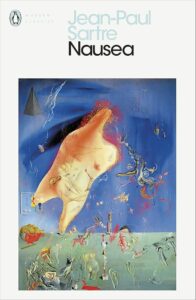
1. Nausea by Jean-Paul Sartre
What Is Nausea About?
Published in 1938, Nausea by Jean-Paul Sartre is one of the most important novels of existentialist literature. The story follows Antoine Roquentin, a lonely historian living in a small French town who slowly becomes overwhelmed by a disturbing realization: existence itself feels strange, artificial, and deeply uncomfortable.
As Roquentin drifts through his daily routine, ordinary objects and situations begin to feel almost unbearable to him. Simple moments suddenly seem meaningless, and the world around him loses the comforting illusion of order. The result is an intense feeling of existential disgust — the “nausea” that gives the novel its title.
Much like Meursault in The Stranger, Roquentin feels disconnected from society and emotionally isolated from the people around him. Both characters experience the world with a cold sense of detachment that makes their stories fascinating and unsettling at the same time.
Why You Should Read It
If the philosophical atmosphere of The Stranger was what captivated you most, Nausea is easily one of the best books you can read next. Sartre transforms existential anxiety into something almost physical, creating a reading experience that feels deeply introspective and psychologically immersive.
What makes the novel so compelling is the way it forces readers to confront uncomfortable questions about existence, identity, and freedom. Instead of offering answers, Sartre invites you to sit inside the protagonist’s growing alienation and experience his existential crisis firsthand.
Fans of Camus will immediately recognize the emotional emptiness, philosophical tension, and unsettling introspection that define this novel. In many ways, Nausea feels like a darker and even more psychologically intense companion piece to The Stranger.
- Perfect for readers who enjoy existential philosophy
- Explores alienation and emotional isolation
- Deeply introspective and psychologically intense
- One of the defining novels of existentialist literature
2. The Trial by Franz Kafka
What Is The Trial About?
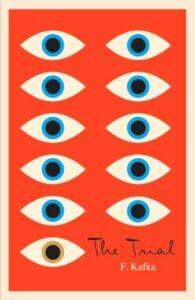
The Trial by Franz Kafka is one of the most famous and unsettling novels ever written. The story begins with a simple but terrifying premise: Josef K., an ordinary bank employee, is suddenly arrested one morning for a crime that is never explained to him.
Although he remains free to continue his daily life, Josef K. becomes trapped inside a mysterious and irrational legal system that seems impossible to understand or escape. The deeper he tries to uncover the truth, the more absurd and oppressive the world around him becomes.
Kafka creates an atmosphere filled with paranoia, confusion, and helplessness. The novel constantly feels like a nightmare where logic no longer works and every attempt to regain control only leads to more uncertainty.
Much like The Stranger, the novel explores the conflict between the individual and society. Josef K. is judged by forces he cannot comprehend, just as Meursault becomes condemned not only for his actions, but for failing to behave according to social expectations.
Why You Should Read It
If you loved the uncomfortable absurdity and emotional detachment of The Stranger, The Trial offers a similarly disturbing experience — but through a much darker and more surreal lens.
Kafka’s writing creates a constant sense of anxiety that slowly consumes both the protagonist and the reader. The novel’s bureaucratic nightmare feels strangely modern even today, making its themes of alienation, judgment, and existential fear incredibly powerful.
What makes The Trial unforgettable is the feeling that the world itself has become irrational. Like Camus, Kafka forces readers to confront the terrifying possibility that life may not follow any understandable logic at all.
- A masterpiece of absurdist literature
- Explores paranoia, helplessness, and social judgment
- Creates an intense atmosphere of existential anxiety
- Perfect for readers who enjoy philosophical and psychological fiction
3. Notes from Underground by Fyodor Dostoevsky
What Is Notes from Underground About?
First published in 1864, Notes from Underground by Fyodor Dostoevsky is often considered one of the earliest and most influential existential novels ever written. Long before Camus and Sartre explored absurdism and existentialism, Dostoevsky was already diving into the contradictions, frustrations, and psychological chaos of the human mind.
The novel follows an unnamed narrator commonly known as the Underground Man, a bitter and isolated former civil servant living in self-imposed solitude in St. Petersburg. Through a series of confessions and fragmented memories, he exposes his resentment toward society, his inability to connect with others, and his constant self-destructive behavior.
The Underground Man is deeply intelligent but emotionally unstable. He overanalyzes everything, sabotages his own happiness, and seems trapped inside his own thoughts. His cynical worldview and rejection of social norms make him one of the most psychologically complex characters in classic literature.
Like Meursault in The Stranger, he feels disconnected from the world around him. However, while Meursault expresses emotional emptiness through indifference, the Underground Man reveals it through bitterness, contradiction, and inner torment.
Why You Should Read It
If you enjoyed the introspective and emotionally distant atmosphere of The Stranger, Notes from Underground offers an even deeper psychological exploration of alienation and existential despair.
The novel feels surprisingly modern despite being written in the nineteenth century. Its themes of loneliness, anxiety, insecurity, and self-hatred remain painfully relatable, which is one reason why the book continues to influence writers and philosophers today.
What makes this novel especially fascinating for fans of Camus is how many existential ideas appear here decades before existentialism officially existed as a philosophical movement. Many readers see the Underground Man as a spiritual ancestor to characters like Meursault.
Dark, introspective, and emotionally raw, this is the kind of book that stays with you long after you finish reading it.
- One of the foundations of existential literature
- Deep psychological introspection and self-analysis
- Explores alienation, bitterness, and isolation
- Perfect for readers who enjoy complex philosophical characters

Explore More of Dostoevsky’s Greatest Works
If Notes from Underground was your favorite recommendation on this list, diving deeper into Fyodor Dostoevsky is absolutely worth it. His novels are filled with psychological tension, existential crises, moral conflict, and some of the most unforgettable characters in literary history.
From the guilt-ridden paranoia of Crime and Punishment to the philosophical depth of The Brothers Karamazov, Dostoevsky’s books continue to influence modern literature, philosophy, and psychology more than a century after they were written.
We created a complete guide to the author’s most essential works, including beginner-friendly recommendations and his most influential novels.
Read our guide to the best Fyodor Dostoevsky books here.
4. No Exit by Jean-Paul Sartre
What Is No Exit About?
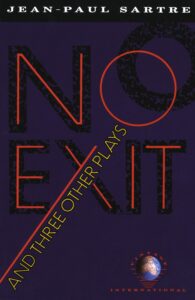
No Exit by Jean-Paul Sartre is a short philosophical play that became one of the most famous works of existentialist literature. Despite its simple setting, the story delivers an intense psychological experience that continues to resonate with readers decades after its publication.
The plot centers around three strangers who find themselves trapped together inside a mysterious room after death. At first, they expect traditional forms of punishment associated with hell, but they slowly realize that their true torment comes from each other.
As conversations unfold, the characters begin exposing their insecurities, lies, regrets, and emotional manipulations. The room transforms into a psychological prison where nobody can escape judgment or the constant gaze of others.
The play is best known for Sartre’s famous line, “Hell is other people,” a phrase that perfectly captures the existential tension running throughout the story.
Although very different in structure from The Stranger, the play explores many similar ideas about identity, freedom, self-awareness, and the uncomfortable relationship between individuals and society.
Why You Should Read It
If the philosophical themes of The Stranger fascinated you more than the plot itself, No Exit is an essential read. Sartre transforms existential philosophy into sharp dialogue and psychological conflict, making complex ideas feel surprisingly accessible and emotionally intense.
One of the most impressive aspects of the play is how much tension it creates with such a minimal premise. There are no action scenes or elaborate settings — only conversation, judgment, and emotional pressure. Yet the result feels deeply claustrophobic and unforgettable.
Fans of Camus will especially appreciate the way Sartre explores human freedom, responsibility, and the impossibility of fully escaping social perception. The play forces readers to confront uncomfortable questions about identity and the roles people perform in front of others.
Short, intelligent, and psychologically powerful, No Exit remains one of the best introductions to existentialist fiction.
- Short but incredibly thought-provoking
- Explores identity, judgment, and psychological conflict
- One of the defining works of existentialist literature
- Perfect for readers interested in philosophical fiction
5. The Myth of Sisyphus by Albert Camus
What Is The Myth of Sisyphus About?
Unlike the other books on this list, The Myth of Sisyphus is not a novel but a philosophical essay written by Albert Camus. However, for readers who were fascinated by the ideas behind The Stranger, this may actually be the most important recommendation of all.
In this work, Camus directly explores his philosophy of absurdism — the idea that human beings desperately search for meaning in a universe that offers none. According to Camus, this conflict between humanity’s need for purpose and the silence of existence itself creates what he calls “the absurd.”
The essay uses the Greek myth of Sisyphus as a metaphor for human life. Condemned by the gods to endlessly push a massive boulder uphill only for it to roll back down again, Sisyphus represents the repetitive and seemingly meaningless nature of existence.
Rather than responding to this realization with despair, Camus argues that people must learn to embrace the absurd and continue living anyway. This philosophical perspective lies at the very heart of The Stranger and helps explain Meursault’s unusual relationship with life, death, and society.
Why You Should Read It
If The Stranger left you thinking about existence long after you finished reading it, The Myth of Sisyphus is essential. This book transforms the emotional atmosphere of Camus’s fiction into a direct philosophical exploration of absurdism and human freedom.
What makes the essay so compelling is how approachable Camus’s ideas remain even when discussing difficult philosophical questions. Instead of feeling cold or academic, the book feels intensely human, confronting fears and uncertainties that almost everyone experiences at some point in life.
Readers who enjoyed the emotional detachment and existential tension of Meursault will discover a much deeper understanding of Camus’s worldview here. In many ways, this essay acts as the philosophical foundation beneath The Stranger.
It is the perfect final recommendation for readers who want not only stories similar to The Stranger, but also a clearer understanding of why Camus’s work continues to resonate so powerfully today.
- Essential for understanding Camus’s philosophy
- Direct exploration of absurdism and meaning
- Deeply connected to the themes of The Stranger
- One of the most influential philosophical essays ever written

Why Absurdist Literature Still Matters Today
Even decades after their publication, books like The Stranger continue to resonate with modern readers because the questions they explore never truly disappear. Feelings of isolation, emotional detachment, anxiety, and uncertainty remain deeply connected to the human experience.
Absurdist and existential literature confront uncomfortable ideas that many stories avoid. These books ask difficult questions about meaning, freedom, death, identity, and humanity’s place in an indifferent universe. Instead of offering comforting answers, they force readers to sit with uncertainty and reflect on their own existence.
That is exactly why novels like The Stranger, Nausea, The Trial, and Notes from Underground still feel surprisingly modern today. Although written in different countries and time periods, they capture emotions that continue to define contemporary life: alienation, loneliness, confusion, and the search for purpose.
What makes these books especially powerful is the way they combine philosophy with unforgettable storytelling. Rather than presenting abstract theories, they immerse readers inside the minds of characters struggling to understand themselves and the world around them.
For readers willing to embrace introspective and challenging fiction, absurdist literature offers something unique. These stories may not provide simple comfort, but they create the rare feeling of confronting life’s biggest questions with honesty.
Final Thoughts
If The Stranger left you fascinated by existential ideas and emotional isolation, these books are the perfect next step. Each one explores the absurdity of life in a different way — through paranoia, psychological conflict, alienation, or philosophical reflection — while preserving the same unsettling atmosphere that made Camus’s novel unforgettable.
Whether you are interested in existential philosophy, introspective fiction, or simply stories that challenge the way you think about life, these works remain some of the most rewarding and thought-provoking books ever written.
Few novels leave readers questioning existence itself. The Stranger is one of them — and these books continue that journey.

Leave a Reply