
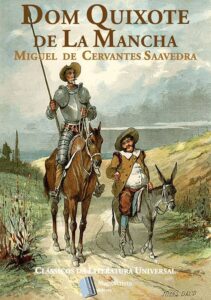
Few novels in literary history have left a legacy as powerful as Don Quixote. Written by Miguel de Cervantes in the early 17th century, the book began as a satire of medieval chivalric romances, but it eventually became something much larger: a deeply philosophical story about idealism, imagination, human dignity, and the painful collision between dreams and reality.
What makes Don Quixote so timeless is not simply its humor or its famous adventures with windmills. The novel resonates because its protagonist feels profoundly human. Don Quixote is ridiculous, noble, tragic, hopeful, delusional, and inspiring all at once. He sees beauty and meaning in a world that others consider ordinary and cynical. In many ways, he represents the eternal struggle between how the world is and how we wish it could be.
Because of this, readers searching for books similar to Don Quixote are often not looking for another story about knights or medieval adventures. Instead, they are searching for novels that capture the same emotional and philosophical atmosphere: stories about dreamers, outsiders, idealists, and obsessive figures trying to impose meaning upon an indifferent world.
The influence of Cervantes can be seen across centuries of literature. Many famous authors borrowed elements from Don Quixote, including its mixture of comedy and melancholy, its criticism of society, and its fascination with characters who live according to impossible ideals. Some novels transform these ideas into psychological dramas, while others turn them into satire, adventure, or existential reflection.
In this list, you will not find books that merely copy the plot of Don Quixote. Instead, these are novels that share its spirit. Some feature innocent protagonists confronting cruel societies. Others explore obsession, philosophical wandering, or the blurry line between madness and greatness. Together, they reveal how Cervantes’ masterpiece helped shape modern literature itself.
Why Don Quixote Still Feels So Modern
The Conflict Between Idealism and Reality
At its core, Don Quixote is about a person refusing to accept the world as it is. While everyone around him sees inns, farmers, and windmills, Don Quixote sees castles, noble quests, and giants. This creates much of the novel’s comedy, but it also creates its emotional power. Beneath the humor lies a painful question: is it foolish to believe in beauty, heroism, and meaning in a cynical world?
This tension between idealism and reality became one of the most influential themes in literary history. Countless novels after Cervantes would revisit this same idea through characters who struggle to maintain their beliefs while society mocks or misunderstands them.
Humor Mixed With Melancholy
One reason Don Quixote remains so memorable is its unusual emotional balance. The novel is undeniably funny, filled with absurd misunderstandings and chaotic adventures, yet there is always a layer of sadness beneath the comedy. Readers laugh at Don Quixote, but they also sympathize with him.
That combination of humor and melancholy appears repeatedly in the books on this list. Many of these stories use comedy not just for entertainment, but to explore loneliness, obsession, innocence, and the fragile nature of human hope.
The Birth of the Modern Anti-Hero
Before Don Quixote, many literary heroes were designed to appear powerful, noble, and admirable. Cervantes changed that forever by creating a protagonist who was deeply flawed, often irrational, and disconnected from reality. Yet despite his failures, Don Quixote remains strangely heroic because of his sincerity and refusal to abandon his ideals.
Modern literature is filled with characters shaped by this influence. From philosophical outsiders to obsessive visionaries, many of the greatest protagonists in fiction owe something to Cervantes’ wandering knight.
Is Don Quixote Still Worth Reading Today?
Curious about whether Don Quixote truly deserves its legendary reputation? In our full review of the novel, we explore what makes Cervantes’ masterpiece so influential, philosophical, funny, and emotionally timeless even centuries after its publication.
If you are wondering whether the book is actually enjoyable for modern readers — or why so many writers consider it one of the greatest novels ever written — this guide will help you understand exactly what makes Don Quixote such a unique literary experience.
Read: Is Don Quixote a Good Book?
1. The Idiot by Fyodor Dostoevsky
What The Idiot Is About
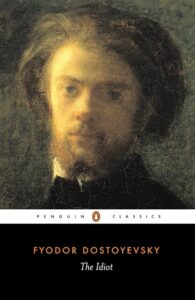
Published in 1869, The Idiot is one of Fyodor Dostoevsky’s most emotionally complex and philosophically rich novels. The story follows Prince Lev Nikolayevich Myshkin, a young man returning to Russian society after years spent in a Swiss clinic treating his epilepsy. Unlike the ambitious and manipulative people surrounding him, Myshkin is remarkably honest, compassionate, and innocent.
Almost immediately, society begins to misunderstand him. His sincerity appears strange in a world built on vanity, greed, status, and emotional games. Some characters admire him, others mock him, and many simply cannot comprehend how someone could genuinely act with kindness and humility. Because of this, Myshkin slowly gains the reputation of being an “idiot,” despite often being the wisest person in the room.
As the novel progresses, Dostoevsky places Myshkin into increasingly chaotic emotional situations involving love, jealousy, pride, and moral corruption. What begins as a social drama gradually transforms into a profound philosophical exploration of human nature, innocence, suffering, and spiritual purity.
Why You Should Read It
If you loved the philosophical side of Don Quixote, then The Idiot may be one of the closest literary experiences you can find. Dostoevsky creates a protagonist who feels painfully out of place in the modern world, much like Cervantes did centuries earlier.
What makes the novel extraordinary is the emotional tension surrounding Prince Myshkin. He is not naïve in the simplistic sense. In many ways, he understands people better than they understand themselves. Yet his refusal to become cynical makes him appear weak and foolish to others. The novel constantly forces the reader to ask whether society mistakes goodness for stupidity.
Dostoevsky also fills the story with powerful psychological discussions and unforgettable characters. The emotional intensity of the book can feel overwhelming at times, but that is precisely what gives it its lasting impact. Like Don Quixote, the novel is deeply concerned with the human soul and the cost of trying to live according to impossible ideals.
Despite being written in the 19th century, The Idiot still feels remarkably modern because its central questions remain timeless. Can a truly good person survive in a corrupt society? Is idealism noble, or is it simply another form of self-destruction? Dostoevsky never offers easy answers, which is part of what makes the novel so fascinating.
How It Resembles Don Quixote
- Both novels center around protagonists who are viewed as foolish because they refuse to adopt society’s cynicism.
- Prince Myshkin and Don Quixote both try to live according to moral or romantic ideals that seem unrealistic to the people around them.
- Each story balances humor with emotional tragedy, creating characters who are both admirable and heartbreaking.
- The novels explore the painful tension between innocence and reality.
- Both books question whether society itself may be more irrational than the “mad” individuals it rejects.
2. The Pickwick Papers by Charles Dickens
What The Pickwick Papers Is About
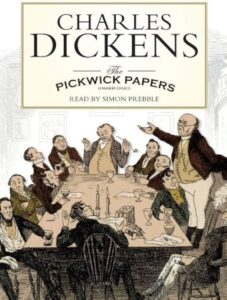
First published in serialized form between 1836 and 1837, The Pickwick Papers was the novel that transformed Charles Dickens into one of the most famous writers in England. Unlike many modern novels with a strict central plot, the book unfolds as a series of adventures following the cheerful and curious Samuel Pickwick and his companions as they travel across the country encountering eccentric people, strange misunderstandings, and bizarre situations.
Mr. Pickwick is the founder of the fictional Pickwick Club, a group dedicated to observing life and society. Although intelligent and kindhearted, he is also remarkably naïve, which often places him in embarrassing or chaotic situations. Throughout the journey, Dickens introduces a wide variety of memorable characters while simultaneously satirizing the legal system, social classes, and everyday absurdities of Victorian England.
The novel constantly shifts between comedy, adventure, social commentary, and emotional warmth. Some chapters feel almost like self-contained stories, filled with humorous encounters and unpredictable detours. This episodic structure gives the book an energetic and spontaneous feeling that remains charming even today.
Why You Should Read It
Readers who enjoy the wandering and unpredictable nature of Don Quixote will likely feel immediately at home in The Pickwick Papers. Dickens creates a world overflowing with eccentric personalities, humorous accidents, and satirical observations about society. The novel feels alive with movement and curiosity.
One of the book’s greatest strengths is its warmth. Even while criticizing hypocrisy and social absurdity, Dickens writes with enormous affection for humanity. Mr. Pickwick himself is impossible not to like. His innocence and optimism make him both funny and deeply sympathetic, much like Cervantes’ wandering knight.
The humor also feels surprisingly modern. Dickens excels at awkward situations, misunderstandings, exaggerated personalities, and witty dialogue. Yet beneath the comedy, there is genuine emotional sincerity. The novel repeatedly suggests that kindness and decency matter more than status or intellectual superiority.
For readers intimidated by some classic novels, The Pickwick Papers can also be a wonderful entry point into Dickens’ work because of its lighter tone and adventurous spirit. It captures the pleasure of simply following interesting characters through a constantly changing world.
How It Resembles Don Quixote
- Both novels follow wandering protagonists who encounter a wide variety of strange people and situations.
- Mr. Pickwick and Don Quixote are idealistic, sincere, and somewhat disconnected from the harsh realities around them.
- The episodic storytelling structure creates a sense of continuous adventure and discovery.
- Both books combine comedy with criticism of society and human behavior.
- Despite the humor, the protagonists possess genuine emotional dignity and kindness.
3. Gulliver’s Travels by Jonathan Swift
What Gulliver’s Travels Is About
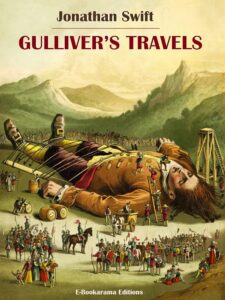
Published in 1726, Gulliver’s Travels by Jonathan Swift is often remembered as a fantasy adventure filled with tiny people and strange islands, but beneath its imaginative surface lies one of the sharpest works of satire ever written. The novel follows Lemuel Gulliver, a ship surgeon whose voyages lead him into a series of bizarre and unforgettable civilizations.
During his travels, Gulliver encounters the miniature inhabitants of Lilliput, the gigantic people of Brobdingnag, scientists obsessed with absurd experiments in Laputa, and the intelligent horses known as the Houyhnhnms. Each society reflects different aspects of human behavior, politics, vanity, greed, and irrationality.
At first, Gulliver approaches these worlds with curiosity and fascination, but as the novel progresses, his perspective on humanity becomes increasingly cynical. Swift uses these imaginary societies not merely for adventure, but as tools to criticize real political institutions, intellectual arrogance, social hypocrisy, and the darker aspects of human nature.
Although many people encounter simplified versions of the story as children, the original novel is deeply philosophical and surprisingly dark. It constantly forces the reader to question whether civilization itself is truly rational or merely another form of organized absurdity.
Why You Should Read It
If you appreciate the satirical and intellectual dimensions of Don Quixote, then Gulliver’s Travels is an essential read. Like Cervantes, Swift disguises profound criticism beneath humor, adventure, and absurd situations. The novel entertains the reader while simultaneously exposing the foolishness of society.
One of the most fascinating aspects of the book is how quickly its tone evolves. What begins as a strange adventure gradually becomes a philosophical exploration of pride, power, and human corruption. Swift constantly shifts between comedy and discomfort, forcing readers to laugh at situations that also feel disturbingly familiar.
The imagination displayed throughout the novel is extraordinary. Each civilization Gulliver visits possesses its own strange logic and social structure, allowing Swift to examine humanity from entirely different perspectives. In many ways, the book feels surprisingly modern because its criticisms of politics, vanity, and intellectual pretension remain relevant centuries later.
Readers who enjoy literature that combines entertainment with philosophical depth will find an enormous amount to appreciate here. Beneath the fantasy elements lies a brilliant and often unsettling reflection on what it truly means to be human.
How It Resembles Don Quixote
- Both novels use humor and absurdity to criticize society and human behavior.
- The protagonists travel through strange environments that reveal deeper philosophical truths.
- Adventure becomes a vehicle for satire and existential reflection.
- Both books blur the line between comedy and serious social criticism.
- Like Don Quixote, Gulliver gradually becomes emotionally transformed by his experiences and increasingly disconnected from ordinary society.
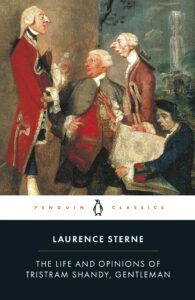
4. Tristram Shandy by Laurence Sterne
What Tristram Shandy Is About
Published between 1759 and 1767, The Life and Opinions of Tristram Shandy, Gentleman by Laurence Sterne is one of the strangest and most unconventional classics ever written. In theory, the novel is supposed to tell the life story of Tristram Shandy. In practice, however, the narrator becomes so distracted by tangents, philosophical reflections, jokes, and interruptions that he struggles to even explain his own birth.
The story constantly wanders away from its original purpose. Characters interrupt themselves, entire chapters become long digressions, and the narrator directly speaks to the reader with playful irony. Sterne intentionally breaks many of the traditional rules of storytelling, creating a novel that feels shockingly modern despite being written centuries ago.
Much of the humor comes from the eccentric personalities surrounding Tristram, especially his father Walter Shandy and Uncle Toby, whose strange obsessions and endless conversations create a chaotic but strangely charming atmosphere. Beneath the absurdity, however, the novel contains thoughtful reflections on memory, identity, time, language, and the limitations of human understanding.
Rather than focusing on plot, Tristram Shandy is fascinated by the unpredictability of the human mind itself. The novel embraces confusion, contradiction, and spontaneity in a way that few books dared to attempt during its era.
Why You Should Read It
Readers who admire the playful intelligence of Don Quixote will likely find Tristram Shandy fascinating. Sterne’s novel feels like a literary experiment constantly reinventing itself, using humor not only for entertainment but also to question how stories are told and how people perceive reality.
One of the book’s greatest strengths is its personality. The narrator feels alive, unpredictable, and deeply human. His endless digressions may sound chaotic at first, but they gradually become part of the novel’s unique charm. Reading the book often feels like listening to an unusually intelligent and eccentric person whose thoughts constantly spiral into unexpected directions.
The novel is also remarkably influential. Many techniques associated with modern literature — self-aware narration, fragmented storytelling, and direct interaction with the reader — appear here long before they became common. In some ways, Sterne was experimenting with literary forms centuries ahead of his time.
At the same time, the book remains genuinely funny. Its humor ranges from absurd misunderstandings to sophisticated philosophical irony, creating a reading experience that feels playful and intellectually stimulating at once.
How It Resembles Don Quixote
- Both novels constantly play with literary conventions and storytelling expectations.
- Humor is used not only for comedy, but also for philosophical reflection.
- The books are filled with eccentric characters whose unusual behavior reveals deeper truths about human nature.
- Both authors blur the line between seriousness and absurdity.
- Like Cervantes, Sterne creates a narrative that feels spontaneous, unpredictable, and deeply self-aware.
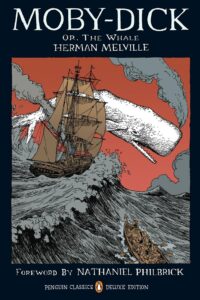
5. Moby-Dick by Herman Melville
What Moby-Dick Is About
Published in 1851, Moby-Dick by Herman Melville is far more than a novel about whaling. At the center of the story is Captain Ahab, the obsessive and deeply troubled commander of the Pequod, a whaling ship traveling across the oceans in search of the legendary white whale known as Moby Dick.
The story is narrated by Ishmael, a thoughtful sailor who joins the voyage without fully understanding the madness driving its captain. As the journey progresses, it becomes clear that Ahab’s pursuit of the whale is not merely personal revenge. The whale gradually transforms into something symbolic — a representation of fate, nature, God, evil, or even the meaningless chaos of existence itself.
Throughout the novel, Melville combines adventure, philosophy, theology, psychology, and long reflections about the sea and whaling. Some sections feel like thrilling maritime fiction, while others resemble philosophical essays exploring humanity’s desire to understand and conquer the unknown.
What makes Moby-Dick so enduring is the intensity of Ahab’s obsession. He becomes consumed by a vision so powerful that it slowly destroys both himself and everyone around him. The novel constantly asks whether greatness and madness are sometimes impossible to separate.
Why You Should Read It
Readers searching for books that capture the philosophical spirit of Don Quixote will find an extraordinary experience in Moby-Dick. Although the tone is much darker than Cervantes’ novel, both stories revolve around men driven by impossible ideals that isolate them from ordinary reality.
Captain Ahab is one of literature’s most unforgettable characters precisely because of his intensity. He refuses to accept the limits of human existence and becomes determined to challenge forces far beyond his control. Like Don Quixote, he transforms reality itself into part of his personal vision.
The novel is also filled with profound existential questions. Melville explores destiny, mortality, obsession, religion, and humanity’s struggle to find meaning in an overwhelming universe. At times, the book feels almost cosmic in scale, turning the ocean into a symbol of the unknown mysteries surrounding human life.
Despite its reputation as a difficult classic, Moby-Dick rewards patient readers with unforgettable imagery, powerful symbolism, and moments of extraordinary emotional and philosophical depth. It is one of those rare novels that grows larger the more one reflects upon it.
How It Resembles Don Quixote
- Both novels feature protagonists consumed by visions that separate them from ordinary society.
- Ahab and Don Quixote transform reality according to their personal obsessions and ideals.
- Adventure serves as a foundation for much deeper philosophical exploration.
- Both books examine the thin boundary between heroism, obsession, and madness.
- The protagonists become tragic figures because of their refusal to abandon impossible quests.
The Lasting Influence of Don Quixote on Literature
The Dreamer Archetype
One of the greatest contributions of Don Quixote to literature was the creation of the dreamer protagonist: characters who refuse to fully surrender to reality even when society considers their ideals foolish or irrational. Before Cervantes, heroes were often presented as confident and traditionally admirable figures. After Don Quixote, literature became increasingly interested in flawed, eccentric, obsessive, and emotionally conflicted protagonists.
This influence can be seen in countless novels across different centuries and genres. Prince Myshkin’s innocence, Gulliver’s shifting perception of humanity, Tristram Shandy’s chaotic narration, and Ahab’s obsession all carry traces of Cervantes’ revolutionary approach to character writing.
Why Readers Still Connect With These Stories
Modern readers continue to connect with books like these because the conflict at the center of Don Quixote remains timeless. Most people experience moments where reality feels disappointing, confusing, or emotionally empty. Stories about characters desperately trying to impose meaning upon the world continue to resonate because they reflect something deeply human.
Even when these protagonists fail, their refusal to completely abandon imagination, hope, or personal conviction often feels strangely admirable. There is something profoundly moving about characters who continue searching for meaning despite the absurdity or cruelty surrounding them.
That is why Don Quixote still feels alive centuries after its publication. It is not simply a novel about a delusional knight. It is a story about humanity’s endless desire to dream beyond the limits of reality itself.
Conclusion
Finding books truly similar to Don Quixote is not easy because Cervantes created something far more complex than a simple adventure novel. Its influence extends into philosophy, satire, psychology, and the very structure of modern storytelling. The books on this list do not imitate its plot, but they preserve many of the qualities that made Don Quixote immortal: idealistic protagonists, existential reflection, emotional depth, absurd humor, and the eternal conflict between imagination and reality.
Whether through Dostoevsky’s spiritual innocence, Dickens’ warm satire, Swift’s biting social criticism, Sterne’s experimental humor, or Melville’s obsessive tragedy, each of these novels captures a different part of Cervantes’ literary spirit.
If Don Quixote left a lasting impression on you, these books offer the opportunity to continue exploring that same fascinating mixture of philosophy, humanity, humor, and melancholy that has inspired readers for centuries.

Leave a Reply