
Few novels explore the human conscience as relentlessly as Fyodor Dostoevsky’s Crime and Punishment. Although the story begins with a brutal crime, its greatest source of tension is not the question of who committed it. The reader already knows the answer. What matters is what happens inside the criminal’s mind afterward.
Raskolnikov attempts to convince himself that his actions can be justified by reason. He imagines that extraordinary people may be allowed to cross moral boundaries when pursuing a supposedly greater purpose. However, his theory begins to collapse as guilt, fear, illness and isolation take control of his life.
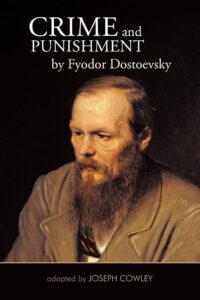
This combination of psychological fiction, philosophical debate and moral suffering is one reason readers continue searching for books like Crime and Punishment. Dostoevsky does not simply present a criminal waiting to be captured. He examines the dangerous distance between an intellectual theory and the human consequences of putting that theory into practice.
Readers who are still deciding whether to approach the novel can also visit our complete review of Crime and Punishment, where we discuss its characters, themes, difficulty and lasting appeal in greater detail.
Why Readers Look for Books Like Crime and Punishment
Finding a true replacement for Crime and Punishment is almost impossible. The novel combines a crime story, a psychological portrait, a social critique and a spiritual struggle in a way that remains distinctly Dostoevskian.
Nevertheless, many readers want another book that creates a similar feeling: the discomfort of entering the mind of a morally compromised character, the tension caused by an irreversible decision and the gradual destruction of the explanations that character once used to defend it.
The best recommendations are therefore not necessarily traditional detective novels. A mystery usually asks the reader to identify the criminal. Crime and Punishment, by contrast, asks something more disturbing: what happens when a person believes he has the right to commit a crime, only to discover that his own conscience refuses to accept the argument?
The novels selected below approach this question from different historical, cultural and philosophical perspectives. Some focus directly on murder and guilt. Others examine social oppression, political betrayal, existential alienation or intellectual pride. What connects them is their interest in crime and consequences rather than crime as a simple puzzle.
What Makes a Book Similar to Crime and Punishment?
A novel does not need to reproduce Raskolnikov’s exact story to resemble Dostoevsky’s masterpiece. The books in this list were chosen because they share one or more of the psychological, moral or narrative concepts that define the original novel.
- Psychological conflict within the mind of a criminal or morally compromised protagonist
- Guilt, paranoia, fear and emotional deterioration after an irreversible act
- Attempts to defend immoral behavior through intellectual or philosophical arguments
- Alienation and increasing separation from society
- The influence of poverty, inequality or social pressure on individual choices
- The conflict between personal responsibility and external circumstances
- Judgment imposed by the law, society or the character’s own conscience
- Questions about suffering, freedom, morality and the possibility of redemption
- Dark environments that intensify the protagonist’s mental instability
- Characters whose abstract ideas collapse when confronted by human reality
These concepts allow the list to move beyond superficial similarities. A book has not been included merely because it contains a murder, an investigation or an unhappy protagonist. Each recommendation offers a meaningful connection to the moral and psychological experience that makes Crime and Punishment so powerful.
An Important Note About These Recommendations
None of the novels on this list is a copy of Crime and Punishment. They do not all take place in nineteenth-century Russia, and their protagonists do not always resemble Raskolnikov in personality, motivation or response to guilt.
Some of the books belong to different literary movements and examine very different social problems. One may approach crime through racial inequality, another through existential philosophy and another through the intellectual arrogance of privileged students. Their plots, writing styles and moral conclusions can therefore differ considerably from Dostoevsky’s novel.
The purpose of this list is not to suggest that these stories are interchangeable. Instead, each book reflects a particular element found in Crime and Punishment: the mind of a murderer, the pressure of social inequality, the experience of judgment, the rationalization of violence or the gradual collapse of a person who believed himself to be above ordinary morality.
Readers should approach these recommendations as variations on related ideas. Together, they show how writers from different countries and periods have explored moral conflict, isolation and the consequences of crossing a boundary that cannot easily be crossed again.
1. The Tunnel by Ernesto Sábato
Among all the books like Crime and Punishment on this list, The Tunnel may offer the closest psychological experience. Ernesto Sábato’s short and disturbing novel places the reader inside the mind of Juan Pablo Castel, an Argentine painter who has murdered a woman named María Iribarne.
There is no mystery about Castel’s guilt. He confesses to the murder at the beginning of the story and then attempts to explain the chain of thoughts, suspicions and obsessions that led him to it. Like Dostoevsky, Sábato is less interested in discovering who committed the crime than in examining the mind of the person responsible.
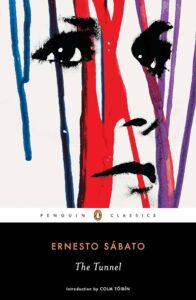
What Is The Tunnel About?
Juan Pablo Castel is a successful but emotionally isolated painter who believes that most people are incapable of truly understanding him. During an exhibition, he notices that María Iribarne is the only visitor who appears to recognize the meaning of a small detail in one of his paintings.
Castel becomes convinced that María possesses a unique connection to his inner world. What initially appears to be a desire for understanding gradually develops into an unhealthy obsession. He analyzes her words, movements and relationships, constantly searching for hidden meanings and possible signs of betrayal.
Because the story is told entirely from Castel’s perspective, the reader is trapped inside his interpretation of events. His arguments sometimes appear logical for a moment, but they are repeatedly distorted by jealousy, insecurity and paranoia. He does not simply experience reality; he reconstructs it until it confirms what he already fears.
The title represents this extreme isolation. Castel imagines human beings moving through separate tunnels, unable to communicate completely with one another. His brief belief that María can enter his private world gives him hope, but it also becomes the foundation of his obsession.
How Is The Tunnel Similar to Crime and Punishment?
The most obvious connection is that both novels reveal the murderer immediately. The central question is not whether Castel or Raskolnikov committed the crime. Instead, the reader must examine how each protagonist understands his actions and whether his explanations can survive moral scrutiny.
Both characters are intelligent, proud and deeply isolated. They believe that their way of seeing the world separates them from ordinary people. This sense of intellectual superiority allows them to dismiss other perspectives and transform personal assumptions into apparent truths.
Raskolnikov creates a theory suggesting that extraordinary individuals may cross moral boundaries for a greater purpose. Castel does not develop an equally elaborate philosophy, but he also uses reason to defend conclusions shaped by emotion. His jealousy becomes evidence, his suspicions become certainty and his obsession becomes a justification for control.
- Both stories are centered on the mind of a murderer rather than a traditional criminal investigation.
- Both protagonists suffer from extreme alienation and struggle to form healthy relationships.
- Both men use intellectual arguments to disguise irrational or immoral impulses.
- The reader watches paranoia gradually overpower the protagonist’s judgment.
- The crime becomes the result of a longer process of psychological deterioration.
- Both novels force readers to remain uncomfortably close to a morally compromised narrator or central character.
However, the two books are not copies of one another. Raskolnikov’s crime is connected to poverty, social conditions, philosophical ambition and his theory of extraordinary people. Castel’s crime develops primarily from possessiveness, jealousy and his desperate desire to be completely understood.
Their reactions are also different. Raskolnikov is divided between pride, guilt, fear and the possibility of redemption. Castel is more resistant to genuine self-examination. He explains his behavior in great detail, but explaining an action is not the same as accepting moral responsibility for it.
This difference makes the comparison valuable. Crime and Punishment explores whether a person can return to humanity after attempting to place himself above morality. The Tunnel presents a mind that becomes increasingly enclosed within its own interpretation of reality.
Why You Should Read The Tunnel
You should read The Tunnel if the most memorable sections of Crime and Punishment were the moments spent inside Raskolnikov’s unstable mind. Sábato creates a similarly claustrophobic atmosphere, but he does so in a much shorter and more concentrated novel.
The book is especially effective for readers interested in unreliable narration. Castel presents himself as someone capable of explaining events rationally, yet every page reveals how little he understands his own motives. Readers must constantly separate what may have happened from what Castel merely believes happened.
It is also an excellent choice for anyone seeking dark psychological fiction without the length and complexity of Dostoevsky’s novel. Its limited cast, direct confession and narrow perspective make it accessible, while its questions about loneliness, obsession and communication give it considerable philosophical depth.
The Tunnel does not reproduce the social world or spiritual journey of Crime and Punishment. Instead, it isolates one of Dostoevsky’s most powerful concepts: the terrifying experience of following an intelligent man whose reasoning becomes a prison built around himself.
2. Native Son by Richard Wright
Native Son approaches the ideas found in Crime and Punishment from a radically different social and historical perspective. Published in 1940, Richard Wright’s novel follows Bigger Thomas, a young Black man living in poverty on the South Side of Chicago during an era of racial segregation.
Although Bigger and Raskolnikov inhabit different societies, both are young men who feel trapped by their circumstances. Each experiences poverty, humiliation, anger and an intense separation from the people around him. After committing a crime, each protagonist enters a world dominated by fear, secrecy and psychological deterioration.
Native Son is not a retelling of Dostoevsky’s novel. Its central concerns are deeply connected to racism and the social conditions imposed upon Black Americans in the United States. However, it shares Dostoevsky’s interest in the relationship between the individual, the environment and the consequences of an irreversible action.
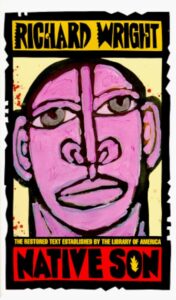
What Is Native Son About?
Bigger Thomas lives with his family in a cramped apartment and has few opportunities to change his circumstances. He is surrounded by poverty and by a society that repeatedly reminds him where he is permitted to live, work and move.
When Bigger accepts a job with a wealthy white family, he enters a social environment that makes him deeply uncomfortable. He is constantly aware that any misunderstanding could place him in danger. His fear affects the way he interprets even ordinary conversations and situations.
After a disastrous event results in a death, Bigger attempts to conceal what happened. His decisions become increasingly desperate as fear, anger and self-preservation begin to control him. Instead of functioning as a traditional mystery, the novel follows the person responsible and examines the psychological and social forces surrounding his actions.
Wright does not present Bigger as an uncomplicated victim or as a simple villain. He is capable of cruelty and must be confronted as a morally responsible individual. At the same time, the novel asks readers to consider how years of racism, poverty, restricted opportunities and constant fear have shaped his understanding of the world.
How Is Native Son Similar to Crime and Punishment?
Both novels place a poor and alienated young man at the center of a crime story. Raskolnikov lives in a suffocating room in Saint Petersburg, while Bigger lives with his family in overcrowded conditions in Chicago. Their physical environments reinforce their feelings of entrapment and separation.
After the crime, fear begins to dominate both protagonists. Every question appears threatening, every encounter may expose them and every attempt to regain control creates additional pressure. The reader knows who is responsible, so the tension comes from watching the characters react to the possibility of discovery.
Raskolnikov and Bigger also struggle with anger toward the social worlds around them. They feel humiliated by poverty and powerless in relation to people with greater wealth and influence. Their resentment does not excuse their actions, but it helps explain the emotional conditions in which those actions become possible.
- Both novels follow a poor young man after he commits a serious crime.
- Both protagonists experience intense alienation from society.
- Fear of discovery leads to paranoia and increasingly desperate decisions.
- Urban poverty contributes to the oppressive atmosphere of both stories.
- The novels examine the relationship between personal choices and social inequality.
- Both stories eventually move toward legal, moral and social judgment.
- The reader must confront a protagonist who is simultaneously human, frightening and morally responsible.
The most important difference is the way each protagonist understands his crime. Raskolnikov acts partly because he has developed a philosophical theory about extraordinary individuals who may be permitted to cross moral boundaries. He wants to test whether he possesses the strength to become one of them.
Bigger’s actions are not driven by the same kind of carefully constructed philosophy. His decisions emerge from fear, rage, social pressure and a lifetime of restricted possibilities. Where Raskolnikov attempts to rise above ordinary morality, Bigger often acts because he believes that society has left him almost no safe path forward.
This distinction changes the moral debate. Crime and Punishment asks what happens when intellectual pride encourages a man to treat another human life as an abstraction. Native Son asks how an oppressive society can help create the fear and violence it then condemns.
Neither novel completely removes responsibility from its protagonist. Instead, both complicate it. They force the reader to consider an uncomfortable question: how should an individual be judged when his choices are his own, but the world surrounding those choices has also shaped his anger, fear and desperation?
Crime, Poverty and Social Inequality
Poverty is important in both novels, but it functions differently in each one. Raskolnikov’s financial desperation contributes to his isolation and resentment, yet Dostoevsky places greater emphasis on his philosophy, pride and spiritual conflict.
In Native Son, poverty cannot be separated from racial segregation. Bigger’s limited opportunities are not simply the result of bad luck or personal failure. They are produced by institutions and social expectations that restrict where he can live, how he can work and how he is perceived by others.
Richard Wright uses Bigger’s story to expose a destructive cycle. Society fears him, denies him meaningful freedom and treats him as dangerous before he has committed the central crime. Bigger gradually begins to understand himself through the same fear and hostility directed toward him.
This does not make his harmful actions acceptable. Rather, it gives the novel its moral complexity. Readers must recognize both the damage Bigger causes and the social conditions that have contributed to the formation of his identity.
That conflict makes Native Son one of the most meaningful books like Crime and Punishment. Both works refuse to offer a comfortable separation between an evil individual and an innocent society. They show how personal guilt can exist alongside wider social failure.
How Bigger Thomas and Raskolnikov Are Different
Raskolnikov spends much of his story analyzing himself. Even when he misunderstands his motives, he possesses a strong intellectual vocabulary through which he examines guilt, power and morality.
Bigger is less able to articulate his emotional condition. Much of his identity has been formed by fear and by the expectations imposed upon him. He often reacts before he can fully understand what he is feeling, which gives his sections a sense of urgency and confinement.
The two characters also have different relationships with guilt. Raskolnikov’s internal conflict becomes increasingly spiritual and philosophical. Bigger’s experience is more closely tied to fear, social judgment and the realization that the public has already constructed a version of him that may be more powerful than the truth.
These differences are precisely why the comparison matters. Native Son takes several Dostoevskian questions and places them within the specific history of race in the United States. It demonstrates how similar forms of moral conflict can acquire different meanings in another culture and another century.
Why You Should Read Native Son
You should read Native Son if you appreciated the way Crime and Punishment combines psychological tension with social criticism. Richard Wright creates a story in which the protagonist’s fear becomes almost physically oppressive, making even quiet conversations feel dangerous.
The novel is especially powerful for readers interested in the relationship between crime and society. It does not permit an easy answer in which the protagonist is either completely innocent or entirely explained by his environment. Bigger remains responsible for his choices, but the society judging him must also confront its own role in creating the conditions surrounding those choices.
Native Son is darker and more politically direct than many of the other books on this list. It addresses racism, segregation and dehumanization in ways that can be intentionally uncomfortable. That discomfort is essential to the novel’s purpose.
For readers searching for psychological fiction about guilt, fear, inequality and the aftermath of crime, Native Son is an essential recommendation. It does not imitate Crime and Punishment; it transforms some of its central questions into a distinctly American examination of freedom, oppression and responsibility.
3. The Stranger by Albert Camus
The Stranger by Albert Camus is one of the most frequently recommended books like Crime and Punishment, but the connection between the two novels is more complicated than it may initially appear.
Both stories place a murderer at their center and explore the relationship between crime, judgment and society. However, Raskolnikov and Meursault respond to their actions in almost opposite ways. Raskolnikov is tormented by inner conflict, while Meursault appears emotionally detached from both his crime and the moral expectations surrounding him.
This difference is exactly what makes the comparison so valuable. Reading the two novels together reveals contrasting approaches to guilt, meaning, responsibility and the human desire to find a rational explanation for death.

What Is The Stranger About?
Published in 1942, The Stranger follows Meursault, a French Algerian office worker whose emotional behavior often seems disconnected from what society expects of him.
At the beginning of the novel, Meursault attends his mother’s funeral. Rather than expressing visible grief, he focuses on physical sensations such as heat, exhaustion and discomfort. His apparent indifference immediately establishes him as someone who does not perform emotions in the conventional way.
Later, during a tense encounter on an Algerian beach, Meursault kills an Arab man. The crime divides the novel into two distinct parts. The first follows the events leading to the shooting, while the second examines Meursault’s imprisonment, trial and confrontation with death.
During the trial, Meursault is judged for more than the murder. His behavior at his mother’s funeral, his relationships and his emotional detachment become evidence against his character. Society does not simply want to establish what he did; it wants him to provide an emotionally and morally acceptable explanation for who he is.
Meursault refuses to pretend that he feels something merely because other people expect it. His honesty can appear disturbing, selfish or strangely liberating, depending on the reader’s interpretation. This tension transforms a relatively short crime story into a powerful examination of alienation, death and the search for meaning.
How Is The Stranger Similar to Crime and Punishment?
The clearest similarity is that both novels focus on a known murderer rather than the solution of a mystery. Readers do not need to identify the criminal. Instead, they observe how the crime changes the protagonist’s relationship with himself and with the society judging him.
Both Raskolnikov and Meursault are isolated characters who struggle to participate in ordinary social life. Their behavior appears incomprehensible to the people around them, and neither man can easily communicate what separates him from others.
The two protagonists also become subjects of moral interpretation. Raskolnikov is questioned by investigators, friends and members of his family, but his most severe judgment comes from within his own conscience. Meursault faces a courtroom that interprets his personality and emotional behavior as signs of moral corruption.
- Both novels reveal the murderer instead of constructing a traditional mystery.
- Both protagonists experience profound alienation from society.
- The crime becomes the beginning of a philosophical and psychological conflict.
- Both stories examine the difference between legal guilt and moral guilt.
- Society attempts to interpret the protagonist’s personality through his crime.
- Death forces both characters to confront the meaning of their existence.
- Each novel questions whether human life follows a clear and understandable moral order.
Another important connection is the relationship between crime and explanation. Raskolnikov possesses an elaborate theory about extraordinary individuals who may be entitled to cross moral boundaries. Meursault does not construct an equivalent philosophical defense, but the people judging him desperately search for a motive that will make his behavior understandable.
In both stories, simple explanations prove insufficient. Poverty alone cannot explain Raskolnikov’s crime, just as anger alone cannot fully explain Meursault’s actions. The novels leave readers with disturbing questions about freedom, choice and the limits of rational interpretation.
How Meursault and Raskolnikov Are Different
The greatest difference between the protagonists is their relationship with guilt. Raskolnikov is internally divided almost immediately after committing murder. He becomes physically ill, suspicious and incapable of maintaining the emotional distance his theory requires.
His suffering reveals that the crime has violated something within him. Although he continues trying to defend his reasoning, his behavior suggests that his conscience has already rejected the argument.
Meursault does not experience the same kind of psychological collapse. He does not spend the novel desperately seeking forgiveness, nor does he interpret his actions through a religious understanding of sin. His emotional detachment creates a different kind of discomfort because readers cannot rely on visible remorse to restore a familiar moral order.
Raskolnikov wants to prove that he is extraordinary. He imagines that committing a crime will demonstrate his ability to rise above ordinary human limitations. Meursault has no comparable ambition. He does not seek greatness, power or historical importance. His separation from society comes from his unwillingness—or inability—to pretend that life possesses meanings he does not experience.
The two novels also offer different treatments of redemption. Crime and Punishment leaves open the possibility that love, suffering and moral recognition may lead Raskolnikov toward spiritual renewal. The Stranger moves toward an acceptance of mortality and an indifferent universe rather than conventional repentance.
These differences mean that The Stranger should not be treated as a modern version of Dostoevsky’s story. Camus takes some of the same concepts—murder, judgment, isolation and death—and uses them to reach a very different philosophical destination.
Crime, Judgment and Society
One of the most compelling similarities between the novels is that the protagonists are judged for more than their criminal acts.
Raskolnikov’s crime becomes connected to his pride, theories and treatment of other people. The question is not merely whether he violated the law, but whether he attempted to remove himself from the moral community shared by ordinary human beings.
Meursault’s trial follows a similar pattern. The courtroom becomes interested in his apparent lack of grief after his mother’s death. His behavior at the funeral is treated as evidence that he lacks the emotional qualities society associates with humanity and moral decency.
This creates a disturbing contradiction. Meursault is legally on trial for murder, yet he appears to be morally condemned because he did not behave like a grieving son. His refusal to perform socially acceptable emotions becomes almost as important as the crime itself.
Dostoevsky and Camus therefore ask related questions about judgment:
- Does society judge only a person’s actions, or does it also judge his personality?
- Can legal punishment accurately represent moral responsibility?
- Is visible remorse necessary before society recognizes someone as human?
- Can a person remain outside conventional morality without becoming dangerous?
- Who has the authority to decide what another person’s emotions should look like?
Neither novel gives readers an easy answer. Raskolnikov’s suffering makes him emotionally understandable without making his crime acceptable. Meursault’s honesty may appear admirable in some moments, but it does not erase the life he has taken.
Existential Questions and the Absurd
The Stranger is closely associated with Camus’s philosophy of the absurd. In this context, the absurd arises from the conflict between the human desire for meaning and a universe that offers no clear response.
Meursault does not discover a hidden explanation that makes his life or approaching death fair. Instead, he confronts the possibility that the universe is indifferent to human hopes, suffering and moral expectations.
Raskolnikov also attempts to create meaning in an uncertain world, but he does so through an intellectual theory. He divides humanity into ordinary people, who must obey the law, and extraordinary individuals, who may supposedly violate it in pursuit of a greater purpose.
His failure demonstrates the danger of forcing human lives into abstract categories. The people affected by his crime cannot be reduced to pieces in a philosophical experiment, and Raskolnikov cannot transform himself into an extraordinary man simply by declaring that ordinary morality does not apply to him.
Meursault reaches a different conclusion. Rather than constructing a theory that elevates him above other people, he gradually accepts the absence of a universal explanation. Where Raskolnikov’s philosophy collapses under the weight of conscience, Meursault confronts a world that may never provide the moral certainty people desire.
Readers interested in these questions can also explore our complete list of books like The Stranger, featuring more novels about absurdity, isolation and existential conflict.
Why You Should Read The Stranger
You should read The Stranger if the philosophical questions in Crime and Punishment interested you as much as its psychological suspense.
Camus’s novel is much shorter and stylistically more restrained than Dostoevsky’s work. Its direct prose, limited cast and simple structure make it accessible, but the questions beneath that simplicity can remain with readers long after the final page.
The book is especially suitable for readers interested in existential literature, alienated protagonists and stories in which a courtroom becomes a place for judging an entire personality rather than a single action.
It is also worth reading because it provides a revealing contrast to Raskolnikov. One protagonist desperately struggles against guilt and searches for a justification capable of saving his pride. The other refuses to invent feelings or meanings simply to satisfy the people around him.
The Stranger does not recreate the emotional intensity, religious concerns or social complexity of Crime and Punishment. Instead, it examines several related concepts from an almost opposite perspective. That makes it not only one of the best books like Crime and Punishment, but also one of the most useful books to read beside it.
4. Under Western Eyes by Joseph Conrad
Under Western Eyes by Joseph Conrad is one of the most intellectually interesting books like Crime and Punishment. Unlike the other recommendations on this list, its relationship with Dostoevsky’s novel is not based only on a few shared themes. Literary critics have long recognized clear parallels between the two works.
Both novels follow an isolated Russian student whose peaceful life is destroyed by a sudden encounter with political violence. However, Razumov does not commit the central assassination in Conrad’s story. His defining action is an act of betrayal that places him between revolutionaries, government authorities and his own conscience.
This difference is important. Under Western Eyes is not a retelling of Raskolnikov’s crime. Instead, Conrad uses a different moral decision to examine familiar Dostoevskian concepts: guilt, isolation, ideological conflict, confession and the psychological consequences of treating another person’s life as a problem that must be removed.

What Is Under Western Eyes About?
The novel follows Kyrilo Razumov, a serious university student living in Saint Petersburg during a period of revolutionary unrest in the Russian Empire. He has no close family and dreams of creating a stable future through academic success and government service.
Razumov attempts to remain outside politics. He is neither a passionate revolutionary nor a devoted defender of the state. His primary ambition is to study, establish a respectable career and protect the limited security he has built for himself.
That carefully controlled life collapses when Victor Haldin, a revolutionary student, unexpectedly appears in Razumov’s apartment. Haldin has participated in the assassination of a powerful government official and believes Razumov will help him escape.
Haldin’s trust places Razumov in an impossible position. If he helps the revolutionary, he risks arrest, punishment and the destruction of his future. If he turns Haldin over to the authorities, he must live with the knowledge that he betrayed a man who approached him as a friend.
Razumov chooses to inform the authorities. Haldin is captured and executed, but the decision does not restore Razumov’s former life. Instead, government officials recognize that his apparent connection to the revolutionary movement could make him useful.
Razumov is eventually drawn into the world of political espionage and sent to Geneva, where Russian revolutionaries living in exile believe he was Haldin’s trusted companion. Among them are Haldin’s mother and his sister, Natalia, who hope Razumov can tell them about the young man’s final days.
The situation forces Razumov to live inside a false identity. He must deceive revolutionaries who trust him, cooperate with authorities he does not respect and conceal the truth from a family that treats him with affection.
What begins as an act of self-preservation gradually becomes a profound crisis of identity. Razumov discovers that avoiding legal punishment does not free him from moral conflict. The betrayal continues to exist within every conversation, relationship and silence.
How Is Under Western Eyes Similar to Crime and Punishment?
Razumov and Raskolnikov are both intelligent, solitary students living in Saint Petersburg. Neither possesses a secure position in society, and both view intellectual achievement as a way to escape vulnerability and insignificance.
Their lives are transformed by a single decision that cannot be reversed. Raskolnikov commits murder in an attempt to test his theory of extraordinary individuals. Razumov betrays Haldin because he believes that doing so will protect his future.
Both men initially attempt to explain their actions through reason. Raskolnikov insists that the victim was harmful and that her money might have been used for better purposes. Razumov convinces himself that he has no responsibility toward a revolutionary who entered his home and placed him in danger without permission.
In each case, the argument contains an element of truth. Haldin has involved Razumov in a dangerous situation, just as Raskolnikov can identify genuine injustice and suffering in the world around him. Nevertheless, the protagonists use these facts to avoid confronting the human cost of their decisions.
- Both novels follow an isolated Russian university student.
- Both protagonists make an irreversible moral decision under intense pressure.
- Each man attempts to protect himself through intellectual reasoning.
- Political and philosophical ideas become inseparable from personal responsibility.
- Both characters become increasingly paranoid while speaking with government officials.
- Legal danger is accompanied by a more persistent crisis of conscience.
- Confession becomes necessary before either protagonist can recover an honest relationship with other people.
- Both novels examine the destructive consequences of extreme alienation.
Another strong similarity appears in the protagonists’ relationships with the authorities. Raskolnikov’s conversations with Porfiry Petrovich become psychological battles in which every word might reveal his guilt. Razumov experiences a comparable fear during his encounters with Mikulin, a government official who understands that pressure and uncertainty can be more effective than direct accusation.
Neither man knows exactly how much the authorities understand. As a result, ordinary conversations become threatening. Silence appears suspicious, explanations become dangerous and attempts to appear calm only increase the characters’ awareness of their own instability.
However, the nature of their guilt is different. Raskolnikov is responsible for the murders he commits. Razumov does not kill Haldin himself, but he knowingly delivers him to a government that will execute him.
Conrad therefore examines whether betrayal can create a psychological burden comparable to direct violence. Razumov tries to maintain a clear distinction between himself and the political forces surrounding him, but the novel repeatedly demonstrates that neutrality becomes impossible once he has made his choice.
Political Ideas and Personal Responsibility
Both Dostoevsky and Conrad explore societies filled with radical political ideas, government repression and young intellectuals who believe that history may justify violence.
In Crime and Punishment, Raskolnikov transforms historical figures such as Napoleon into evidence for his theory. He imagines that exceptional individuals can violate existing laws when creating a new social order.
Under Western Eyes expands the political conflict beyond one man’s private theory. Razumov becomes trapped between an authoritarian government and revolutionary groups that also demand loyalty, secrecy and sacrifice.
Conrad does not present either side as morally simple. The government uses surveillance, manipulation and fear. The revolutionaries speak about freedom but can also reduce individuals to instruments of a political cause.
Haldin assumes Razumov will help him because they are fellow students and fellow Russians. The authorities assume Razumov can be transformed into an informer because he has already betrayed Haldin. In both cases, other people interpret Razumov according to the role they need him to perform.
This pressure gradually destroys his sense of identity. Before meeting Haldin, Razumov believes he can build a life through discipline and remain independent from political conflict. After the betrayal, he is known by everyone through relationships and beliefs that do not accurately represent him.
Raskolnikov experiences a similar destruction of identity. He commits murder to prove that he belongs among extraordinary people, but his suffering reveals that the identity created by his theory is false. Both characters discover that abstract ideas cannot erase ordinary human dependence, compassion and responsibility.
Joseph Conrad’s Literary Response to Dostoevsky
The similarities between Under Western Eyes and Crime and Punishment have been recognized since Conrad’s novel first appeared. Critics have compared Razumov with Raskolnikov and identified additional echoes of Dostoevsky’s political novel Demons.
However, describing the book as a simple imitation would be misleading. Conrad had a complicated relationship with Russian literature and with Dostoevsky in particular. His novel engages with Dostoevskian characters and situations while questioning the way Russia, revolution and spiritual suffering were represented.
One of Conrad’s major changes is the use of an English narrator living in Geneva. This narrator obtains access to Razumov’s written account but repeatedly admits that he cannot completely understand the Russian experiences he is describing.
The title Under Western Eyes therefore draws attention to perspective. Russia and its political conflicts are being presented to Western readers through an observer whose understanding is limited by language, culture and distance.
This creates another layer of uncertainty. Readers are not placed directly inside Razumov’s mind in the same way they follow Raskolnikov. Instead, Razumov’s experiences are filtered through documents, translations and the interpretations of another person.
The structure reinforces one of the novel’s central questions: can one person ever fully understand the political, cultural and emotional reality of another?
Conrad’s response to Dostoevsky is therefore both literary and philosophical. He borrows recognizable elements—a Russian student, political violence, psychological interrogation, guilt and confession—but reorganizes them into a novel about betrayal, espionage and the difficulty of interpreting another culture.
Razumov and Raskolnikov: Two Different Paths to Confession
Confession plays an essential role in both novels because it allows the protagonists to stop treating other people as objects inside a private intellectual struggle.
Raskolnikov’s isolation depends on secrecy. As long as he refuses to confess, every relationship is affected by the knowledge he conceals. He cannot accept the compassion offered by Sonia without also confronting the truth about what he has done.
Razumov faces a similar conflict when he meets Natalia. She believes he was one of her brother’s closest companions and approaches him with trust. Her sincerity makes his deception increasingly difficult to maintain.
Razumov’s feelings for Natalia also force him to recognize the human reality behind his betrayal. Haldin can no longer remain merely a reckless revolutionary who endangered his future. He becomes a brother whose death has caused lasting suffering to people Razumov has come to know.
In both stories, confession does not erase the consequences of the original act. It does not restore the dead or remove the need for punishment. Its importance comes from the protagonist’s decision to abandon deception and accept membership in the human community he previously rejected.
Nevertheless, Conrad’s treatment of confession is more politically pessimistic. Razumov is caught within systems that punish honesty as well as betrayal. Telling the truth may free his conscience, but it cannot guarantee safety, forgiveness or a peaceful future.
How Under Western Eyes Is Different from Crime and Punishment
The two novels differ significantly in style and focus. Crime and Punishment remains close to Raskolnikov’s physical and emotional instability, creating an intense psychological atmosphere that often feels feverish and immediate.
Under Western Eyes is more distant and structurally complex. Conrad uses an external narrator, written records and shifts in time to make readers question how the story is being interpreted.
The novels also reach different conclusions about political ideology. Dostoevsky focuses heavily on Raskolnikov’s individual theory and his possible spiritual transformation. Conrad examines entire networks of revolutionaries, spies, exiles and government officials.
Religion and redemption are more central to Dostoevsky’s moral vision. Conrad’s novel offers confession and human connection, but it does not provide the same clear possibility of spiritual rebirth.
These differences may make Under Western Eyes more challenging for some readers. Its politics, narrative structure and deliberate uncertainty require attention. Yet they also prevent the book from becoming a copy of Crime and Punishment.
It is a separate work that uses comparable situations to ask different questions about identity, loyalty and the possibility of remaining morally independent in a society controlled by competing forms of power.
Why You Should Read Under Western Eyes
You should read Under Western Eyes if you were fascinated by the political arguments, psychological interrogations and crisis of conscience in Crime and Punishment.
It is particularly suitable for readers who want a novel that remains close to the Russian setting of Dostoevsky while offering a different cultural perspective. Conrad writes about Russian revolutionaries and authorities as an outsider, making the limits of Western interpretation part of the story itself.
The book also offers one of the most morally complex protagonists on this list. Razumov is neither a heroic revolutionary nor a loyal supporter of the government. His first decision is understandable as an attempt at self-preservation, yet it leads him into deeper forms of dishonesty and complicity.
Readers interested in espionage, political fiction and morally compromised characters will find much to examine. The novel shows how authoritarian states and revolutionary movements can both place abstract causes above individual lives.
Under Western Eyes is not the closest recommendation in terms of plot. Razumov is a betrayer rather than the central murderer, and Conrad’s narrative style differs considerably from Dostoevsky’s.
However, it may be the most meaningful literary companion to Crime and Punishment. It transforms the story of an isolated Russian student, an irreversible decision and a tormented conscience into a wider examination of political power, loyalty and the human need to confess.
5. The Secret History by Donna Tartt
The Secret History by Donna Tartt moves the central ideas of Crime and Punishment from the streets of nineteenth-century Saint Petersburg to an elite American college. Instead of following one isolated intellectual who believes he may stand above conventional morality, the novel presents an entire group of students who gradually become separated from the ethical world around them.
Published in 1992, the novel combines psychological fiction, campus drama and an inverted murder mystery. Readers learn very early that a student named Bunny Corcoran has been killed by his friends. The suspense does not depend on discovering who committed the murder. It comes from understanding why they did it and watching the group deteriorate under the pressure of secrecy, fear and guilt.
This structure makes The Secret History an excellent modern recommendation for readers searching for books like Crime and Punishment. Donna Tartt does not recreate Raskolnikov’s story, and her characters occupy a social world very different from his. Nevertheless, both novels examine what happens when intelligent people convince themselves that ordinary moral restrictions do not fully apply to them.

What Is The Secret History About?
The story is narrated by Richard Papen, a young man from California who transfers to Hampden College, a fictional liberal arts institution in Vermont. Richard feels embarrassed by his modest and unhappy background, so he begins inventing a more sophisticated identity for himself.
He soon becomes fascinated by a small and exclusive group of students who study ancient Greek under the charismatic professor Julian Morrow. The group consists of the brilliant and commanding Henry Winter, the sociable Bunny Corcoran, the twins Charles and Camilla Macaulay and the elegant Francis Abernathy.
To Richard, these students seem to inhabit a world of beauty, intelligence and privilege. They dress differently, speak confidently and appear detached from the ordinary concerns of campus life. Their knowledge of ancient languages and philosophy gives them an aura of mystery that Richard desperately wants to enter.
However, the group’s intellectual isolation has dangerous consequences. Under Julian’s influence, the students begin treating ancient Greek ideas not merely as subjects to study but as principles that might offer access to a more intense and transcendent form of existence.
Their search takes them beyond harmless academic experimentation. After a secret event leads to a death, Bunny discovers enough information to threaten the others. His behavior becomes increasingly unpredictable, and the group begins to view him not as a friend but as a danger that must be controlled.
Henry eventually organizes Bunny’s murder, and the other students participate in the plan or accept it through silence. Because Richard narrates the story years later, readers know the outcome from the opening pages. The novel’s real subject is the path that leads the students to murder and the damage that follows.
Once the crime has been committed, the group does not return to its former life. Relationships begin to collapse under suspicion, substance abuse, resentment and fear. The intellectual unity that once made the students appear powerful gradually reveals itself as emotional dependency and moral isolation.
How Is The Secret History Similar to Crime and Punishment?
The strongest connection between the novels is the way their characters use ideas to separate themselves from ordinary morality.
Raskolnikov develops a theory dividing humanity into ordinary and extraordinary people. According to his reasoning, certain exceptional individuals may be permitted to violate moral laws if their actions contribute to a greater historical purpose.
The students in The Secret History do not reproduce this theory exactly. Their ideas arise from classical philosophy, aestheticism, privilege and their desire to experience something beyond the limitations of ordinary life. However, they also begin to behave as though intelligence and refinement place them outside the moral rules followed by everyone else.
The similarity becomes especially clear in Henry Winter. Henry is highly educated, calm and intellectually confident. He tends to evaluate human problems as abstract puzzles that can be solved through planning and reason.
When Bunny becomes a threat, Henry treats murder as a practical solution. The victim’s humanity is gradually replaced by a calculation: if Bunny remains alive, the group may be exposed; if he dies, the others may preserve their freedom.
Raskolnikov performs a comparable transformation when thinking about Alyona Ivanovna. Rather than confronting her as a human being, he reduces her to an obstacle whose removal might supposedly produce useful consequences.
- Both novels reveal the identity of the murderer instead of functioning as traditional mysteries.
- Intelligent characters attempt to place themselves above conventional morality.
- Murder is rationalized as a necessary or potentially beneficial act.
- The perpetrators become increasingly separated from ordinary society.
- The consequences of the crime matter more than discovering who committed it.
- Guilt, fear and paranoia damage the characters’ ability to think clearly.
- Intellectual theories collapse when confronted by suffering and human reality.
- The novels examine the difference between appearing sophisticated and possessing genuine moral wisdom.
Another similarity is the division between careful preparation and psychological reality. A murder may appear manageable when considered as an abstract plan, but the people responsible cannot control everything that follows.
Raskolnikov imagines that his intelligence will allow him to commit the perfect crime. Instead, chance, illness and his unstable emotions immediately interfere with the plan.
Henry is a more effective organizer, yet even he cannot control the emotional consequences of Bunny’s death. The group may avoid immediate arrest, but its members cannot restore their former relationships or eliminate the knowledge they share.
Both novels therefore challenge the belief that intelligence provides mastery over moral consequences. A person may plan the physical act of murder, but no calculation can completely predict what the crime will do to the mind, identity and relationships of the murderer.
From Raskolnikov to a Group of Morally Compromised Students
Crime and Punishment concentrates its moral conflict primarily within Raskolnikov. Other characters influence his journey, but the theory, crime and psychological collapse belong largely to one person.
The Secret History distributes these elements across a group. Henry provides much of the planning and intellectual authority. Richard observes, admires and cooperates. Francis, Charles and Camilla participate in different ways while attempting to survive the consequences.
This collective structure changes the nature of responsibility. Each student can privately imagine that someone else is more guilty. Henry designed the plan, but the others allowed it to proceed. Richard did not create the original crisis, yet he chooses loyalty to the group over intervention.
The characters protect themselves by dividing responsibility among several people. Because no single student carries the entire burden, each one can temporarily avoid confronting the full meaning of the crime.
Raskolnikov also tries to distance himself from responsibility, but he does so through philosophy. He claims that the murder might serve a greater purpose and that the victim’s life possesses little value. Tartt’s students use group loyalty, necessity and self-preservation in a similar way.
The result could be described as a collective version of Raskolnikov’s moral conflict. Instead of one man repeating arguments inside his own mind, a group of friends reinforces the explanations its members need to believe.
This makes their isolation especially dangerous. A solitary person may still be challenged by friends, relatives or society. A closed group can create its own standards and confirm its own beliefs until immoral behavior begins to appear reasonable.
Intellectual Pride and the Illusion of Superiority
Both novels question the assumption that intelligence naturally produces moral superiority.
Raskolnikov is educated and capable of sophisticated reasoning, but his intelligence allows him to construct excuses that a less theoretical person might never consider. He does not lack the ability to think; he misuses that ability to place distance between himself and the suffering of others.
The students in The Secret History make a related mistake. Their knowledge of Greek, philosophy, art and history gives them cultural sophistication, but it does not necessarily give them wisdom, compassion or emotional maturity.
Julian encourages the students to see themselves as exceptional. His private class creates an atmosphere in which belonging to the group becomes proof of intelligence and distinction. The students begin to define themselves in opposition to ordinary people, whom they often treat as boring, vulgar or incapable of understanding them.
This elitism contributes directly to their alienation. The group becomes increasingly dependent on its own approval, while outsiders appear less real and less important.
Raskolnikov’s theory depends on a similar division. He imagines humanity separated into those who must obey and those who possess the right to command. In both novels, this division allows privileged thinkers to transform other people into categories.
The characters’ downfall exposes the weakness of their supposed superiority. Their education does not protect them from jealousy, fear, addiction, violence or self-deception. Beneath their cultivated appearance, they remain vulnerable human beings struggling with consequences they cannot control.
Why Revealing the Murder Early Makes the Story More Powerful
The Secret History announces Bunny’s murder at the beginning. This decision removes the question that normally drives a mystery novel: who killed the victim?
Instead, the reader asks why the murder happened, how the characters reached that point and whether their friendship could ever survive it.
Crime and Punishment uses a comparable structure. Readers accompany Raskolnikov before, during and after his crime. The investigators may need to prove his guilt, but the audience already knows the truth.
By revealing the culprit, both novels shift attention from evidence to psychology. A hidden murderer can remain an abstract threat. A known murderer must be examined as a human being whose thoughts may be understandable even when his actions remain indefensible.
This creates a particularly uncomfortable reading experience. Richard is an appealing narrator in many respects. He is insecure, lonely and desperate to belong. Readers may understand why he is attracted to the group long before they recognize how far his need for acceptance will carry him.
That sympathy becomes morally complicated once Richard participates in the conspiracy. Tartt forces readers to confront how admiration, loyalty and passivity can draw someone into actions he might never have chosen alone.
Raskolnikov creates a similar conflict. His poverty, love for his family and moments of generosity make him emotionally complex. Understanding his suffering does not excuse his crime, but it prevents the reader from treating him as a simple monster.
Both novels demonstrate that psychological understanding and moral approval are not the same thing. Literature can enter the mind of a murderer without asking the reader to agree with him.
Guilt, Paranoia and the Collapse of the Group
The aftermath of Bunny’s death reveals that escaping immediate legal punishment does not mean escaping the consequences of the crime.
The students become increasingly suspicious of one another. Old tensions grow more dangerous because every disagreement carries the possibility of betrayal. Each character knows enough to destroy the others, making friendship inseparable from mutual fear.
Charles becomes particularly unstable, while Francis experiences intense anxiety. Richard attempts to remain attached to the romantic image he once created around the group, even as the reality becomes impossible to ignore.
Henry appears more controlled, but his calmness does not necessarily demonstrate moral strength. His ability to treat death as an intellectual problem may be one of the clearest signs of his separation from ordinary human feeling.
Raskolnikov’s psychological deterioration is more concentrated and physically dramatic. He suffers from fever, confusion and overwhelming suspicion. Tartt spreads comparable pressure among several characters, showing how a shared secret can damage an entire social structure.
In both books, paranoia is not created only by the police. It comes from the characters’ awareness that their lives depend on maintaining a lie.
Every conversation becomes dangerous because it may reveal too much. A harmless comment can sound like an accusation, and an unexpected visit can appear to signal exposure. The characters become trapped inside the meaning of their own actions.
How The Secret History Is Different from Crime and Punishment
Despite these similarities, The Secret History is not a modern copy of Dostoevsky’s novel.
The most obvious difference is social position. Raskolnikov lives in extreme poverty and feels humiliated by his inability to support himself or help his family. Many of Tartt’s students possess money, social status and educational privilege.
Richard’s background is less wealthy, but his desire to escape it leads him to imitate the habits and values of his privileged friends. Poverty contributes to Raskolnikov’s resentment, while the relative privilege of Tartt’s group contributes to its sense of exemption from normal consequences.
The novels also have different spiritual concerns. Dostoevsky examines sin, suffering, confession and the possibility of redemption through love and religious faith. Tartt’s story is more skeptical about whether the characters will achieve meaningful moral renewal.
Another difference is the role of beauty. The students are attracted to ancient culture, elegant surroundings and aesthetic experience. Their pursuit of beauty gradually becomes disconnected from ethical responsibility.
Crime and Punishment focuses more directly on social suffering, philosophical radicalism and the spiritual recovery of an individual. The Secret History examines elitism, group psychology and the danger of valuing beauty or intellectual distinction above human life.
The writing styles are also different. Dostoevsky creates a feverish urban atmosphere filled with arguments, interruptions and emotional intensity. Tartt uses reflective narration, detailed settings and a slower sense of approaching disaster.
These differences are not weaknesses in the comparison. They show how similar concepts can be transformed by another period, culture and literary tradition.
Why You Should Read The Secret History
You should read The Secret History if you want a modern novel about intelligent characters who cross a moral boundary and then discover that ideas cannot protect them from human consequences.
The book is particularly appealing to readers who enjoyed Raskolnikov’s theory of extraordinary people. Henry and the other students offer a different version of the same dangerous temptation: the belief that education, beauty or exceptional ability can place someone beyond ordinary ethical restrictions.
It is also an excellent recommendation for readers who prefer a strong atmosphere and a larger cast. The isolated college, exclusive Greek class and complicated friendships create a closed world that becomes increasingly oppressive.
Unlike a conventional murder mystery, the novel does not rely primarily on surprising readers with the identity of the killer. Its tension comes from watching the characters approach a crime that has already been revealed and then observing the slow collapse of everything they hoped the murder would preserve.
The Secret History is longer and more socially focused than some of the other recommendations in this article, but its accessible modern setting may make it an effective entry point for readers interested in psychological fiction.
The novel does not offer the same religious vision, poverty-driven conflict or individual path toward redemption found in Crime and Punishment. What it shares is the unsettling idea that intellectual pride can make violence appear reasonable—and the equally important recognition that no theory can prevent the consequences from becoming painfully human.
Which Book Is Most Similar to Crime and Punishment?
No single recommendation reproduces everything that makes Crime and Punishment distinctive. Dostoevsky combines murder, poverty, philosophy, spiritual suffering, social criticism and the possibility of redemption within one novel.
The best choice therefore depends on which part of Raskolnikov’s story affected you most. Some readers are primarily interested in the mind of the murderer, while others are drawn to the novel’s treatment of inequality, judgment or dangerous intellectual theories.
For the Closest Psychological Experience: The Tunnel
The Tunnel is probably the closest recommendation for readers who want another intense journey through the mind of a murderer.
Like Crime and Punishment, it reveals the criminal immediately and replaces the traditional mystery with a psychological question: how does an intelligent and isolated man convince himself that his destructive reasoning is justified?
Juan Pablo Castel resembles Raskolnikov through his pride, loneliness, obsessive thinking and inability to maintain a healthy connection with other people. Both protagonists analyze their actions extensively, yet their intelligence often becomes a tool for self-deception rather than genuine understanding.
The major difference is that Castel’s crime grows from jealousy and obsession, while Raskolnikov’s is connected to poverty, philosophy and his theory of extraordinary individuals. Even so, readers looking for claustrophobic psychological fiction will probably find The Tunnel the most immediately familiar book on this list.
For Crime and Social Inequality: Native Son
Native Son is the strongest recommendation for readers interested in the relationship between crime, poverty and oppressive social conditions.
Bigger Thomas and Raskolnikov are both poor young men who feel trapped by the worlds around them. Their resentment, isolation and fear shape the choices they make, although neither novel allows social suffering to erase personal responsibility.
Richard Wright places this conflict within the history of racial segregation in the United States. The result is not a copy of Dostoevsky’s story, but a powerful transformation of its central question: how should society judge an individual whose actions are morally wrong when that same society has contributed to his fear, anger and lack of opportunity?
Readers who appreciated the social criticism in Crime and Punishment may find Native Son the most challenging and politically significant recommendation.
For Existential Questions: The Stranger
The Stranger is the best choice for readers who were most interested in questions about death, freedom, judgment and the meaning of human existence.
Meursault and Raskolnikov both become alienated murderers judged by society, but their emotional responses are almost opposite. Raskolnikov is consumed by guilt and contradiction, while Meursault appears resistant to the emotional language through which society expects him to explain himself.
This difference makes the two novels especially rewarding to read together. Dostoevsky explores the collapse of a theory that attempts to rise above morality. Camus examines what remains when a person refuses to invent a comforting moral or cosmic explanation.
Readers searching for a shorter and more restrained work of existential literature should begin with The Stranger.
For Russian Politics and Moral Guilt: Under Western Eyes
Under Western Eyes is the most suitable recommendation for readers who want to remain close to the Russian political and intellectual world associated with Dostoevsky.
Razumov is not a murderer like Raskolnikov, but he is an isolated student whose attempt to protect his future leads to betrayal, secrecy and a severe crisis of conscience. His story examines how political systems can transform an individual into an instrument.
The novel also preserves several recognizable elements from Crime and Punishment: psychological interrogation, ideological conflict, fear of exposure and the growing need for confession.
However, Joseph Conrad approaches these concepts through espionage, revolution and the difficulty of interpreting Russia through a Western perspective. Readers interested in politics, moral ambiguity and literary dialogue with Dostoevsky may find this the richest comparison.
For a Modern Story About Intellectual Pride: The Secret History
The Secret History is the best recommendation for readers who want a modern story about intelligent people attempting to place themselves above conventional morality.
Donna Tartt replaces Raskolnikov with a group of students whose education, exclusivity and fascination with ancient culture encourage a dangerous sense of superiority. Like Raskolnikov, they begin treating murder as a problem that can be solved through intelligence and careful planning.
The aftermath proves otherwise. Guilt, paranoia and fear gradually destroy the relationships the crime was intended to protect.
The novel differs greatly from Crime and Punishment in setting, style and social background, but it offers the clearest modern examination of the same central danger: the belief that intellectual distinction provides an exemption from ordinary moral responsibility.
Our Overall Recommendation
If you plan to choose only one book, begin with The Tunnel. It offers the closest psychological parallel and can be read more quickly than the other novels on this list.
For the fullest reading experience, however, the five books should be understood as complementary rather than interchangeable. Each one reflects a different element of Dostoevsky’s novel:
- The Tunnel explores the isolated mind of a murderer.
- Native Son examines crime through poverty, race and social inequality.
- The Stranger focuses on existential judgment and emotional alienation.
- Under Western Eyes develops themes of betrayal, ideology and confession.
- The Secret History presents a modern version of intellectual superiority and collective responsibility.
None of these books is identical to Crime and Punishment. Their crimes, cultures, philosophies and conclusions can be very different. What unites them is their refusal to treat violence as a simple plot device.
In every case, the real subject is what happens after a moral boundary has been crossed: how the characters explain themselves, how society interprets them and whether they can continue living inside the identities they created before the crime.
More Books to Read After Crime and Punishment
The five main recommendations were selected because each recreates a particular aspect of Dostoevsky’s novel. However, several other works also deserve consideration if you want to continue exploring guilt, alienation, moral responsibility and philosophical conflict.
These additional books are not necessarily as close to the plot of Crime and Punishment. Some do not center on a known murderer at all. Instead, they develop related ideas about isolation, judgment, suffering and the dangerous power of abstract beliefs.
- Notes from Underground by Fyodor Dostoevsky: This short novel enters the mind of an isolated and self-destructive narrator whose intelligence increases his resentment rather than improving his life. The Underground Man anticipates several qualities found in Raskolnikov, including pride, social withdrawal and the use of ideas to defend harmful behavior. Read our complete discussion of Notes from Underground to learn why it remains one of Dostoevsky’s most challenging psychological works.
- The Brothers Karamazov by Fyodor Dostoevsky: Readers who want another large novel about crime, faith, responsibility and redemption should consider Dostoevsky’s final work. It expands the moral questions of Crime and Punishment through a divided family, a murder investigation and debates about whether people share responsibility for the suffering caused by others.
- The Trial by Franz Kafka: Josef K. is arrested and prosecuted without being told the nature of his alleged crime. The novel reverses Dostoevsky’s structure: instead of following a guilty man who fears legal discovery, it follows a man who is treated as guilty without understanding why. Both books create an oppressive atmosphere of judgment, uncertainty and alienation.
- The Fall by Albert Camus: Presented as an extended confession, the novel follows Jean-Baptiste Clamence as he exposes his hypocrisy, vanity and moral failures. There is less emphasis on conventional criminal suspense, but its examination of confession, judgment and self-deception makes it a strong companion to both Crime and Punishment and The Stranger.
- Les Misérables by Victor Hugo: This monumental novel examines poverty, law, mercy and the possibility of moral transformation. Jean Valjean’s experience differs greatly from Raskolnikov’s because he is punished for a desperate act rather than an intellectual experiment. Nevertheless, both stories ask whether legal punishment and moral justice are truly the same thing.
Readers who prefer to remain with the same author can also explore our guide to the best Fyodor Dostoevsky books. It includes several novels that continue his examination of faith, free will, political radicalism and the divided human conscience.
Those approaching Dostoevsky for the first time may benefit from our list of the best books to start reading Fyodor Dostoevsky, which compares his major works by length, difficulty and thematic intensity.
These additional recommendations demonstrate why searching for books like Crime and Punishment can lead in several directions. A reader may continue through Russian literature, move toward existentialism or choose novels about law and social injustice.
What connects these paths is not an identical plot. It is the continuing literary question at the heart of Dostoevsky’s novel: what happens when personal freedom collides with responsibility toward other human beings?
Final Thoughts on the Best Books Like Crime and Punishment
Crime and Punishment remains difficult to imitate because its power comes from several elements working together. It is simultaneously a crime story, a portrait of psychological deterioration, a criticism of poverty and social inequality, a philosophical debate and a novel about the possibility of redemption.
For that reason, none of the books in this list should be understood as a replacement or copy of Dostoevsky’s masterpiece. Their settings, protagonists and moral conclusions are often very different. Some focus on racial oppression, others on political betrayal, existential philosophy, romantic obsession or intellectual privilege.
What makes them meaningful books like Crime and Punishment is the way they explore related concepts:
- The psychological consequences of committing or participating in a crime
- The use of intellectual arguments to justify immoral behavior
- Guilt, paranoia and fear of discovery
- The conflict between personal responsibility and social conditions
- The isolation of characters who believe they are different from ordinary people
- The relationship between legal punishment and moral judgment
- The collapse of theories when confronted by real human suffering
- The possibility—or impossibility—of confession, forgiveness and redemption
The Tunnel offers the closest journey into the obsessive mind of a murderer. Its narrow perspective and unreliable narrator create an atmosphere that will feel familiar to readers fascinated by Raskolnikov’s unstable reasoning.
Native Son is the strongest choice for those interested in crime, poverty and social inequality. Richard Wright examines individual responsibility while also confronting the racist institutions and restrictions that shape Bigger Thomas’s life.
The Stranger approaches murder and judgment through existential philosophy. Meursault’s emotional detachment contrasts sharply with Raskolnikov’s suffering, allowing the novels to present almost opposite responses to death and moral responsibility.
Under Western Eyes is the most direct literary conversation with Dostoevsky. Joseph Conrad transforms the story of an isolated Russian student into a political novel about betrayal, surveillance, revolutionary ideology and the need for confession.
The Secret History provides the most accessible modern variation. Donna Tartt replaces one intellectually proud murderer with a group of privileged students who gradually convince themselves that intelligence, beauty and loyalty can excuse crossing an irreversible moral boundary.
Readers seeking the closest psychological match should begin with The Tunnel. Those who want another socially ambitious novel should choose Native Son, while readers most interested in philosophical questions may prefer The Stranger.
However, reading all five reveals something even more interesting. The central questions of Crime and Punishment are not restricted to nineteenth-century Russia. Writers from Argentina, the United States, Algeria, Britain and modern America have continued examining the same dangerous human temptation: the belief that circumstances, intelligence or ideology can release a person from responsibility toward others.
Dostoevsky’s novel ultimately demonstrates that committing a crime is only the beginning of the punishment. The deeper consequences appear in isolation, fear, damaged relationships and the inability to escape one’s own conscience.
The best books on this list reach different conclusions, but they all understand the same essential truth: after a moral boundary has been crossed, the most important struggle may not take place in a courtroom. It takes place within the person who must continue living with what has been done.

Leave a Reply