
Is Crime and Punishment good? Yes. Fyodor Dostoevsky’s novel remains one of the most powerful psychological works ever written, combining moral philosophy, emotional tension, social criticism, and an unforgettable exploration of guilt.
However, calling it a great book does not mean that it is an easy one. Crime and Punishment is long, emotionally intense, and deliberately slow in certain sections. Its characters often engage in extended conversations about morality, suffering, faith, poverty, and personal responsibility. Readers expecting a fast-paced detective story may therefore be surprised by what the novel actually offers.
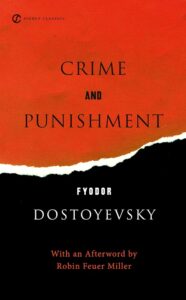
Although the story begins with a crime, the central mystery is not the identity of the criminal. Dostoevsky is far more interested in what happens inside the criminal’s mind. The novel follows Rodion Raskolnikov, an impoverished former student living in Saint Petersburg, as he attempts to justify a terrible act through an intellectual theory about exceptional individuals.
What follows is not simply a story about avoiding the police. It is an intense examination of guilt, pride, isolation, compassion, and the limits of human reason. Dostoevsky transforms Raskolnikov’s mental deterioration into a form of psychological suspense that can be just as gripping as a conventional thriller.
This Crime and Punishment review will examine the novel’s greatest strengths, its most common criticisms, its central themes, its difficulty, and the type of reader most likely to appreciate it. It will also consider whether Crime and Punishment is a good introduction to Dostoevsky and which English translation may provide the best reading experience.
Is Crime and Punishment Worth Reading?
Crime and Punishment is worth reading because it does something few novels accomplish so effectively: it makes an abstract moral conflict feel immediate, personal, and emotionally dangerous.
Raskolnikov does not merely break the law. He attempts to prove that he is intellectually and morally superior to ordinary people. He believes that certain extraordinary individuals may be justified in crossing ethical boundaries when pursuing a supposedly greater purpose. The novel tests this idea not through a detached philosophical argument, but through the physical and psychological consequences experienced by the person who believes it.
This is one reason the book still feels relevant. Readers do not need to share Raskolnikov’s circumstances to recognize the dangers of arrogance, self-deception, and the desire to place oneself above common moral standards. His reasoning may sound cold and logical, yet his emotions, relationships, and conscience refuse to behave according to his theory.
The result is a novel in which punishment begins long before any courtroom judgment. Fear, paranoia, illness, loneliness, and guilt gradually imprison Raskolnikov within his own mind. Dostoevsky repeatedly asks whether a person can escape moral responsibility simply by constructing an intelligent argument.
The novel is also worth reading for its supporting characters. Sonya, Razumikhin, Dunya, Porfiry, and the Marmeladov family each reveal a different response to poverty, humiliation, sacrifice, faith, or suffering. They prevent the story from becoming a single prolonged monologue and force Raskolnikov to confront people whose lives contradict his assumptions.
Readers interested in discovering the best Dostoevsky books for beginners will often find Crime and Punishment among the strongest starting points. It is philosophically rich, but its central conflict is easier to follow than the vast networks of characters and ideas found in some of Dostoevsky’s later novels.
That said, the book requires patience. Its tension develops through conversations, repeated thoughts, emotional confrontations, and gradual changes in the protagonist. Readers who enjoy psychological novels, morally complicated characters, and philosophical questions are likely to find it extraordinary. Those seeking constant action may find parts of it frustrating.
Ultimately, Crime and Punishment is worth reading not merely because it is historically important, but because it remains capable of unsettling modern readers. It forces us to consider whether intelligence can excuse cruelty, whether suffering can transform a person, and whether isolation makes moral collapse more likely.
What Is Crime and Punishment About?
A Spoiler-Free Overview of the Story
Crime and Punishment follows Rodion Romanovich Raskolnikov, a poor former student living alone in a cramped room in Saint Petersburg. Intelligent, proud, and increasingly isolated, he has withdrawn from university and from most of the people who care about him.
Raskolnikov spends much of his time developing a dangerous theory. He believes that humanity can be divided into ordinary people, who must follow established laws, and extraordinary individuals, who may be permitted to violate moral rules when pursuing a supposedly greater purpose.
Historical figures such as Napoleon influence this idea. Raskolnikov wonders whether people remembered as great leaders were able to change history precisely because they refused to accept the same moral limitations imposed on everyone else.
Rather than leaving this theory as an intellectual exercise, Raskolnikov decides to test it. He commits a serious crime and then discovers that human conscience cannot be controlled as easily as a philosophical argument.
The novel reveals the central crime early, so the suspense does not come from discovering who committed it. Instead, readers follow Raskolnikov as he becomes trapped between his desire to defend his theory and his inability to escape fear, guilt, illness, and suspicion.
His mental condition becomes increasingly unstable. Ordinary conversations begin to feel threatening, unexpected visitors seem dangerous, and every question appears to contain a hidden accusation. Dostoevsky places readers close to Raskolnikov’s consciousness, making his paranoia one of the novel’s primary sources of tension.
At the same time, several people attempt to draw him back into human society. His loyal friend Razumikhin offers companionship and practical support. His mother and sister, Dunya, arrive in Saint Petersburg carrying problems of their own. Sonya, a young woman forced into desperate circumstances, represents compassion, sacrifice, and spiritual endurance.
Another major figure is Porfiry Petrovich, the examining magistrate responsible for investigating the crime. Porfiry does not behave like a conventional detective who simply collects physical clues. He studies personalities, contradictions, ideas, and emotional reactions. His encounters with Raskolnikov become intellectual contests in which casual words may conceal carefully calculated pressure.
As the story develops, Crime and Punishment by Fyodor Dostoevsky becomes an exploration of what separates an abstract idea from a real human action. Raskolnikov may be able to explain his theory logically, but he cannot prevent his body, emotions, and relationships from responding to what he has done.
The novel therefore asks a question more complicated than whether Raskolnikov will be caught. It asks whether a person can live peacefully after rejecting the moral value of other human beings.
Why Crime and Punishment Is Not a Traditional Murder Mystery
Readers approaching the novel because of the word “crime” in its title may expect a mystery similar to classic detective fiction. However, Crime and Punishment does not hide the identity of the criminal or invite readers to solve a puzzle before the investigator does.
In traditional mysteries, such as the stories featured in our selection of books like Sherlock Holmes, the central pleasure often comes from following clues, eliminating suspects, and eventually uncovering the truth.
Dostoevsky reverses that structure. Readers already know the truth, but the characters do not. This creates a different kind of tension. Instead of asking “Who committed the crime?”, the novel asks:
- Will Raskolnikov reveal himself through his behavior?
- Can he maintain control during questioning?
- Does he genuinely believe his own justification?
- What will guilt do to his mind?
- Can intellectual pride survive contact with human suffering?
The result is sometimes described as an inverted detective story or a reverse mystery. The investigator’s task is still important, but the reader’s attention remains focused on the criminal’s psychological collapse rather than on the discovery of external evidence.
This structure allows Dostoevsky to transform conversations into suspenseful confrontations. A meeting between Raskolnikov and Porfiry may contain little physical action, yet every pause, joke, accusation, and change of subject feels potentially dangerous.
Porfiry understands that psychological pressure can be more powerful than direct confrontation. He rarely needs to announce everything he suspects. His greatest weapon is uncertainty. Raskolnikov cannot always determine how much Porfiry knows, whether he is being manipulated, or whether his own nervousness is creating threats that do not exist.
This is why readers who enjoy psychological suspense may find the novel gripping even when the plot moves slowly. The action occurs inside Raskolnikov’s mind, where every attempt at self-control produces another contradiction.
The book also differs from a conventional crime thriller because Dostoevsky is not primarily interested in the practical mechanics of the investigation. The crime provides a framework for exploring morality, alienation, poverty, freedom, and personal responsibility.
In other words, the most important punishment in the novel is not initially imposed by the police or the legal system. It emerges from Raskolnikov’s inability to reconcile his theory with his own humanity.
Readers should therefore approach the book as a psychological and philosophical novel rather than as a fast-moving murder mystery. Doing so makes its long conversations, repeated thoughts, and moral conflicts feel purposeful instead of distracting.
The crime begins the story, but the consequences give the novel its lasting power.

Why Is Crime and Punishment Considered a Great Book?
Crime and Punishment is considered a great book because it combines philosophical ideas with intense human drama. Dostoevsky does not simply tell readers that guilt is destructive or that pride can distort judgment. He places those ideas inside the mind of a character who is forced to experience their consequences.
The novel’s reputation rests on several interconnected strengths: the complexity of Raskolnikov, the psychological tension created by his guilt, the richness of the supporting characters, the continuing relevance of its moral questions, and the oppressive atmosphere of Saint Petersburg.
Raskolnikov Is One of Literature’s Most Complex Protagonists
Rodion Raskolnikov is not designed to be a conventional hero. He can be arrogant, dismissive, cruel, and convinced of his intellectual superiority. At other moments, however, he behaves with remarkable generosity and compassion.
These contradictions make him difficult to categorize. He is neither an innocent victim of circumstance nor a completely emotionless villain. His actions are horrifying, but his mind remains recognizably human.
Raskolnikov often appears to contain two opposing personalities. One side of him wants to remain isolated, prove his superiority, and reject ordinary moral standards. The other responds instinctively to suffering and repeatedly becomes involved in the problems of people around him.
He may treat his family coldly while secretly worrying about their sacrifices. He may claim to despise weakness while helping people who are poor, humiliated, or vulnerable. His compassion consistently interferes with the identity he is trying to construct.
This tension prevents him from becoming a simple example of a philosophical theory. He does not calmly apply his beliefs and accept the outcome. He argues with himself, changes his explanations, lashes out at others, and struggles to understand his own motivations.
Dostoevsky also refuses to provide one convenient reason for the crime. Poverty contributes to Raskolnikov’s desperation, but financial need does not completely explain his actions. Pride, resentment, social alienation, intellectual experimentation, and a desire to test his own courage are all involved.
Raskolnikov wants to discover what kind of person he is. He imagines that committing the crime will prove he belongs among the extraordinary individuals who shape history without being restrained by ordinary morality. Instead, the experience reveals how little control he has over his own conscience.
This inner conflict makes him one of the most memorable figures in classic literature. Readers may dislike him, pity him, fear him, or become frustrated with him, but it is difficult to remain indifferent to his struggle.
His complexity also explains why different readers respond to him so differently. Some see a young man destroyed by arrogance and isolation. Others focus on his poverty, emotional instability, or moments of generosity. The novel leaves room for all these interpretations without reducing him to a single diagnosis or moral label.
The Novel Turns Guilt Into Psychological Suspense
The greatest source of suspense in Crime and Punishment is not the possibility of discovering the criminal. Readers already know what Raskolnikov has done. The tension comes from watching him attempt to live with that knowledge.
After the crime, his mind becomes a kind of prison. He is unable to relax, communicate honestly, or interpret other people’s behavior calmly. Innocent remarks seem like accusations, unexpected visitors feel threatening, and every encounter with authority becomes a possible trap.
Dostoevsky frequently places readers close to Raskolnikov’s disordered thoughts. His fever, exhaustion, fear, and obsession make it difficult to distinguish genuine danger from imagined suspicion.
This uncertainty produces a powerful form of psychological suspense. Raskolnikov may appear calm during a conversation, but internally he is analyzing every word and gesture. A minor question can send him into panic because he cannot determine whether the speaker knows something or whether guilt is making him paranoid.
The interrogations and informal meetings with Porfiry Petrovich are especially effective. Porfiry understands that Raskolnikov’s greatest weakness is not a lack of intelligence but an excess of self-consciousness. Instead of relying only on physical evidence, he allows uncertainty to pressure the young man.
Their conversations resemble intellectual duels. Porfiry appears friendly, humorous, and occasionally disorganized, yet his questions repeatedly approach the ideas Raskolnikov used to justify the crime. Raskolnikov, meanwhile, tries to appear indifferent while desperately searching for hidden meanings.
This tension proves that a novel does not require constant physical action to become gripping. Dostoevsky creates danger through pauses, contradictions, nervous reactions, and the possibility that one careless sentence could destroy Raskolnikov’s defense.
Guilt is therefore more than one of the novel’s themes. It becomes part of its narrative machinery. Every attempt Raskolnikov makes to suppress it creates new suspense.
The Supporting Characters Give the Story Its Emotional Depth
Although Raskolnikov dominates the novel, Crime and Punishment would be far less powerful without its supporting characters. Each important figure reveals something about him or represents an alternative response to suffering.
Sonya Marmeladova is among the most important. Like Raskolnikov, she lives under extreme social and financial pressure. Unlike him, she does not respond by declaring herself superior to others. Her endurance, compassion, and faith challenge his belief that strength requires separation from ordinary morality.
Sonya is not presented as untouched by suffering. Her life is marked by humiliation and sacrifice. What distinguishes her is the way she continues to recognize the humanity of other people, even when society has failed to recognize hers.
Razumikhin offers another contrast. He is also poor and faces serious difficulties, but he remains sociable, practical, hardworking, and loyal. His friendship demonstrates that hardship does not inevitably lead to isolation or moral rebellion.
Dunya, Raskolnikov’s sister, possesses much of his intelligence and determination. However, her strength is directed toward protecting others rather than proving superiority. Her willingness to make sacrifices for her family also forces Raskolnikov to confront how his pride affects the people who love him.
Porfiry Petrovich represents intellectual opposition. He is capable of understanding Raskolnikov’s theory, but he is not impressed by its grand language. He studies the difference between what Raskolnikov claims to believe and how he actually behaves.
Other figures, including Marmeladov, Katerina Ivanovna, Luzhin, and Svidrigailov, broaden the novel’s moral world. Through them, Dostoevsky explores addiction, humiliation, exploitation, selfishness, despair, and the ways people attempt to justify their treatment of others.
These characters are not merely obstacles or assistants placed around the protagonist. They embody competing visions of responsibility, freedom, love, and power. Their lives prevent Raskolnikov’s philosophy from remaining abstract.
Whenever he encounters another person’s suffering, he must decide whether to treat that person as an individual or as part of a theory. His repeated failure to remain emotionally detached exposes the weakness in his worldview.
Its Moral Questions Still Feel Relevant Today
Crime and Punishment was published in the nineteenth century, but its central questions have not become obsolete. The novel examines the temptation to use intelligence, ideology, or historical importance as an excuse for harming others.
Raskolnikov’s reasoning begins with the belief that some people may be entitled to ignore rules that restrict ordinary society. He imagines that if an action produces a greater benefit, the individual who performs it might be justified in crossing moral boundaries.
Dostoevsky tests this argument by moving it away from theory and into lived experience. It is easy to speak abstractly about sacrificing one life for a greater goal. It is much harder to control the emotional, social, and spiritual consequences once another person has been reduced to an obstacle.
The novel therefore raises questions that remain disturbingly familiar:
- Can a good objective justify a cruel action?
- Are highly intelligent or powerful people entitled to different moral rules?
- Does believing in an ideology reduce personal responsibility?
- Can someone completely silence their conscience?
- Is punishment primarily legal, psychological, or moral?
These questions make the book more than a historical document. Readers continue to encounter individuals and institutions that defend harmful behavior by claiming that the outcome will eventually justify the cost.
Raskolnikov also reflects a modern form of alienation. He withdraws from relationships, becomes trapped inside his own arguments, and begins treating other people as symbols rather than individuals. His isolation makes his theory appear increasingly reasonable because he no longer allows ordinary human contact to challenge it.
Readers interested in other existential novels about alienation and moral conflict will recognize similar questions about freedom, responsibility, and the individual’s relationship with society.
However, Dostoevsky’s approach differs from a purely abstract philosophical discussion. He insists that ideas have emotional consequences. Raskolnikov’s theory affects his body, his friendships, his family, and his ability to see himself honestly.
The continuing relevance of these conflicts is one of the main reasons Crime and Punishment is worth reading today.

Saint Petersburg Becomes Part of Raskolnikov’s Mind
Saint Petersburg is more than the setting of Crime and Punishment. Its streets, buildings, crowds, heat, poverty, and cramped interiors contribute directly to the psychological atmosphere of the novel.
Raskolnikov lives in a tiny rented room that is repeatedly compared to a cupboard or a coffin. The space reflects his isolation. It is physically narrow, uncomfortable, and separated from ordinary social life, much like the mental world he has constructed for himself.
When he leaves the room, the city offers little relief. The streets are crowded, noisy, dirty, and oppressively hot. Taverns, rented rooms, staircases, police offices, and decaying apartment buildings create an environment in which privacy and escape seem almost impossible.
Dostoevsky often connects physical discomfort with mental instability. The heat contributes to Raskolnikov’s feverish condition, while the crowded streets repeatedly force him into contact with people he would prefer to avoid.
The city also exposes extreme social inequality. Raskolnikov encounters poverty, alcoholism, desperation, exploitation, and families living close to collapse. These conditions do not excuse his crime, but they form the world in which his resentment and theories develop.
Saint Petersburg can feel dreamlike and claustrophobic at the same time. Raskolnikov wanders through recognizable streets, yet his unstable perspective makes the city seem distorted. Chance meetings occur with unsettling frequency, and familiar places become associated with fear or suspicion.
This atmosphere gives the novel much of its emotional intensity. The reader does not merely observe Raskolnikov’s mental confinement; the physical world begins to share it.
In many novels, the setting provides historical background. In Crime and Punishment, it becomes part of the protagonist’s consciousness. The city seems to trap him, confront him, and continually return him to the suffering he is trying to transform into an intellectual problem.
That fusion of character, setting, philosophy, and suspense is one of Dostoevsky’s greatest achievements. It helps explain why the novel remains powerful even for readers who already know its plot.
Final Verdict: Is Crime and Punishment Good?
Is Crime and Punishment good? Yes. It is not only a good novel but one of the most psychologically powerful works in classic literature. Fyodor Dostoevsky transforms a crime story into a profound examination of guilt, pride, isolation, suffering, and moral responsibility.
The novel’s greatest strength is Raskolnikov. He is intelligent, arrogant, compassionate, cruel, frightened, and self-destructive, often within the same chapter. Readers are not required to admire him. The fascination comes from watching him attempt to force human experience into an intellectual theory and gradually discover that conscience cannot be controlled by logic alone.
Crime and Punishment is also remarkably suspenseful, although not in the usual manner of a detective novel. The reader knows who committed the crime. The tension comes from Raskolnikov’s unstable mind, his encounters with Porfiry Petrovich, and the growing conflict between what he claims to believe and what he actually feels.
The supporting characters add emotional and philosophical depth. Sonya represents compassion and spiritual endurance. Razumikhin demonstrates that poverty does not inevitably produce bitterness or isolation. Dunya offers another form of strength, while Porfiry challenges Raskolnikov through patience and psychological insight rather than simple accusation.
The novel is not flawless or effortless. Some sections are slow, conversations can become lengthy, and the repeated movement through Raskolnikov’s thoughts may frustrate readers who prefer concise storytelling. Russian names and nicknames can also be confusing, especially during the first chapters.
These difficulties are real, but they do not make the book unsuccessful. Much of the repetition and discomfort is connected to the experience Dostoevsky is creating. The reader is meant to feel trapped inside Raskolnikov’s feverish reasoning, just as the protagonist becomes trapped by his own choices.
The book will be most rewarding for readers who enjoy:
- psychological novels with morally complicated characters;
- stories about guilt, conscience, and personal responsibility;
- philosophical debates presented through dramatic conflict;
- dark settings and emotionally intense narratives;
- classics that reward patience and close attention.
It may be less enjoyable for readers who want constant action, a traditional murder mystery, a clearly heroic protagonist, or a light and comforting story. Crime and Punishment demands emotional and intellectual attention, and it rarely allows the reader to remain comfortably detached.
For readers wondering whether Crime and Punishment is difficult to read, the honest answer is that it can be challenging, but it is usually more accessible than its intimidating reputation suggests. The central plot is straightforward, the psychological conflict is immediately understandable, and a clear modern translation can make a significant difference.
It is also one of the strongest places to begin exploring the author. Readers uncertain about where to start reading Dostoevsky will find that Crime and Punishment introduces many of his defining concerns without the enormous cast and even broader philosophical structure of some of his later novels.
Those who finish the book and want to continue can explore our guide to the best Fyodor Dostoevsky books, including works that develop similar questions about faith, freedom, identity, and moral responsibility.
Ultimately, Crime and Punishment deserves its reputation because it does more than ask whether a person can escape legal punishment. It asks whether anyone can escape the psychological and moral consequences of treating another human life as an abstract problem.
Final rating: 5 out of 5 stars.
Crime and Punishment is worth reading for its unforgettable protagonist, its psychological tension, its moral complexity, and its continuing relevance. It is demanding, dark, and occasionally exhausting—but that intensity is precisely what makes it so difficult to forget.
Who Was Fyodor Dostoevsky?
Fyodor Mikhailovich Dostoevsky was a Russian novelist, essayist, and journalist whose fiction transformed psychological conflict into some of the most intense drama in world literature. He was born in Moscow on November 11, 1821, and died in Saint Petersburg on February 9, 1881, at the age of 59.
His novels frequently examine guilt, freedom, faith, suffering, poverty, political radicalism, and the human need for moral responsibility. These subjects were not merely intellectual interests. Many of them emerged from Dostoevsky’s own experiences with imprisonment, illness, financial instability, and personal loss.
Dostoevsky’s Early Life
Dostoevsky grew up near the Mariinsky Hospital for the Poor in Moscow, where his father worked as a physician. From an early age, he was exposed to the social inequality and suffering that would later appear throughout his fiction.
Although he showed a strong interest in literature, Dostoevsky was sent to study at the Military Engineering Academy in Saint Petersburg. He completed his studies but soon abandoned an engineering career to concentrate on writing.
His first novel, Poor Folk, was published in 1846 and received immediate attention from influential Russian literary critics. Its portrayal of poverty and social humiliation established Dostoevsky as a promising young writer.
However, the enthusiastic reception of his first book was followed by more complicated responses to his subsequent work. Dostoevsky’s interest in unstable minds, unusual personalities, and emotional extremes was already visible, but many readers and critics did not immediately understand the direction his fiction was taking.

Arrest, Imprisonment, and Exile in Siberia
In 1849, Dostoevsky was arrested for his involvement with the Petrashevsky Circle, a group of intellectuals that discussed political reform, socialism, censorship, and prohibited literature.
He was imprisoned and eventually sentenced to death. In December 1849, Dostoevsky and several other prisoners were taken before a firing squad and prepared for execution. At the final moment, they were informed that their sentences had been commuted.
The event was a deliberately staged mock execution intended to terrify the prisoners. Dostoevsky was instead sentenced to four years of forced labor in a Siberian prison camp, followed by compulsory military service.
His years in Siberia profoundly affected his political, religious, and philosophical outlook. Living among prisoners from different social backgrounds forced him to confront human cruelty, endurance, guilt, and the possibility of spiritual transformation.
These experiences later influenced books such as The House of the Dead, as well as the recurring themes of punishment and redemption found throughout his mature novels.
The title Crime and Punishment can therefore be understood as more than a reference to a legal process. Dostoevsky had personally experienced imprisonment and had observed how suffering could either destroy a person or force that person to reconsider their understanding of life.
Financial Difficulties and the Writing of Crime and Punishment
Dostoevsky returned to Saint Petersburg in 1859 and gradually rebuilt his literary career. However, his personal and financial life remained unstable.
In 1864, both his first wife, Maria Dmitriyevna Isaeva, and his older brother, Mikhail, died. Dostoevsky inherited financial obligations connected to the journal he had operated with his brother, while also attempting to support members of his extended family.
His financial troubles were worsened by gambling. Dostoevsky repeatedly lost money at roulette while traveling in Europe, leaving him dependent on advances from publishers and forcing him to write under severe deadlines.
Crime and Punishment was first published in monthly installments in the literary journal The Russian Messenger throughout 1866. The pressure surrounding its composition did not prevent Dostoevsky from producing a carefully structured psychological novel, although the urgency of his circumstances may have contributed to its feverish emotional intensity.
During the same year, Dostoevsky was required to complete another novel, The Gambler, under an exceptionally demanding publishing contract. To meet the deadline, he hired a young stenographer named Anna Grigoryevna Snitkina.
Dostoevsky dictated The Gambler to Anna, completed it in time, and later married her in 1867. Anna helped organize his finances, manage his publishing affairs, and create greater stability during the final period of his career.
The difficult circumstances surrounding Crime and Punishment help explain why the novel feels so urgent. Its world is filled with unpaid debts, cramped apartments, desperate decisions, and people whose moral choices are influenced by economic pressure.
Dostoevsky’s Most Important Books
After returning from Siberia, Dostoevsky produced the works that established his international reputation. His most important books include:
- Notes from Underground — a short but influential examination of resentment, isolation, and rebellion against rational systems;
- Crime and Punishment — a psychological study of guilt, pride, and moral responsibility;
- The Idiot — a novel about innocence, compassion, and corruption within society;
- Demons, also published as The Possessed — a political novel about radical ideology and social disorder;
- The Brothers Karamazov — his final novel and one of his most ambitious explorations of faith, freedom, family, and responsibility;
- The House of the Dead — a fictionalized account inspired by his imprisonment in Siberia;
- The Gambler — a shorter novel shaped by Dostoevsky’s personal experience with gambling addiction and debt.
Readers interested in continuing beyond Crime and Punishment can explore our guide to the best Fyodor Dostoevsky books and choose a novel according to the themes and level of difficulty that most appeal to them.
Dostoevsky died in 1881, shortly after completing The Brothers Karamazov. His influence can be found in modern psychology, existential philosophy, religious thought, political fiction, and countless novels centered on morally divided protagonists.
Understanding his life is not necessary to appreciate Crime and Punishment, but it helps explain the extraordinary seriousness with which he approached suffering, imprisonment, guilt, and the possibility of redemption. Dostoevsky did not treat these subjects as distant philosophical puzzles. He wrote about them as realities capable of changing an entire human life.

Leave a Reply