Why Dracula Still Captivates Readers Today
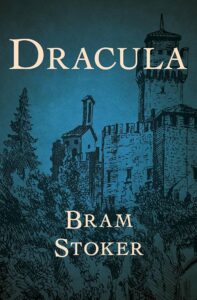
Dracula is one of those rare books that never seems to lose its power. More than a century after its publication, Bram Stoker’s novel remains one of the most famous works of gothic horror ever written. It has castles, shadows, superstition, forbidden desire, ancient evil, and one of the most iconic monsters in literary history. In other words, it has almost everything a horror reader could want.
But what makes Dracula so fascinating is not just the vampire himself. Count Dracula is terrifying, of course, but the novel also works because of its atmosphere. The story moves between old-world mystery and modern anxiety, between Transylvanian folklore and Victorian England, between science, religion, fear, obsession, and the unknown. It is a book about invasion, temptation, corruption, and the thin line between civilization and darkness.
That is why readers who enjoy Dracula often want more than just another vampire story. They usually want books with the same kind of mood: mysterious, elegant, disturbing, and full of gothic tension. They want stories where old houses feel alive, secrets hide behind respectable faces, monsters reveal something about human nature, and evil does not always appear in an obvious form.
What Makes Dracula Such a Timeless Horror Novel?
One of the reasons Dracula still works so well is that it blends several kinds of fear at once. It is a vampire novel, but it is also a travel narrative, a supernatural mystery, a gothic romance, and a battle between ancient evil and modern society. The novel uses letters, diary entries, newspaper clippings, and recorded testimonies to create the feeling that the reader is slowly uncovering a terrifying case file.
This structure makes the horror feel strangely intimate. Instead of simply watching the events from a distance, the reader receives the fears, doubts, and discoveries of the characters directly through their own words. Jonathan Harker’s imprisonment in Dracula’s castle, Mina Murray’s intelligence and courage, Van Helsing’s strange wisdom, and Lucy Westenra’s tragic transformation all help build a story that feels both dramatic and deeply personal.
Another reason the book remains so influential is that Count Dracula is not merely a monster who attacks people. He represents something older, darker, and more seductive. He is aristocratic, predatory, foreign, mysterious, and almost impossible to fully understand. He is frightening because he does not belong to the normal rules of life and death. He enters homes, dreams, bodies, and societies like a corrupting shadow.
For fans of classic horror books, this is exactly the kind of atmosphere that makes Dracula unforgettable. The best gothic novels rarely depend only on shocking scenes. Instead, they build tension through suggestion, mood, symbolism, and the sense that something dreadful is approaching from just beyond the candlelight.
What to Expect From This List
This list focuses on five books that capture different parts of what makes Dracula so memorable. Some of them helped shape gothic literature before Bram Stoker wrote his famous novel. Others explore similar themes of monstrosity, temptation, duality, madness, and the supernatural. Not every book here is about vampires, but each one belongs naturally beside Dracula on the shelf of a reader who loves dark classics.
The books selected here are all respected works of literature, and each one offers a different path into the world of gothic fiction. If you love the eerie atmosphere of Stoker’s novel, the conflict between good and evil, the fear of hidden corruption, or the pleasure of reading a story that feels both beautiful and unsettling, these books are excellent choices.
Here are five books like Dracula that every fan of gothic horror should consider reading.
1. Frankenstein by Mary Shelley
What Is Frankenstein About?
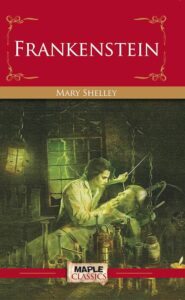
Published in 1818, Frankenstein is often considered one of the most important novels ever written and a foundational work of both gothic horror and science fiction. The story follows Victor Frankenstein, a brilliant young scientist whose ambition leads him to accomplish what many would consider impossible: creating life from dead matter.
At first, Victor is consumed by excitement and intellectual curiosity. He dreams of pushing the boundaries of human knowledge and achieving something that no one before him has ever accomplished. But the moment his creation opens its eyes, he realizes that he has brought something terrifying into the world.
The creature, often mistakenly called Frankenstein, is not a mindless monster. He is intelligent, emotional, and capable of great kindness. Yet because of his frightening appearance, he is rejected by nearly everyone he encounters. Loneliness, bitterness, and despair gradually transform him into something far more dangerous.
As Victor and his creation become locked in a tragic cycle of guilt, revenge, and suffering, the novel explores profound questions about responsibility, morality, ambition, and what it truly means to be human.
Why You Should Read It
If you loved Dracula, there is a good chance that you will appreciate Frankenstein for many of the same reasons. Both novels are considered pillars of gothic literature, and both explore humanity’s encounter with forces that seem to transcend ordinary understanding.
One of the greatest strengths of Frankenstein is that it refuses to present a simple battle between heroes and villains. The creature is frightening, but he is also sympathetic. Victor is intelligent and ambitious, yet many of the disasters that follow can be traced directly to his own choices. The result is a story that forces readers to question their assumptions about good and evil.
Mary Shelley also creates an atmosphere that feels remarkably similar to the best parts of Dracula. Dark landscapes, isolation, dread, and a constant sense of approaching tragedy give the novel a haunting quality that remains effective even two centuries after its publication.
The book is also surprisingly emotional. Beneath the horror lies a deeply human story about rejection, loneliness, and the desire to be accepted. The creature’s search for companionship is often heartbreaking, making him one of the most memorable figures in all of literature.
For readers who enjoy classics that combine suspense, philosophy, horror, and unforgettable characters, Frankenstein remains an essential experience.
How Frankenstein Compares to Dracula
Although the two novels feature very different monsters, they share many themes. Both stories examine the consequences of confronting forces that humanity cannot fully control. Both explore fear of the unknown and the destructive impact of obsession.
Count Dracula represents an ancient evil invading the modern world, while Frankenstein’s creature is the result of modern ambition creating something that should perhaps never have existed. In both cases, the monster becomes a reflection of human fears and weaknesses.
If Dracula fascinated you because of its gothic atmosphere, moral conflict, and unforgettable villain, then Frankenstein is one of the most natural books to read next.
2. Carmilla by Sheridan Le Fanu
What Is Carmilla About?
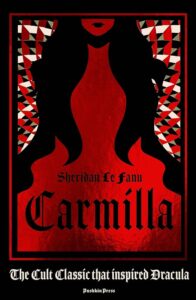
Long before Bram Stoker introduced Count Dracula to the world, Irish writer Sheridan Le Fanu had already created one of literature’s most influential vampires. First published in 1872, Carmilla tells the story of Laura, a young woman living in an isolated castle deep in the Austrian countryside.
Laura’s quiet life changes when a mysterious carriage accident brings a beautiful and enigmatic young woman named Carmilla into her home. The two quickly form a close relationship, but strange events begin to unfold around them. Laura experiences vivid dreams, unexplained weakness, and a growing sense of unease. Meanwhile, people in the surrounding region are falling victim to a mysterious illness.
As the story progresses, Laura realizes that her charming guest may not be what she appears to be. Hidden beneath Carmilla’s elegance and beauty lies something ancient, predatory, and deeply unsettling.
Unlike many modern vampire stories, Carmilla focuses less on action and more on atmosphere. The novel slowly builds a sense of dread, allowing the mystery surrounding its central character to grow darker with every chapter.
Why You Should Read It
For fans of Dracula, Carmilla is practically required reading. Not only is it one of the greatest vampire stories ever written, but it also served as a major influence on Bram Stoker’s famous novel.
One of the book’s greatest strengths is its atmosphere. Le Fanu creates a world filled with loneliness, mystery, old castles, moonlit landscapes, and creeping terror. The horror does not arrive all at once. Instead, it slowly wraps itself around the reader, creating an unsettling feeling that something is terribly wrong.
Carmilla herself is also a fascinating character. Unlike many monsters in gothic fiction, she is not simply frightening. She is charismatic, intelligent, affectionate, and strangely sympathetic. This combination of attraction and danger makes her one of the most memorable figures in horror literature.
The novel is relatively short, making it an excellent choice for readers who want a classic gothic horror experience without committing to a lengthy book. Despite its size, it delivers many of the themes and emotions that have made vampire fiction so enduring.
Readers who enjoy stories filled with mystery, psychological tension, and supernatural dread will find plenty to love in Carmilla.
How Carmilla Influenced Dracula
Many of the elements readers associate with Dracula can already be found in Carmilla. The vampire’s ability to charm victims, the mixture of desire and fear, the mysterious illnesses, the gothic settings, and the sense of an ancient evil hiding behind a civilized appearance all appear in Le Fanu’s work.
Of course, Bram Stoker expanded these ideas considerably. Dracula is larger in scope, featuring multiple protagonists, international travel, and an epic battle against evil. Yet the foundation for many of those concepts was already present in Carmilla.
Reading the two books together offers a fascinating look at the evolution of vampire fiction. It becomes easy to see how Le Fanu helped establish many of the conventions that later writers would develop and refine.
If what you loved most about Dracula was the vampire mythology itself, then Carmilla may be the closest recommendation on this list. It is elegant, haunting, and essential reading for anyone interested in the history of gothic horror.
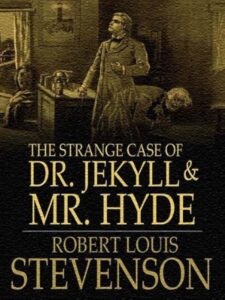
3. The Strange Case of Dr Jekyll and Mr Hyde by Robert Louis Stevenson
What Is Dr Jekyll and Mr Hyde About?
First published in 1886, The Strange Case of Dr Jekyll and Mr Hyde is one of the most famous horror stories ever written. Even people who have never read the book are familiar with the names Jekyll and Hyde, but many are surprised by how dark, suspenseful, and intelligent the original novel actually is.
The story begins with Gabriel John Utterson, a respectable London lawyer, who becomes increasingly concerned about the strange connection between his longtime friend, Dr Henry Jekyll, and a disturbing man named Edward Hyde.
Hyde is violent, cruel, and deeply unsettling. Everyone who encounters him seems to feel an instinctive sense of revulsion, even when they cannot explain why. As Utterson investigates the mystery, he uncovers clues that suggest something far more terrifying than ordinary criminal behavior.
What follows is a suspenseful tale of secrets, hidden identities, and scientific experimentation that gradually reveals one of the most famous twists in literary history.
Why You Should Read It
One reason this novel has remained popular for well over a century is that its central idea is timeless. Stevenson explores the conflict between the civilized face people present to the world and the darker impulses they try to keep hidden.
While modern readers already know the basic premise, the true power of the novel lies in its atmosphere and psychological depth. The story creates a growing sense of unease that feels remarkably modern, making readers question how well anyone truly knows themselves.
The book is also incredibly accessible. Unlike some nineteenth-century classics, it is relatively short and moves quickly. The mystery unfolds at a steady pace, making it easy to read while still providing plenty of material for reflection afterward.
Another reason to read it is its enormous influence on popular culture. Countless books, films, television shows, and video games have borrowed from Stevenson’s ideas. Reading the original novel allows you to see where many of these themes first became widely known.
For readers who enjoy horror that focuses on psychological conflict rather than supernatural creatures alone, Dr Jekyll and Mr Hyde is an outstanding choice.
How It Captures the Dark Side of Human Nature
Like Dracula, this novel is ultimately about hidden darkness. The difference is that Dracula presents evil as an external threat invading society, while Stevenson turns that threat inward.
Count Dracula is a monster that comes from outside civilization. Edward Hyde, on the other hand, emerges from within a seemingly respectable individual. This shift creates a different kind of horror—one that suggests the greatest dangers may already exist inside the human mind.
Both novels reflect anxieties that were common during the Victorian era. They question whether progress, science, and social order are truly enough to control humanity’s darker instincts. Beneath their gothic settings, both stories ask unsettling questions about morality, temptation, and corruption.
Readers who enjoyed the tension between civilization and savagery in Dracula will find a similar fascination in Dr Jekyll and Mr Hyde. The monsters may be different, but the fear at the heart of the story feels surprisingly familiar.
If you are looking for a gothic classic that combines suspense, psychological horror, and one of literature’s most enduring ideas, this book deserves a place near the top of your reading list.
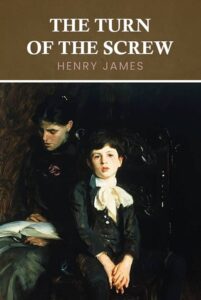
4. The Turn of the Screw by Henry James
What Is The Turn of the Screw About?
Published in 1898, The Turn of the Screw is one of the most influential ghost stories ever written. Unlike many horror novels that rely on obvious monsters or supernatural attacks, Henry James creates fear through uncertainty, ambiguity, and psychological tension.
The story follows a young governess who accepts a position caring for two children, Miles and Flora, at a remote English estate called Bly. At first, everything seems peaceful. The children appear charming, intelligent, and unusually well-behaved.
Before long, however, the governess begins seeing mysterious figures around the property. Convinced that these apparitions are connected to the estate’s dark past, she becomes increasingly determined to protect the children from a threat that only she seems capable of perceiving.
As the story unfolds, readers are forced to confront a disturbing question: are the ghosts real, or is the governess slowly losing her grip on reality?
This uncertainty transforms what could have been a simple ghost story into a psychological puzzle that continues to fascinate readers more than a century after its publication.
Why You Should Read It
If you enjoyed the atmosphere of Dracula, then The Turn of the Screw offers some of the finest gothic suspense ever written. Rather than relying on violence or action, Henry James builds tension through suggestion, silence, and the fear of things that may be lurking just beyond sight.
One of the novel’s greatest strengths is its ability to make readers question everything they are seeing. Every strange event can be interpreted in multiple ways, creating a constant feeling of uncertainty that becomes increasingly unsettling as the story progresses.
The setting also plays a major role in the novel’s appeal. Bly Manor feels isolated, beautiful, and strangely oppressive. Like Dracula’s castle or the remote locations found in many gothic stories, it becomes a place where ordinary rules seem less reliable.
The book is particularly rewarding for readers who enjoy discussing interpretations after finishing a story. Few horror novels have inspired as much debate as The Turn of the Screw, and literary scholars continue to argue about its meaning today.
For those looking for a horror novel that relies on atmosphere and psychological complexity rather than straightforward scares, this is one of the genre’s greatest achievements.
Why the Story Remains So Disturbing Today
Many horror stories lose their effectiveness once readers understand the threat. The Turn of the Screw remains frightening because the threat is never fully explained.
Unlike Count Dracula, whose existence is eventually confirmed, the ghosts in Henry James’s novel remain uncertain. Readers never receive definitive proof about what is actually happening. This ambiguity forces each person to draw their own conclusions, making the experience deeply personal.
The novel also explores themes that continue to resonate with modern audiences. Fear, obsession, repression, innocence, corruption, and the reliability of perception all play important roles in the narrative. The result is a story that feels surprisingly contemporary despite its nineteenth-century origins.
In many ways, the book demonstrates one of the central strengths of gothic horror: the idea that what we imagine can often be more terrifying than what we see directly. Henry James understands this principle perfectly, using uncertainty as his most powerful tool.
If Dracula captivated you with its atmosphere of dread and its constant sense of unseen danger, then The Turn of the Screw offers a similarly haunting experience—one that may linger in your mind long after you finish the final page.
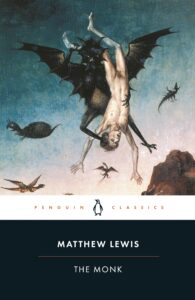
5. The Monk by Matthew Gregory Lewis
What Is The Monk About?
Published in 1796, The Monk is one of the earliest and most influential works of gothic fiction. Long before readers encountered Dracula’s castle or Frankenstein’s laboratory, Matthew Gregory Lewis was shocking audiences with a story filled with temptation, corruption, supernatural terror, forbidden desire, and moral downfall.
The novel follows Ambrosio, a respected monk in Madrid who is admired for his piety, discipline, and apparent virtue. To the outside world, he seems almost incapable of wrongdoing. However, beneath this reputation lies a dangerous vulnerability.
As Ambrosio faces temptation and increasingly questionable choices, he begins a descent that leads him further and further from the ideals he once represented. Along the way, the story introduces ghosts, demons, curses, secret passages, forbidden relationships, and some of the darkest themes found in eighteenth-century literature.
The result is a novel that feels both like a supernatural horror story and a cautionary tale about the destructive consequences of unchecked desire and pride.
Why You Should Read It
Readers who enjoy the gothic atmosphere of Dracula will find many familiar elements in The Monk. Ancient buildings, religious imagery, hidden secrets, supernatural forces, and a growing sense of doom all play major roles in the story.
One of the most fascinating aspects of the novel is its historical importance. Many of the conventions that later became standard in gothic fiction can be found here. In many ways, books like Dracula owe part of their existence to the foundation that Lewis helped establish more than a century earlier.
The novel is also remarkably bold for its time. Its treatment of temptation, corruption, violence, and the supernatural generated controversy when it was first published. Even today, some sections retain the ability to surprise readers because of how far Lewis was willing to push his story.
Another reason to read the book is its relentless pace. New revelations, mysteries, and disasters arrive one after another, creating a narrative that rarely feels predictable. The novel constantly escalates, pulling readers deeper into Ambrosio’s tragic downfall.
For fans of classic horror who want to explore one of the most important works in the history of gothic literature, The Monk is an excellent choice.
The Gothic Elements That Fans of Dracula Will Love
Although vampires are absent from the story, many of the qualities that make Dracula memorable can be found throughout The Monk. Both novels are deeply concerned with temptation, moral corruption, and the hidden darkness that exists beneath respectable appearances.
Count Dracula uses charm and seduction to prey upon his victims. Similarly, Ambrosio’s downfall begins when he becomes vulnerable to desires that he believes he can control. In both novels, evil grows gradually, taking advantage of human weaknesses rather than relying solely on brute force.
The atmosphere is also unmistakably gothic. Monasteries, crypts, shadows, supernatural encounters, and constant feelings of dread create the kind of immersive setting that fans of classic horror often seek.
Perhaps most importantly, both books understand that horror is most effective when it reflects deeper human fears. Beneath the ghosts, demons, and supernatural events lies a story about ambition, temptation, guilt, and the consequences of surrendering to one’s darkest impulses.
If you are searching for a novel that captures the spirit of gothic horror in its purest form, The Monk may be one of the most rewarding discoveries on this list.
Why Gothic Horror Continues to Fascinate Modern Readers
Despite being centuries old, gothic horror remains one of the most enduring forms of storytelling. Readers continue to return to these novels because they offer something more than simple scares. They explore timeless fears: death, isolation, temptation, corruption, madness, and the unknown.
Books like Dracula, Frankenstein, Carmilla, Dr Jekyll and Mr Hyde, The Turn of the Screw, and The Monk remain relevant because the questions they ask are still relevant. What makes someone a monster? Can evil be defeated? How well do we truly know ourselves? Are there forces in the world that lie beyond our understanding?
These stories may feature vampires, ghosts, scientific experiments, or supernatural beings, but their lasting appeal comes from the very human anxieties hidden beneath those elements. That is why readers continue discovering them generation after generation.
The Legacy of Dracula and Its Literary Descendants
Few novels have left a mark on popular culture as large as Dracula. The book helped define the modern image of the vampire and inspired countless novels, films, television series, games, and other works of fiction.
Yet Dracula itself did not emerge from nowhere. It was influenced by earlier gothic masterpieces such as Carmilla and The Monk, while later works continued to build upon the themes and ideas that Bram Stoker helped popularize.
Together, the books on this list form a fascinating journey through the history of gothic literature. Each one represents a different aspect of the genre’s evolution, showing how writers explored fear, mystery, and the supernatural across different eras.
Which of These Books Should You Read First?
If you want something closest to Dracula, start with Carmilla. If you prefer philosophical themes and a sympathetic monster, choose Frankenstein. Readers interested in psychological horror should consider Dr Jekyll and Mr Hyde or The Turn of the Screw. Those who want a darker and more intense gothic experience may find The Monk particularly rewarding.
Ultimately, there is no wrong choice. Each of these novels offers a unique perspective on the fears, mysteries, and obsessions that have made gothic horror one of literature’s most beloved genres.
Final Thoughts
Finding books like Dracula is not simply a matter of finding more vampire stories. The true appeal of Bram Stoker’s masterpiece lies in its atmosphere, suspense, moral complexity, and unforgettable sense of dread. The novels on this list capture those qualities in different ways while offering their own distinctive experiences.
Whether you are interested in tragic monsters, seductive vampires, haunted estates, divided personalities, or tales of supernatural corruption, these classics demonstrate why gothic horror continues to enchant readers around the world. More than a century after their publication, they remain as haunting, thought-provoking, and entertaining as ever.
References
- Dracula – Wikipedia
- Frankenstein – Wikipedia
- Carmilla – Wikipedia
- The Strange Case of Dr Jekyll and Mr Hyde – Wikipedia
- The Turn of the Screw – Wikipedia
- The Monk – Wikipedia
- Dracula – Encyclopædia Britannica
- Frankenstein – Encyclopædia Britannica
- Sheridan Le Fanu – Encyclopædia Britannica
- The Turn of the Screw – Encyclopædia Britannica

Leave a Reply