
Few dystopian novels have remained as influential and disturbingly relevant as Brave New World by Aldous Huxley. First published in 1932, the novel presents a futuristic society built around comfort, entertainment, consumerism, and artificial happiness. Unlike many classic dystopian stories that rely on violence and fear, Huxley imagined a world where people willingly surrender their freedom in exchange for pleasure and stability.
That idea is precisely why the book continues to fascinate readers nearly a century later. Modern audiences often describe Brave New World as frighteningly prophetic, especially in an age dominated by social media, endless entertainment, instant gratification, and constant distraction. The novel asks an uncomfortable question that still feels relevant today: what happens when people stop searching for truth and begin prioritizing comfort above everything else?
At the same time, Brave New World is not a universally loved novel. Some readers consider it one of the greatest dystopian books ever written, praising its philosophical depth and social criticism. Others struggle with its emotionally distant characters, slower pacing, and highly intellectual style. It is a book that often sparks debate rather than simple admiration.
So, is Brave New World actually good? The answer depends largely on what you expect from it. If you are looking for an action-heavy dystopian thriller, the novel may feel cold and unusual. But if you enjoy thought-provoking fiction that explores society, human nature, and the dangers of artificial happiness, Huxley’s classic can be an unforgettable experience.
In this article, we will explore what makes Brave New World so important, why it remains relevant today, its strengths and weaknesses, and whether it is still worth reading for modern audiences.
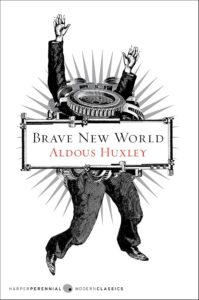
What Is Brave New World About?
A Society Built on Artificial Happiness
Brave New World takes place in a futuristic society known as the World State, a civilization obsessed with stability, efficiency, and happiness above all else. In this world, suffering, emotional conflict, and individuality are seen as dangerous problems that must be eliminated for society to function smoothly.
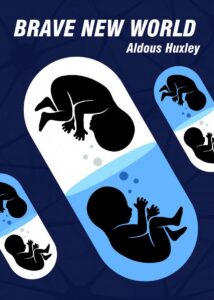
People are no longer born naturally. Instead, human beings are artificially created and genetically conditioned before birth to belong to specific social classes. From the intelligent and privileged Alphas to the obedient lower-class Epsilons, every person is designed to fulfill a predetermined role in society. The result is a civilization where almost everyone accepts their position without question.
To maintain this artificial harmony, the World State constantly distracts its citizens with entertainment, casual relationships, consumerism, and a powerful drug called soma, which removes pain and unpleasant emotions almost instantly. Real emotional connections, deep thinking, and individual desires are discouraged because they threaten the stability of the system.
The World State and Social Conditioning
One of the most fascinating aspects of the novel is the way society controls people without relying heavily on violence or terror. Citizens are conditioned from childhood through repetitive psychological programming that shapes their beliefs, desires, and behaviors. They are taught to fear solitude, reject strong emotions, and embrace endless consumption as a way of life.
This is what makes Brave New World so unsettling compared to many other dystopian stories. The people living in this society are not visibly oppressed in the traditional sense. Most of them genuinely believe they are happy. Huxley creates a terrifying possibility: a society where freedom disappears not because people are forced into submission, but because they no longer desire freedom at all.
The novel constantly raises philosophical questions about happiness, individuality, and the cost of emotional comfort. Is a painful but authentic life better than a peaceful artificial one? Can humanity still exist without suffering, art, passion, or personal struggle? These are the ideas that give the book its lasting power.
Who Is John “The Savage”?
The central emotional conflict of the story emerges through the character of John, often called “The Savage.” Unlike the citizens of the World State, John grows up outside this controlled society and experiences a more traditional human life filled with love, pain, religion, literature, and emotional conflict.
When John is eventually brought into the World State, he becomes a powerful contrast to the artificial happiness surrounding him. Through his perspective, readers can better see the emptiness hidden beneath the society’s perfect surface. John values individuality, emotional depth, and personal freedom, even when those things bring suffering.
His presence transforms the novel from a simple dystopian story into a deeper philosophical clash between comfort and humanity itself. In many ways, John represents the question at the heart of the novel: what does it truly mean to live a meaningful human life?

Why Brave New World Still Feels Relevant Today
Entertainment as a Form of Control
One of the main reasons Brave New World continues to resonate with modern readers is how accurately it anticipated a society obsessed with entertainment. In the World State, people are constantly distracted by pleasurable activities, superficial relationships, and endless stimulation designed to prevent them from thinking too deeply about their lives or the world around them.
That idea feels increasingly familiar in the modern age. Today, people live surrounded by streaming platforms, social media feeds, short-form videos, advertisements, and digital distractions competing for attention every second of the day. Huxley’s novel suggests that a society can be controlled not only through fear and censorship, but also through constant amusement and overstimulation.
What makes the novel so unsettling is that the citizens of the World State do not realize they are being controlled. They are entertained, comfortable, and emotionally sedated. As a result, they willingly accept the loss of individuality and freedom because they rarely stop long enough to question the system itself.
The Dangers of Endless Consumption
Consumerism plays a massive role in the society of Brave New World. Citizens are encouraged to constantly buy new products, participate in social activities, and avoid anything that promotes reflection or emotional attachment. Even relationships are treated as disposable experiences rather than meaningful human connections.
Huxley presents consumption almost like a civic duty. People are conditioned to replace objects instead of repairing them, pursue pleasure instead of emotional depth, and prioritize comfort over personal growth. The economy of the World State depends on people continuing to consume endlessly without questioning why.
Many readers see obvious parallels with modern culture, where advertising, trends, and digital algorithms constantly encourage people to seek immediate satisfaction. This aspect of the novel often feels less like science fiction and more like an exaggerated reflection of real life.
Escaping Reality Through Pleasure and Distraction
The drug soma is one of the most famous elements of the novel because it symbolizes humanity’s desire to escape discomfort. Whenever citizens feel sadness, stress, or emotional conflict, they simply take soma to instantly remove those feelings.
Although modern society does not have a direct equivalent to soma, many readers interpret it as a metaphor for anything used to avoid emotional pain or difficult truths. Endless entertainment, social media addiction, unhealthy habits, and constant distraction can all serve similar purposes by helping people temporarily escape anxiety, loneliness, or dissatisfaction.
Huxley’s warning is not necessarily about technology or pleasure themselves, but about the danger of building a society where people become afraid of silence, discomfort, and genuine emotional experiences.
Why the Novel Feels More Real Every Year
Many dystopian novels imagine societies ruled by brutal dictatorships and open oppression. Brave New World feels different because its world appears pleasant on the surface. Citizens are comfortable, entertained, and rarely experience conflict. That is precisely what makes the story so disturbing.
The novel argues that people may willingly sacrifice freedom, individuality, and critical thinking if they are offered enough comfort in return. This idea feels incredibly modern in a world increasingly shaped by algorithms, convenience, digital dependency, and constant stimulation.
For many readers, the true horror of Brave New World is not that its world seems impossible. It is that parts of it already exist.
What Makes Brave New World So Good?
The Disturbing and Memorable Worldbuilding
One of the greatest strengths of Brave New World is the incredible worldbuilding created by Aldous Huxley. The society of the World State feels carefully designed in every detail, from its artificial reproduction system to its psychological conditioning and obsession with pleasure. Even decades after its publication, the setting remains unique among dystopian novels.
What makes this world especially memorable is how believable it feels. Huxley does not create a chaotic apocalypse or a violent dictatorship filled with constant suffering. Instead, he presents a stable and highly functional civilization where nearly everyone appears satisfied with their lives. That surface-level happiness makes the hidden loss of humanity feel even more disturbing.
The novel constantly introduces ideas that stay in the reader’s mind long after finishing the book: babies genetically engineered for social classes, emotional suppression through drugs, meaningless entertainment replacing art and culture, and a society terrified of solitude and deep thought. The result is a fictional world that feels intellectually fascinating and emotionally unsettling at the same time.
Aldous Huxley’s Philosophical Ideas
Unlike many dystopian novels that focus primarily on plot or action, Brave New World stands out because of its philosophical depth. Huxley explores complex questions about freedom, happiness, individuality, and the nature of humanity itself.
The novel asks whether true happiness can exist without pain, struggle, or emotional depth. In the World State, suffering has largely been eliminated, but so have many of the qualities that make human life meaningful: passionate love, personal ambition, artistic expression, religion, and emotional authenticity.
This philosophical conflict becomes especially powerful through the character of John, who values freedom and emotional truth even when they lead to pain. His perspective challenges the values of the World State and forces readers to question what kind of life they would personally choose.
These deeper themes are one of the main reasons why the novel continues to be studied in schools, debated online, and discussed by readers nearly a century after its release.
The Novel’s Powerful Social Criticism
Another reason the book is so highly regarded is its sharp criticism of modern society. Huxley examines the dangers of excessive consumerism, technological dependency, emotional avoidance, and blind conformity long before many of these issues became central parts of everyday life.
The novel criticizes a culture that prioritizes comfort over truth and entertainment over critical thinking. Citizens are encouraged to avoid difficult emotions, consume endlessly, and remain constantly distracted. In doing so, they gradually lose their individuality without even noticing it.
This social criticism feels remarkably modern today. Readers often describe the novel as prophetic because many of its warnings seem increasingly relevant in an age dominated by algorithms, social media, advertising, and instant gratification.
Why the Book Feels So Uncomfortably Real
Perhaps the most impressive aspect of Brave New World is how realistic its central ideas feel. The novel does not rely on impossible science fiction concepts or exaggerated fantasy. Instead, it takes recognizable human behaviors and pushes them to disturbing extremes.
People naturally seek pleasure, comfort, convenience, and emotional escape. Huxley simply imagines a society where those desires become the foundation of an entire civilization. That is why the novel often feels more believable than many other dystopian stories.
For countless readers, the book’s greatest achievement is not merely predicting technological trends, but understanding human nature itself. Brave New World remains powerful because its warnings are psychological and philosophical rather than purely political.
The Biggest Weaknesses of Brave New World
Why Some Readers Find the Story Emotionally Cold
Despite its reputation as a classic masterpiece, Brave New World is not a novel that works for everyone. One of the most common criticisms is that the story feels emotionally distant. Unlike many character-driven novels, Huxley focuses far more on ideas and social commentary than on creating deeply emotional relationships between the characters.
As a result, some readers struggle to form strong emotional attachments to the people in the story. Characters often feel more like representations of philosophical viewpoints than fully realistic individuals. For readers expecting a deeply personal or emotionally immersive narrative, this can make the novel feel cold and detached.
However, many fans argue that this emotional emptiness is intentional. The society portrayed in the novel has removed much of what makes human relationships meaningful, so the emotional distance experienced by the reader mirrors the artificial nature of the World State itself.
A Slow Beginning That Divides Readers
Another common criticism is the novel’s opening section. The first chapters spend a significant amount of time explaining how the World State functions, including its genetic engineering, social hierarchy, and conditioning systems. While these details are essential for understanding the story, some readers find the beginning slow, dense, or overly focused on exposition.
Unlike fast-paced dystopian novels filled with immediate conflict and suspense, Brave New World takes its time introducing the mechanics of its society before fully developing the central philosophical conflict. Readers who prefer action-heavy stories may find this structure difficult to engage with initially.
At the same time, many people who struggle with the beginning later admit that the payoff becomes stronger as the novel progresses and its themes become clearer.
Characters That Feel More Symbolic Than Human
Several characters in the novel are intentionally symbolic. Bernard Marx represents dissatisfaction within a conformist society, Lenina Crowne reflects the conditioned values of the World State, and John embodies emotional authenticity and individuality.
While this symbolic approach strengthens the novel’s philosophical themes, it can also make some characters feel less natural or psychologically complex compared to those in more traditional literary fiction. Readers searching for nuanced emotional development may feel disappointed by how much the novel prioritizes ideas over character depth.
This is one of the reasons why opinions about Brave New World can vary so dramatically. Some readers admire its intellectual focus, while others wish the story offered stronger emotional engagement.
Why Some People Struggle to Finish the Book
The combination of philosophical discussions, emotionally distant characters, and slower pacing means that Brave New World is not always an easy read for modern audiences. Readers expecting a straightforward dystopian thriller may be surprised by how reflective and dialogue-heavy the novel becomes, especially in its later sections.
In many ways, the book demands patience and careful thought from the reader. It is less concerned with entertainment and more interested in challenging assumptions about happiness, freedom, and modern society.
For some readers, that makes the novel unforgettable. For others, it makes the experience feel difficult or emotionally inaccessible. Whether this is a flaw or part of the book’s brilliance ultimately depends on the type of reading experience someone is looking for.
Brave New World vs 1984
Control Through Pleasure vs Control Through Fear
Comparisons between Brave New World and 1984 are almost unavoidable. Both novels are considered among the greatest dystopian books ever written, yet they imagine completely different methods of controlling society.
In 1984, written by George Orwell, people are controlled through fear, violence, surveillance, censorship, and political oppression. The government maintains power by creating suffering and terror. Citizens obey because they are afraid of punishment.
In Brave New World, however, control works in the opposite way. The World State keeps society stable through pleasure, entertainment, comfort, and emotional distraction. Citizens are not forced into obedience through pain. Instead, they willingly accept their lack of freedom because they are constantly entertained and emotionally satisfied.
This difference is one of the main reasons why readers continue debating which novel feels more realistic today.
The Different Types of Dystopian Horror
The horror of 1984 is immediate and obvious. It is a world filled with paranoia, torture, propaganda, and brutal authoritarianism. Readers can easily recognize the danger because suffering is visible everywhere.
The horror of Brave New World is much quieter and psychologically unsettling. At first glance, the World State appears peaceful and successful. People are comfortable, entertained, sexually liberated, and rarely experience emotional pain. Yet beneath that surface lies a society that has sacrificed individuality, emotional depth, art, family, religion, and genuine human connection.
This is what makes Huxley’s dystopia uniquely disturbing. The citizens do not realize what they have lost because they were conditioned from birth to avoid questioning the system. Their happiness exists partly because they no longer understand what freedom truly means.
Many readers find this concept especially frightening because it feels more subtle and psychologically believable than traditional dystopian oppression.
Which Novel Feels More Relevant Today?
For decades, readers often viewed 1984 as the ultimate warning about authoritarian governments and political surveillance. However, many modern readers now argue that Brave New World feels even more relevant in today’s world.
Modern society is heavily shaped by entertainment, social media, consumerism, advertising, and constant digital stimulation. People are surrounded by distractions designed to capture attention and provide instant gratification. Because of this, Huxley’s vision of a society controlled through pleasure and comfort can feel surprisingly familiar.
That does not mean Orwell’s warnings are no longer important. In reality, many readers believe both novels complement each other perfectly. 1984 explores the dangers of external oppression, while Brave New World explores the dangers of voluntary submission through distraction and comfort.
Together, they remain two of the most important dystopian novels ever written, each offering a different warning about the future of human society.
Looking for More Dystopian Books Like Brave New World?
If the disturbing social criticism and psychological horror of Brave New World left you wanting more thought-provoking dystopian fiction, there are plenty of other unforgettable novels waiting for you. From oppressive governments to terrifying visions of the future, these books explore humanity, control, freedom, and the dangers of modern society in fascinating ways.
Check out our list of 5 Books Like 1984 and discover more dystopian classics that will challenge the way you see the world.
Is Brave New World Hard to Read?
The Writing Style and Narrative Structure
For many modern readers, Brave New World can feel somewhat challenging at first. Aldous Huxley’s writing style is more intellectual and idea-driven than emotionally immersive, especially compared to many contemporary dystopian novels. The book spends a considerable amount of time exploring philosophical concepts, social systems, and psychological conditioning rather than focusing entirely on plot or action.
The opening chapters are particularly dense because they introduce the structure of the World State in great detail. Readers are quickly exposed to unfamiliar terminology, scientific concepts, and complex social hierarchies. This can initially feel overwhelming, especially for those expecting a faster and more straightforward narrative.
However, the novel becomes easier to follow once the reader understands how the society functions. Many people who struggled with the beginning later describe the book as deeply rewarding because its themes become more powerful as the story progresses.
Who Will Enjoy This Book the Most?
Brave New World is often most appreciated by readers who enjoy philosophical fiction and thought-provoking social commentary. People interested in dystopian literature, political ideas, psychology, or critiques of modern society are especially likely to connect with the novel’s themes.
The book also appeals strongly to readers who enjoy analyzing symbolism and deeper meanings in literature. Much of its impact comes not from dramatic action scenes, but from the uncomfortable questions it raises about happiness, freedom, consumerism, and human nature.
Fans of authors like George Orwell, Ray Bradbury, and Yevgeny Zamyatin will likely appreciate the novel’s intellectual approach to dystopian storytelling.
What Kind of Reader Might Not Like It?
Readers searching for an emotional, character-driven story may struggle with Brave New World. The novel intentionally creates emotional distance between the audience and many of its characters, prioritizing philosophical ideas over personal drama.
People who prefer fast pacing, intense suspense, or action-heavy narratives may also find parts of the book slow. Some readers become frustrated with the large amount of dialogue and social commentary, especially during the later sections of the novel.
That said, even readers who do not fully enjoy the experience often admit that the book remains intellectually fascinating. Brave New World is one of those rare novels that can provoke strong thought and discussion even among people who have mixed feelings about the story itself.
Ultimately, whether the novel feels difficult or enjoyable depends largely on what the reader expects from dystopian fiction. Those looking for deep ideas and unsettling social criticism will likely find it rewarding, while readers searching primarily for entertainment may connect with it less strongly.
Who Should Read Brave New World?
Perfect for Fans of Dystopian Fiction
If you enjoy dystopian novels that explore the darker possibilities of human society, Brave New World is absolutely worth reading. The book stands alongside classics like 1984 and Fahrenheit 451 as one of the defining works of dystopian literature.
What makes Huxley’s novel especially unique is its focus on comfort and pleasure as tools of control. Instead of depicting a world ruled purely through violence and oppression, the story explores how people might willingly surrender freedom in exchange for convenience, entertainment, and artificial happiness.
Readers who enjoy dystopian fiction that feels psychologically unsettling rather than action-oriented will likely find the novel fascinating.
A Great Choice for Readers Interested in Philosophy
Beyond its dystopian setting, Brave New World is deeply philosophical. The novel constantly questions ideas about happiness, individuality, suffering, morality, and the meaning of human life. Rather than offering simple answers, Huxley encourages readers to reflect on difficult questions about society and human nature.
The story explores whether emotional pain is an essential part of being human and whether a perfectly stable society might ultimately destroy the qualities that give life meaning. Readers interested in philosophy, psychology, sociology, or political thought often find the novel especially rewarding because of these deeper themes.
Even decades after its publication, many of the questions raised by the book still feel surprisingly modern.
Why Fans of George Orwell and Ray Bradbury May Love It
Readers who enjoy the works of George Orwell and Ray Bradbury will probably appreciate Brave New World as well. Like 1984 and Fahrenheit 451, Huxley’s novel examines the dangers of conformity, mass control, and the gradual loss of critical thinking within society.
However, the atmosphere and themes feel very different from Orwell’s darker political paranoia or Bradbury’s emotional defense of literature and intellectual freedom. Huxley’s vision is colder, more clinical, and arguably more subtle in the way it portrays societal control.
For readers interested in classic speculative fiction that still sparks debate today, Brave New World remains one of the most important novels in the genre.
Who Was Aldous Huxley?
A Brief Biography of the Author
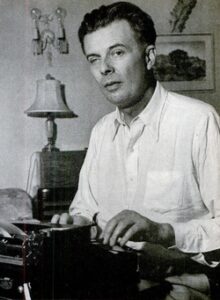
Aldous Huxley was an English writer and philosopher born on July 26, 1894, in Surrey, England. He came from a highly intellectual family connected to science, literature, and education. His grandfather was the famous biologist Thomas Henry Huxley, often known as “Darwin’s Bulldog” because of his strong defense of Charles Darwin’s theories.
During his youth, Huxley suffered from a serious eye illness that left him partially blind for several years. This experience had a profound impact on his life and influenced his intellectual interests, pushing him toward literature and philosophy rather than scientific work.
Over time, Huxley became known not only as a novelist, but also as an essayist and social critic deeply interested in politics, psychology, spirituality, technology, and human consciousness. His writing often explored the relationship between scientific progress and the future of humanity.
Huxley’s Literary Legacy
Although Brave New World remains his most famous work, Aldous Huxley built a literary legacy that extends far beyond a single novel. His books frequently examined modern civilization, mass culture, human behavior, and the dangers of losing individuality within increasingly technological societies.
What makes Huxley particularly important in literary history is his ability to combine philosophical ideas with speculative fiction. Many of his warnings about consumerism, technological distraction, and psychological manipulation continue to feel remarkably relevant today.
Over the decades, Brave New World became one of the most influential dystopian novels ever written, inspiring countless discussions about politics, ethics, media, and modern culture. The novel remains widely studied in schools and universities around the world.
Other Important Books Written by Aldous Huxley
While Brave New World is his defining masterpiece, Huxley wrote many other influential works throughout his career. Some of his best-known books include:
- Island (1962) – a philosophical utopian novel often viewed as a thematic counterpart to Brave New World.
- The Doors of Perception (1954) – an influential nonfiction work exploring altered states of consciousness and perception.
- Point Counter Point (1928) – a satirical and intellectual novel examining modern society and human relationships.
- Eyeless in Gaza (1936) – a deeply philosophical novel focused on morality, pacifism, and self-discovery.
Aldous Huxley died on November 22, 1963, but his work continues to influence literature, philosophy, and cultural discussions to this day. Few authors have written a dystopian novel that remains as debated and relevant nearly a century after publication.
Final Verdict: Is Brave New World Good?
Why the Novel Remains One of the Most Important Dystopian Books Ever Written
Yes, Brave New World is widely considered one of the greatest dystopian novels ever written — but not necessarily because it is entertaining in the traditional sense. Aldous Huxley’s novel stands out because of its ideas, its disturbing social criticism, and the uncomfortable questions it forces readers to confront about modern society and human nature.
The book’s greatest strength is how realistic its warnings feel. Huxley imagined a future where people become controlled not through violence, but through pleasure, distraction, convenience, and endless consumption. Decades later, many readers believe that vision feels more relevant than ever.
At the same time, the novel is not perfect for everyone. Its emotionally distant characters, slower pacing, and highly philosophical style can make the reading experience difficult for some audiences. Readers looking for fast action or emotionally intense storytelling may struggle to connect with it.
However, even many people who dislike certain aspects of the novel still acknowledge its importance and intellectual power. Brave New World is the kind of book that stays in the reader’s mind long after the final page because its ideas continue to feel disturbingly possible.
Is Brave New World Worth Reading Today?
For readers interested in dystopian fiction, philosophy, psychology, or social criticism, Brave New World remains absolutely worth reading. The novel continues to spark debates about technology, entertainment, consumerism, freedom, and the future of society nearly a century after it was first published.
Its relevance to modern culture is one of the main reasons why the book still attracts new readers every year. In a world increasingly shaped by algorithms, digital distraction, instant gratification, and emotional escapism, Huxley’s vision often feels less like science fiction and more like an unsettling reflection of reality.
Whether you end up loving the novel or struggling with parts of it, Brave New World is undeniably an important and thought-provoking reading experience. It is not simply a story about the future — it is a warning about human nature itself.

Leave a Reply