
More than 175 years after its publication, The Count of Monte Cristo remains one of the most beloved novels ever written. Originally published in 1844 and written by Alexandre Dumas, the book continues to attract new generations of readers despite its intimidating length and nineteenth-century origins.
At first glance, it may seem like just another classic adventure story. However, those who venture into its pages quickly discover something much more ambitious. The novel combines revenge, betrayal, friendship, justice, romance, political intrigue, and personal transformation into a story that feels surprisingly modern even today.
Many readers approach the book wondering whether such an old and lengthy novel can still hold their attention. After all, there are countless contemporary thrillers, fantasy novels, and historical adventures competing for their time. Yet The Count of Monte Cristo continues to earn enthusiastic praise from both casual readers and literary critics alike.
So, is The Count of Monte Cristo actually worth reading in the twenty-first century? The short answer is yes. But the reasons why it has earned its legendary reputation are far more interesting than a simple recommendation.
Why The Count of Monte Cristo Is Still Considered a Masterpiece
Few novels have maintained their popularity as successfully as The Count of Monte Cristo. While many classics are admired primarily for their historical importance, Dumas’s masterpiece continues to be genuinely enjoyed by modern readers.
One reason for its enduring success is the universal appeal of its central premise. The story begins with Edmond Dantès, a young sailor whose future appears bright. He is talented, respected, and about to marry the woman he loves. Then, through the jealousy and greed of several enemies, his entire life is destroyed. Wrongfully imprisoned without a trial, he loses everything that once gave his life meaning.
From that moment, readers become emotionally invested in his fate. The injustice is so severe that it creates an immediate desire to see those responsible face the consequences of their actions. This emotional connection drives the novel forward and keeps readers engaged throughout its many twists and turns.
Another reason for the book’s reputation is its remarkable scope. What begins as the story of a falsely imprisoned man gradually evolves into a vast narrative involving hidden identities, secret fortunes, political conspiracies, family dramas, and carefully orchestrated acts of revenge. Dumas manages to weave these elements together in a way that rarely feels confusing despite the large cast of characters.
The novel also succeeds because it offers much more than simple entertainment. Beneath the thrilling plot lies a thoughtful exploration of human nature. The story asks difficult questions about justice, mercy, obsession, and whether revenge can truly heal a wounded soul. These themes give the book a depth that many adventure novels never achieve.
Perhaps most importantly, The Count of Monte Cristo has influenced countless stories that came after it. The idea of a betrayed man returning under a new identity to confront those who wronged him has inspired generations of writers, filmmakers, and storytellers. Many modern heroes, antiheroes, and vigilantes owe at least part of their existence to the blueprint that Dumas created.
For all these reasons, the novel has earned a rare distinction. It is not simply a classic that people feel obligated to respect—it is a classic that people genuinely love reading.
What Is The Count of Monte Cristo About?
The Count of Monte Cristo follows the story of Edmond Dantès, a young French sailor whose life is destroyed just when everything seems to be going perfectly. He has a promising career ahead of him, he is loved by his fiancée Mercédès, and he appears to be on the edge of a happy future.
However, his success creates envy. Several men, each driven by jealousy, ambition, or cowardice, conspire against him. As a result, Dantès is falsely accused of political treason and imprisoned in the Château d’If, a grim island fortress off the coast of Marseille.
During his imprisonment, Dantès meets Abbé Faria, an elderly prisoner who becomes his mentor. Faria teaches him languages, history, science, philosophy, and strategy. More importantly, he reveals the location of a hidden treasure on the island of Monte Cristo.
After escaping prison, Dantès finds the treasure and reinvents himself as the mysterious and immensely wealthy Count of Monte Cristo. With his new identity, he enters Parisian high society and begins a carefully planned campaign against the people who betrayed him.
But the novel is not only about revenge. As Dantès gains power over the lives of his enemies, the story becomes increasingly concerned with morality. Is he delivering justice, or has he become consumed by vengeance? That question is one of the reasons The Count of Monte Cristo remains such a powerful and memorable book.
Why So Many Readers Fall in Love With This Novel
There are countless classic novels that are respected by literary scholars but rarely read for pleasure. The Count of Monte Cristo is different. Decades after finishing the book, many readers still describe it as one of the greatest novels they have ever experienced.
The reason for this lasting admiration is simple: the novel excels in almost every area that makes a story memorable. It delivers suspense, emotional investment, unforgettable characters, dramatic twists, philosophical depth, and a plot that rewards patience. Few books manage to combine all of these qualities so successfully.
Whether someone approaches the novel as a fan of historical fiction, adventure stories, mysteries, thrillers, or character-driven dramas, there is usually something in Dumas’s masterpiece that captures their attention.
One of the Greatest Revenge Stories Ever Written
If revenge stories have become a staple of modern fiction, The Count of Monte Cristo is one of the main reasons why. The novel takes a simple concept—a man seeking justice against those who ruined his life—and elevates it into an epic narrative of extraordinary scale.
What makes the revenge so satisfying is that readers witness every stage of Edmond Dantès’s suffering. They see his innocence, his betrayal, his years of imprisonment, and his transformation into a man capable of carrying out an intricate plan. Because the audience experiences these hardships alongside him, every step toward retribution feels meaningful.
Unlike many modern revenge stories that rely heavily on violence, Dumas often focuses on psychological and social consequences. The Count rarely rushes into action. Instead, he patiently studies his enemies, learns their weaknesses, and positions himself so that their own flaws ultimately contribute to their downfall.
This careful approach creates an almost irresistible sense of anticipation. Readers constantly wonder how the next piece of the Count’s plan will unfold and what consequences await the people who betrayed him.
An Unforgettable Main Character
One of the novel’s greatest strengths is Edmond Dantès himself. His transformation is so dramatic that it almost feels as though readers are following multiple characters throughout the story.
At the beginning of the novel, Dantès is kind, optimistic, and trusting. He believes in hard work, loyalty, and the basic goodness of those around him. His wrongful imprisonment shatters that worldview and forces him to confront a much harsher reality.
Years later, when he reappears as the Count of Monte Cristo, he is nearly unrecognizable. Intelligent, wealthy, mysterious, and seemingly in control of every situation, he possesses an almost mythical presence. Yet beneath that confident exterior remains a wounded man who has never fully escaped the trauma of his past.
This complexity is what makes Dantès such a compelling protagonist. He is neither a flawless hero nor a simple villain. Readers may admire him, sympathize with him, fear him, or even question his actions, sometimes all within the same chapter.
Few literary characters evolve as dramatically or remain as fascinating from the first page to the last.
The Story Never Stops Evolving
Many long novels struggle to maintain momentum. The Count of Monte Cristo, despite often exceeding a thousand pages, continually reinvents itself.
The story begins as a tale of betrayal and imprisonment. It then becomes an escape adventure, a treasure hunt, a social drama, a mystery, and finally a complex examination of revenge and justice. Each phase introduces new challenges, new characters, and new layers to the narrative.
This constant evolution prevents the book from feeling repetitive. Just when readers think they understand where the story is heading, Dumas introduces another twist or reveals another piece of the Count’s larger plan.
The result is a novel that often feels surprisingly modern. Many contemporary thrillers rely on cliffhangers and shocking revelations to keep readers engaged, yet Dumas was employing similar techniques nearly two centuries ago.
Much More Than an Adventure Novel
Although The Count of Monte Cristo is frequently categorized as an adventure novel, that label only tells part of the story.
Beneath the exciting plot lies a thoughtful exploration of some of humanity’s most enduring questions. The novel examines the nature of justice, the consequences of obsession, the corrupting influence of power, and the possibility of redemption after immense suffering.
As the Count’s plans unfold, readers are encouraged to reflect on whether revenge truly brings peace. Can a person dedicate years of their life to vengeance without losing part of themselves in the process? Is it possible to act as an instrument of justice without becoming morally compromised?
These deeper themes elevate the novel beyond simple entertainment. They ensure that readers are not only invested in what happens next but also in what the events ultimately mean.
It is this combination of thrilling storytelling and philosophical depth that has helped The Count of Monte Cristo remain relevant for generations of readers.
The Psychological Transformation of Edmond Dantès
One of the most fascinating aspects of The Count of Monte Cristo is that it is not merely a story about revenge. At its heart, it is a story about transformation. The Edmond Dantès who enters the Château d’If is not the same man who eventually emerges from it.
When readers first meet Dantès, he is young, honest, and remarkably innocent. He trusts those around him and believes that hard work and good intentions will naturally lead to a happy life. His future seems secure, and he has little reason to suspect that others might secretly resent him.
His imprisonment destroys that innocence almost overnight. Stripped of his freedom and cut off from the world, Dantès experiences years of despair, anger, and hopelessness. At several points, he comes dangerously close to surrendering entirely.
Everything changes when he meets Abbé Faria. More than simply helping Dantès escape, Faria gives him a new purpose. Through education and mentorship, he transforms an ordinary sailor into an exceptionally intelligent and disciplined man. The knowledge Dantès acquires becomes just as important as the treasure he later discovers.
This period of growth is one of the novel’s most important sections because it demonstrates that the Count of Monte Cristo is not created by wealth alone. His power comes from years of study, patience, and self-control. The treasure gives him resources, but his experiences in prison shape the person he becomes.
Yet Dantès’s transformation comes at a cost. The qualities that once defined him—trust, optimism, and simplicity—gradually disappear. In their place emerges a man who carefully calculates every move and views the world through the lens of justice and revenge.
This creates a fascinating tension within the character. Readers often admire the Count’s intelligence and determination, but they also witness how deeply his suffering has altered him. He becomes increasingly isolated, treating people as pieces on a chessboard rather than as individuals with their own emotions and struggles.
As the novel progresses, Dumas repeatedly invites readers to ask an uncomfortable question: has Edmond Dantès become stronger, or has he simply become consumed by his desire for vengeance?
The answer is intentionally complex. Dantès is undoubtedly more capable than he was as a young sailor. He possesses knowledge, confidence, wealth, and influence. At the same time, he carries emotional scars that never fully heal.
This psychological depth is one of the reasons the novel continues to resonate with modern audiences. Many stories feature characters who seek revenge, but few explore the emotional consequences with the same level of nuance. Dumas understands that suffering changes people, and he is unwilling to present that change as entirely positive or entirely negative.
By the end of the novel, readers have witnessed not only an extraordinary revenge plot but also a profound study of identity, trauma, and personal growth. Edmond Dantès remains memorable because his journey feels deeply human, even when his actions seem larger than life.
Is The Count of Monte Cristo Difficult to Read?
One of the most common questions potential readers ask is whether The Count of Monte Cristo is difficult to read. Considering that it is a lengthy nineteenth-century novel, the concern is understandable.
Many people assume that classic literature is automatically dense, slow, and inaccessible. Fortunately, this is one area where The Count of Monte Cristo often surprises readers.
The Length Can Be Intimidating
There is no denying that the novel is large. Depending on the edition, it can exceed 1,000 pages. For readers who are accustomed to shorter modern novels, that number alone can seem overwhelming.
The book also contains a large cast of characters, multiple subplots, and a story that unfolds over many years. Some readers may initially struggle to keep track of names, relationships, and hidden identities.
In addition, the pacing occasionally slows down as Dumas develops secondary characters and establishes future events. Readers expecting constant action from beginning to end may find certain sections more deliberate than they anticipated.
These factors explain why some people hesitate before starting the novel. On paper, it appears to require a significant investment of time and attention.
Why Most Readers End Up Flying Through It
Despite its length, many readers are surprised by how quickly they move through the book. Unlike some classics that prioritize literary experimentation or dense prose, Dumas focuses on storytelling.
His writing style is generally clear, direct, and accessible. The chapters are often structured to create suspense, encouraging readers to continue with “just one more chapter.” Before long, hundreds of pages have passed.
The novel’s constant stream of revelations also helps maintain momentum. Secrets are uncovered, new identities are revealed, alliances shift, and carefully hidden plans gradually come into focus. This creates a reading experience that often feels closer to a modern thriller than a traditional literary classic.
Perhaps most importantly, readers become emotionally invested in Edmond Dantès and his journey. Once that connection is established, the length of the novel becomes far less intimidating because the audience genuinely wants to know what happens next.
For this reason, many readers who initially worry about the book’s size eventually describe it as one of the fastest thousand-page novels they have ever read.
Does The Novel Have Any Weaknesses?
As beloved as The Count of Monte Cristo is, no book is perfect. Even many of its biggest admirers acknowledge that certain aspects of the novel may not appeal to every reader.
Fortunately, most criticisms tend to focus on relatively minor issues rather than fundamental flaws. The strengths of the story are so significant that many readers consider these shortcomings easy to forgive. Still, anyone considering the novel should know what challenges they might encounter.
Its Massive Cast of Characters
One of the most common criticisms involves the sheer number of characters. Dumas populates his story with aristocrats, bankers, politicians, criminals, servants, soldiers, merchants, and members of several interconnected families.
As the Count’s plans become more elaborate, new characters continue to enter the narrative. Some play major roles, while others appear briefly before becoming important hundreds of pages later.
This complexity contributes to the richness of the novel, but it can also create confusion. Readers occasionally find themselves flipping back through earlier chapters to remember a particular name or relationship.
The challenge becomes even greater because several characters operate under false identities or conceal important information. Keeping track of who knows what can sometimes require careful attention.
However, many readers ultimately view this complexity as one of the book’s strengths. The intricate web of relationships makes the world feel larger and more realistic, while also allowing Dumas to construct an unusually sophisticated plot.
Some Sections Move More Slowly Than Others
Another criticism concerns pacing. While much of the novel is remarkably engaging, certain sections progress more slowly than others.
Dumas occasionally spends considerable time introducing characters, exploring social relationships, or setting up future events. These chapters may feel less exciting to readers who are primarily interested in the Count’s revenge plot.
This is partly a consequence of how nineteenth-century novels were written. Unlike many modern thrillers that focus relentlessly on momentum, serialized novels often devoted time to developing secondary storylines and expanding the world of the narrative.
Readers expecting nonstop action may therefore encounter stretches where the story feels more concerned with conversation, social dynamics, or long-term setup than immediate payoff.
That said, many of these slower sections become more rewarding in hindsight. Details that initially appear insignificant often prove essential later, demonstrating the remarkable level of planning behind Dumas’s narrative.
For most readers, these weaknesses are far outweighed by the novel’s strengths. The occasional pacing issues and complex cast rarely diminish the power of the overall experience.
The Moral Question at the Heart of the Story
At first glance, The Count of Monte Cristo appears to be a straightforward tale of revenge. A wronged man escapes prison, acquires immense wealth, and returns to punish those who destroyed his life.
Yet one of the reasons the novel has endured for so long is that it refuses to remain that simple.
As Edmond Dantès executes his plans, the story gradually shifts from a question of whether his enemies deserve punishment to a much more complicated question: how far should any person be allowed to go in pursuit of justice?
This moral ambiguity gives the novel much of its emotional and philosophical depth. Readers may begin the story enthusiastically supporting the Count’s mission, only to find themselves questioning certain aspects of it as events unfold.
When Does Justice Become Revenge?
Few readers would argue that Dantès was treated fairly. His imprisonment was cruel, unjust, and motivated by the selfish desires of others. In the beginning, his desire for justice feels completely understandable.
However, the longer his plans continue, the more difficult it becomes to separate justice from revenge.
The Count does not simply seek compensation for what he lost. He dedicates years of his life to carefully orchestrating the downfall of those responsible. His punishments often extend far beyond legal accountability and reach into nearly every aspect of his enemies’ lives.
Dumas encourages readers to consider whether even the most justified anger can become destructive when pursued without limits. The novel never offers an easy answer, which is one reason discussions about it remain so active today.
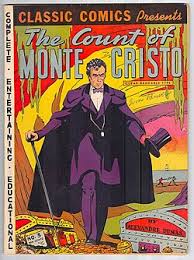
Is Edmond Dantès Still a Hero?
This question lies at the center of the novel.
In the early chapters, Dantès is unquestionably sympathetic. Readers naturally identify with his suffering and want him to reclaim the life that was stolen from him.
As the Count of Monte Cristo, however, he becomes a far more complicated figure. He is intelligent, charismatic, and often admirable, but he is also capable of manipulation and emotional detachment.
At times, he appears almost godlike, deciding who deserves reward and who deserves punishment. This immense power forces readers to evaluate his actions more critically than they might have expected when they first opened the book.
The brilliance of Dumas’s characterization is that Dantès never becomes entirely heroic or entirely villainous. Instead, he remains a deeply human figure whose strengths and flaws coexist throughout the story.
That complexity is one of the main reasons readers continue to debate him nearly two centuries after the novel’s publication.
How The Count of Monte Cristo Influenced Modern Fiction
It is difficult to overstate the influence that The Count of Monte Cristo has had on literature and popular culture. While many classic novels remain confined to classrooms and literary discussions, Dumas’s masterpiece continues to shape the stories we read, watch, and enjoy today.
The novel helped popularize a narrative formula that remains incredibly effective: a wronged protagonist disappears, transforms themselves through hardship and determination, and eventually returns to confront those who betrayed them. Countless books, films, television series, and comic book storylines have borrowed elements of this structure.
One reason the formula remains so powerful is that it taps into universal human emotions. Most people understand feelings of injustice, betrayal, or the desire to prove others wrong. Edmond Dantès embodies these emotions in an unforgettable way, making him one of literature’s most influential protagonists.
The Count’s secret identity also helped establish many conventions associated with later heroes and vigilantes. His wealth, intelligence, strategic planning, and mysterious public persona can be seen echoed in numerous fictional characters that followed.
Readers familiar with modern stories may even be surprised by how contemporary many aspects of the novel feel. Hidden agendas, elaborate schemes, dramatic revelations, and long-term character arcs are all elements that dominate modern entertainment, yet Dumas was using them masterfully in the mid-nineteenth century.
Beyond its influence on plot structures, the novel’s themes have remained equally relevant. Questions about justice, revenge, forgiveness, and personal identity continue to appear in modern fiction because they reflect timeless aspects of the human experience.
The fact that so many contemporary stories still explore these ideas is a testament to the enduring power of Dumas’s work. Even readers who have never opened the novel have likely encountered stories that were influenced by it in some way.
Who Should Read The Count of Monte Cristo?
Although The Count of Monte Cristo is often classified as a classic, it appeals to a much wider audience than many people expect.
Readers who enjoy historical fiction will find a richly detailed world filled with political intrigue, social conflicts, and memorable settings. Those who prefer adventure stories will discover daring escapes, hidden treasure, secret identities, and carefully planned schemes.
Fans of psychological fiction can appreciate the complex evolution of Edmond Dantès and the emotional consequences of his obsession with revenge. Meanwhile, readers who enjoy philosophical themes will find plenty of material to reflect upon as the novel explores justice, morality, and redemption.
The book is also an excellent choice for readers who are interested in exploring classic literature but worry that older novels may feel inaccessible. While its length can be intimidating, the storytelling itself is surprisingly approachable and engaging.
However, the novel may not be ideal for everyone. Readers who strongly prefer fast-paced contemporary writing styles or very short books might find the scale of the story challenging. Likewise, those who dislike large casts of characters may occasionally feel overwhelmed.
For most readers, though, these obstacles are minor compared to what the novel offers. Few books provide such a satisfying combination of adventure, character development, suspense, and thematic depth.
If you enjoy stories that reward patience and deliver memorable payoffs, The Count of Monte Cristo is likely to become one of the most rewarding reading experiences you will ever have.
Who Was Alexandre Dumas?
Alexandre Dumas was one of the most successful and influential writers of the nineteenth century. Born on July 24, 1802, in Villers-Cotterêts, France, he became famous for creating some of the most enduring adventure novels in literary history.
Dumas came from a remarkable family background. His father, Thomas-Alexandre Dumas, was a celebrated general who served during the French Revolutionary Wars. Although Alexandre lost his father at a young age, the stories of his father’s military achievements would later influence many of his own works.
Before becoming a novelist, Dumas worked as a clerk and developed an interest in theater. His early success as a playwright helped establish his reputation and eventually opened the door to a prolific literary career.
Over the course of his life, Dumas produced an enormous amount of writing, including novels, plays, essays, travel books, and historical works. His storytelling talent, combined with his gift for creating memorable characters and exciting plots, made him one of the most widely read authors of his era.
He died on December 5, 1870, but his works remain popular throughout the world. Today, he is widely regarded as one of France’s greatest literary figures.
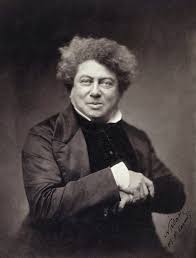
His Life and Literary Legacy
Dumas’s legacy extends far beyond his own lifetime. His novels have been translated into dozens of languages and adapted countless times for film, television, theater, and other media.
What makes his work particularly remarkable is its accessibility. Unlike some classic authors whose books are admired more than they are enjoyed, Dumas continues to attract enthusiastic readers because his stories remain entertaining even after nearly two centuries.
His influence can be seen in adventure fiction, historical novels, mysteries, thrillers, and even modern superhero narratives. Few writers have left such a broad and lasting mark on popular storytelling.
Other Famous Books by Alexandre Dumas
Although The Count of Monte Cristo is often considered his masterpiece, it is far from his only famous work.
- The Three Musketeers (1844)
- Twenty Years After (1845)
- The Vicomte of Bragelonne (1847–1850)
- The Black Tulip (1850)
- The Man in the Iron Mask (part of The Vicomte of Bragelonne)
These novels helped establish Dumas as one of the defining voices of adventure literature and continue to be read around the world today.
Final Verdict: Is The Count of Monte Cristo a Good Book?
Yes—The Count of Monte Cristo is not only a good book, but arguably one of the greatest novels ever written.
Its reputation has endured for nearly two centuries for good reason. Alexandre Dumas created a story that successfully combines thrilling adventure, unforgettable characters, emotional depth, philosophical questions, and one of the most satisfying revenge plots in literary history.
Few novels manage to appeal to such a wide range of readers. It can be enjoyed as a historical adventure, a psychological character study, a suspenseful thriller, or a meditation on justice and redemption. No matter how readers approach it, they are likely to find something memorable within its pages.
The novel is certainly not without challenges. Its length may intimidate some readers, and its large cast of characters occasionally demands careful attention. Yet these obstacles are ultimately small when compared to the richness of the experience it provides.
Perhaps the greatest compliment that can be paid to The Count of Monte Cristo is that it rarely feels like an obligation to read. Unlike many classics that are admired mainly for their historical importance, Dumas’s masterpiece remains genuinely entertaining. Readers do not finish it simply because they think they should; they finish it because they become completely absorbed by the story.
Edmond Dantès’s journey from innocent sailor to the mysterious Count of Monte Cristo remains one of the most compelling character arcs ever written. His triumphs, failures, doubts, and moral struggles continue to resonate with readers generations after the novel’s original publication.
If you are looking for a classic that still feels exciting, emotionally powerful, and surprisingly modern, The Count of Monte Cristo deserves a place near the top of your reading list.
While not every reader will rank it as their favorite novel, it is difficult to deny its extraordinary achievement. For many people, it is the rare book that not only lives up to its legendary reputation but actually exceeds it.
In short, if you have been wondering whether The Count of Monte Cristo is worth your time, the answer is an emphatic yes.

Leave a Reply