
How Live Shopping Is Changing the Publishing Industry
For the past several years, #BookTok has been one of the most powerful discovery engines in publishing, capable of turning backlist novels into overnight bestsellers. Now, social media is moving beyond passive recommendations into real-time retail. According to the first-ever TikTok Shop UK LIVE Report, released in November 2026, major publisher HarperCollins has seen a 225 percent surge in revenue from live-streamed shopping events since joining the platform in 2023. As live video broadcasts merge book clubs with instant checkout buttons, the rise of TikTok Shop live book sales is reshaping how books are marketed, sold, and discovered—raising new questions about what happens when literature meets social commerce.

Inside HarperCollins’s Live-Shopping Surge
When HarperCollins UK first began experimenting with TikTok Shop in 2023, the publisher started cautiously with a storefront of just 40 titles. Three years later, that experiment has scaled into a major direct-to-consumer channel. As reported by British trade publication The Bookseller and highlighted internationally by Publishing Perspectives, HarperCollins’s live-shopping performance demonstrates how rapidly live video has matured as a retail format:
- 225 percent increase in revenue generated specifically through TikTok Shop LIVE broadcasts since 2023.
- 193 percent growth in overall HarperCollins book sales across the TikTok Shop platform during the same period.
- Catalog expansion from 40 available titles to more than 24,000 books listed directly on the platform.
- An official brand channel audience that has grown past 100,000 followers.
HarperCollins is far from alone. Across TikTok Shop UK as a whole, the volume of books sold through live broadcasts grew by an average of 45 percent per month throughout 2026. During these live sessions, in-house hosts, guest authors, and book influencers showcase special editions, answer real-time questions from viewers in the chat, and pin limited-time discount links directly onto the video screen—allowing readers to buy a book without ever leaving the stream.
How BookTok Creators Drive Over Half of TikTok Shop Book Sales
One of the most striking findings in the November 2026 report is who is actually driving those transactions. Rather than relying solely on corporate brand accounts, content creators generated 54 percent of all book sales on TikTok Shop UK. Through affiliate commissions, everyday readers and established BookTok personalities have effectively become digital booksellers, turning personal enthusiasm and community trust into measurable retail conversions.
To understand the scale of the BookTok publishing industry shift, it helps to separate direct in-app purchases on TikTok Shop from BookTok’s broader cultural ripple effect across traditional bookstores and online retailers. In 2025 alone, more than 11 million books sold in the United Kingdom across all retail channels were linked to BookTok trends, generating £86 million in retail revenue. TikTok Shop simply closes the gap between seeing a passionate 30-second review and completing the purchase—eliminating the friction that once sent viewers off the app to search elsewhere.

Discovery vs. Impulse: How Algorithms Shape What We Read
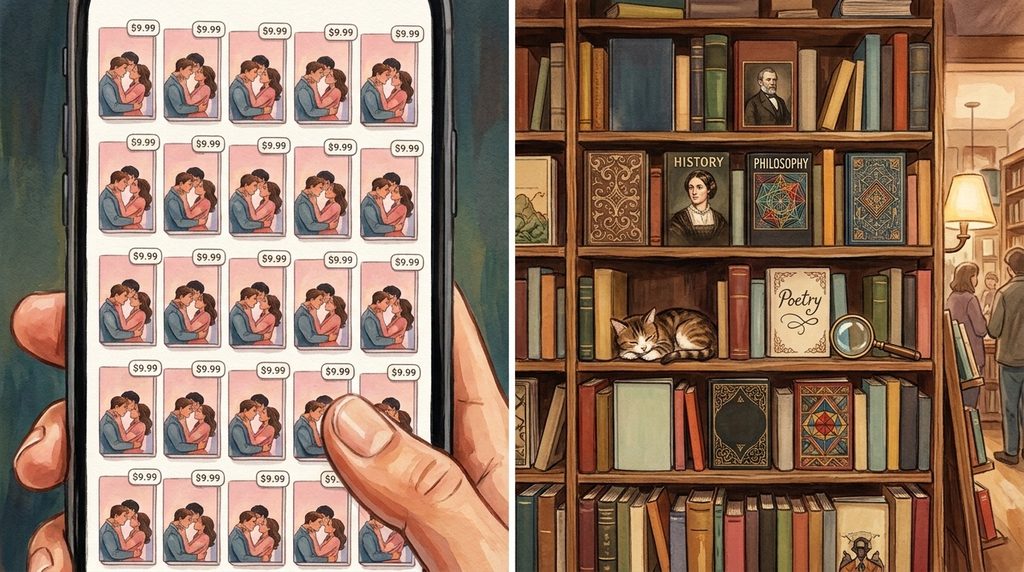
While the commercial numbers are impressive, the fusion of entertainment and instant purchasing—often called “shoppertainment”—has sparked debate among readers, authors, and critics. Platform bestseller rankings, such as TikTok’s monthly UK BookTok charts, consistently show that commercial fiction—especially contemporary romance, romantasy, psychological thrillers, and young adult fiction—dominates viral sales.
Because short videos and fast-paced live streams reward immediate emotional hooks, books with easily summarized tropes and eye-catching cover designs enjoy a clear algorithmic advantage. Literary fiction, poetry, translated works, and quieter character studies often struggle to compete in a format built around urgency and countdown deals. Even within the BookTok community, veteran creators have voiced concern over impulsive “book haul” culture, warning that flash discounts during live streams can encourage buying stacks of trendy paperbacks as social props rather than savoring them as stories.
Read Next on Reader Habitat
Curious about how reading culture, classic stories, and modern technology continue to collide? Explore these related articles on Reader Habitat:
- Classic Literature in 30 Minutes: Is Artificial Intelligence Destroying the Reading Experience? — From viral algorithms to AI-condensed audiobooks, discover how German publisher Argon Verlag’s 30-minute classics ignited a fierce debate over convenience versus deep reading.
- Is The Count of Monte Cristo a Good Book? Why This 1,000-Page Classic Still Captivates Readers — Step away from fast-paced feeds and see why Alexandre Dumas’s sprawling revenge epic continues to win over new generations of readers.
- 10 Best Books Like Brave New World — Explore gripping novels that examine how entertainment, consumer culture, and technology shape human attention and choice.
Opportunities and Risks for Publishers and Independent Bookstores
For major publishers, social commerce books offer two clear advantages: direct access to Gen Z and young millennial readers who overwhelmingly prefer physical print editions, and valuable first-party sales data outside traditional retail giants. At the same time, major brick-and-mortar chains like Waterstones in the UK and Barnes & Noble in the United States have adapted by installing dedicated BookTok display tables, proving that viral online buzz still drives foot traffic into physical shops.
Smaller publishers and independent bookstores face a steeper climb. While indie shops have found creative ways to use TikTok to build local community and sell signed editions, matching the deep promotional discounts and 24,000-title logistics of a global conglomerate on live streams is rarely realistic. Furthermore, building a sales pipeline inside a single social network carries inherent risks: algorithm shifts, rising platform fees, or regulatory uncertainty can alter visibility overnight.
Conclusion: Balancing Viral Reach With Literary Diversity
HarperCollins’s 225 percent jump in live-shopping revenue confirms that social media has become a permanent pillar of modern bookselling. By meeting young audiences in interactive spaces and keeping print books at the center of digital culture, live streams have brought undeniable energy—and millions of sales—to publishing. Yet as books increasingly share the screen with flash deals and algorithmic feeds, the industry’s long-term challenge will be ensuring that viral convenience complements, rather than replaces, the quiet diversity of human curation.