
Why Medieval Fiction Still Fascinates Readers
There is something timeless about the world of medieval fiction. Long before modern cities, technology, and industrial life, people lived in a harsher and more uncertain world shaped by war, religion, kings, castles, and survival. It was an era filled with political intrigue, bloody conflicts, mysterious monasteries, legendary warriors, and powerful myths that still influence modern storytelling today.
That atmosphere is exactly why medieval fiction continues to attract so many readers. These stories transport us into worlds where honor could mean life or death, where kingdoms rose and fell through betrayal, and where even ordinary people had to navigate brutal realities. Whether the story focuses on knights charging into battle, scholars hiding forbidden knowledge, or families struggling through famine and war, medieval fiction often feels larger than life while still reflecting deeply human emotions.
Another reason these novels remain so compelling is the incredible variety within the genre itself. Some medieval stories are dark murder mysteries hidden inside ancient abbeys. Others are enormous political epics about kings, wars, and cathedrals. Some romanticize the age of chivalry, while others portray the Middle Ages with raw realism and brutality.
This list brings together some of the best and most respected medieval fiction books ever written. Some are literary classics that helped define the genre, while others are modern masterpieces that made historical fiction accessible to millions of readers. Together, they showcase the many different faces of medieval storytelling: mystery, adventure, war, faith, politics, and legend.
And for fans of Arthurian fiction, there is also a bonus recommendation at the end that many readers consider one of the greatest retellings of King Arthur ever written.
1. The Name of the Rose by Umberto Eco
What Is The Name of the Rose About?
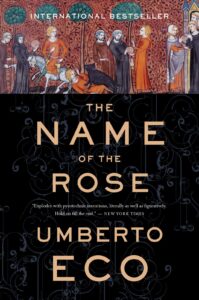
Published in 1980, The Name of the Rose by Umberto Eco is one of the most famous medieval novels ever written. The story takes place in northern Italy in the year 1327, inside a remote Benedictine monastery where a series of mysterious deaths begins to terrify the monks living there.
The novel follows William of Baskerville, a Franciscan friar known for his intelligence and logical thinking, accompanied by his young novice Adso of Melk. As more bodies appear under strange circumstances, William begins investigating the murders while tensions rise between different religious factions inside the Church.
What initially seems like a simple mystery slowly transforms into something much larger involving forbidden books, medieval philosophy, heresy, fear, censorship, and the dangerous power of knowledge itself. Much of the story revolves around the monastery’s labyrinthine library, one of the most memorable settings in modern literature.
Why You Should Read It
- It combines a brilliant murder mystery with deep historical realism
- The atmosphere of the monastery feels immersive, dark, and unforgettable
- The philosophical and religious discussions add enormous depth to the story
- William of Baskerville is one of the most fascinating detective-like characters in historical fiction
- The novel captures both the intellectual brilliance and paranoia of the medieval world
One of the reasons this novel became so influential is the way it respects the intelligence of the reader. Eco does not simplify the medieval setting for a modern audience. Instead, he fully embraces the complexity of the era, creating a story that feels authentic, scholarly, and haunting at the same time.
At its core, The Name of the Rose is not only about solving murders. It is also about the conflict between knowledge and ignorance, reason and fear, freedom and control. Those themes make the novel feel surprisingly modern despite being set nearly seven hundred years ago.
The Medieval Atmosphere of the Novel
Few books recreate medieval life as convincingly as this one. The cold stone monastery, the endless debates about theology, the handwritten manuscripts, and the fear of forbidden ideas all contribute to an atmosphere that feels both fascinating and oppressive.
Eco also explores the political instability of the medieval Church, including conflicts between different religious orders and the growing fear of heresy during the Inquisition. These historical details never feel forced because they are woven naturally into the mystery itself.
For readers who enjoy intelligent historical fiction filled with mystery, symbolism, and rich worldbuilding, The Name of the Rose is an unforgettable experience.
2. The Pillars of the Earth by Ken Follett
What Is The Pillars of the Earth About?
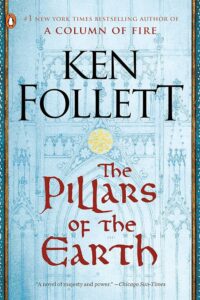
Published in 1989, The Pillars of the Earth by Ken Follett is one of the most successful and beloved medieval historical novels ever written. Set in 12th-century England during a period known as The Anarchy, the story revolves around the construction of the fictional Kingsbridge Cathedral and the lives of the people connected to it.
The novel follows several unforgettable characters, including Prior Philip, a determined and compassionate monk trying to protect Kingsbridge, Tom Builder, a mason whose lifelong dream is to build a great cathedral, Aliena, a noblewoman forced into poverty after political betrayal, and Jack, a gifted young builder with mysterious origins.
As their lives intertwine, the story explores political conspiracies, civil war, religious authority, revenge, ambition, romance, and survival in medieval England. The cathedral itself becomes the emotional and symbolic center of the novel, representing hope, faith, and human perseverance during a violent and unstable era.
Why You Should Read It
- It is one of the most accessible and addictive medieval novels ever written
- The characters feel deeply human and emotionally engaging
- The political conflicts create constant tension and suspense
- The construction of the cathedral gives the story a unique and memorable focus
- It balances historical realism with fast-paced storytelling perfectly
One of the greatest strengths of The Pillars of the Earth is how easy it is to become emotionally attached to its characters. Their struggles feel personal and realistic even while the story unfolds on a massive historical scale. Readers often become completely invested in the triumphs and tragedies of the people living in Kingsbridge.
Ken Follett also has a remarkable ability to explain medieval society in a way that never feels overly academic. The novel explores architecture, religion, economics, politics, and class differences without slowing down the story itself.
Why This Book Became So Popular
Part of what made The Pillars of the Earth such a phenomenon is its cinematic style. The novel combines detailed historical research with the pacing of a modern thriller, making it appealing even to readers who normally do not read historical fiction.
The book also helped popularize medieval fiction for a broader audience by showing that stories about cathedrals, monks, and medieval politics could still feel exciting, emotional, and suspenseful. Decades after its release, it remains one of the defining works of the genre.
For readers searching for a medieval story filled with ambition, love, betrayal, war, and unforgettable characters, The Pillars of the Earth is an easy recommendation.
3. Ivanhoe by Walter Scott
What Is Ivanhoe About?
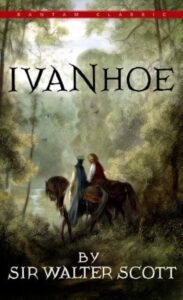
First published in 1819, Ivanhoe by Walter Scott is one of the most influential medieval adventure novels ever written. Set in England shortly after the Third Crusade, the story takes place during a time of political tension between the ruling Normans and the conquered Saxons.
The novel follows Wilfred of Ivanhoe, a Saxon knight loyal to King Richard the Lionheart. After returning from the Crusades, Ivanhoe becomes entangled in tournaments, political conspiracies, rivalries, and dangerous conflicts involving Prince John, Norman nobles, and outlaws hidden within the forests of England.
The story also introduces some of the book’s most memorable characters, including the noble and intelligent Rebecca, the proud Lady Rowena, the villainous Brian de Bois-Guilbert, and even legendary figures connected to the Robin Hood tradition.
Although modern readers may recognize some romanticized elements in its portrayal of the Middle Ages, Ivanhoe played a massive role in shaping the popular image of medieval England that still exists today.
Why You Should Read It
- It helped define modern medieval adventure fiction
- The novel is filled with tournaments, knights, castles, and political intrigue
- Its influence can be seen in countless later fantasy and historical stories
- Rebecca remains one of the most respected female characters in classic literature
- It captures the romantic imagination associated with the medieval world
What makes Ivanhoe particularly important is its historical influence. Many modern ideas about knights, chivalry, medieval tournaments, and heroic quests were heavily shaped by Walter Scott’s work. Even readers who have never opened the novel have probably encountered stories inspired by it.
At the same time, the book remains entertaining because of its adventurous tone. There are dramatic rescues, castle sieges, duels, betrayals, and moments of genuine tension throughout the narrative.
The Influence of Ivanhoe on Medieval Fiction
Before Ivanhoe, medieval settings were not nearly as popular in mainstream fiction. Walter Scott helped revive public fascination with the Middle Ages and inspired generations of writers who later expanded the genre into historical fiction and fantasy literature.
Its influence can still be felt in stories involving noble knights, divided kingdoms, heroic quests, and romantic visions of medieval Europe. Elements that modern readers associate with medieval fantasy often trace part of their origin back to Scott’s work.
For readers interested in classic medieval adventure and the origins of modern historical fiction, Ivanhoe remains an essential read.
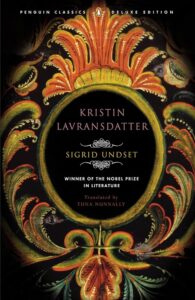
4. Kristin Lavransdatter by Sigrid Undset
What Is Kristin Lavransdatter About?
Published between 1920 and 1922, Kristin Lavransdatter by Sigrid Undset is a historical fiction trilogy set in 14th-century Norway. Unlike many medieval novels that focus primarily on war and knights, this story explores everyday life, family, religion, love, and personal morality during the Middle Ages.
The trilogy follows Kristin Lavransdatter from childhood into adulthood, portraying her emotional growth, relationships, marriage, struggles, and spiritual conflicts across decades of medieval life. Her relationship with Erlend Nikulausson becomes one of the central emotional forces of the story, bringing both passion and tragedy into her life.
What makes the series remarkable is how deeply human and realistic it feels. The characters are not idealized heroes from legends. They are flawed, emotional, complicated people trying to navigate love, faith, pride, duty, and regret in a difficult world.
Why You Should Read It
- It offers one of the most realistic portrayals of medieval daily life ever written
- The emotional and psychological depth of the characters is extraordinary
- The novel explores faith, morality, and human relationships with great maturity
- Its medieval setting feels authentic without becoming overwhelming
- The trilogy won worldwide recognition for its literary quality and historical detail
One of the greatest achievements of Kristin Lavransdatter is the way it transforms medieval life into something intimate and emotionally recognizable. Readers experience not only the political and religious realities of the time, but also the quieter human experiences that often disappear from historical narratives.
Sigrid Undset’s attention to detail also makes the world feel alive. The customs, clothing, religious traditions, social expectations, and family structures of medieval Norway are portrayed with incredible care and realism.
A Different Kind of Medieval Story
Many medieval novels emphasize warfare, heroic knights, and epic political struggles. Kristin Lavransdatter takes a very different approach. Its focus is deeply personal, centering on emotional choices, family dynamics, marriage, motherhood, guilt, and spiritual conflict.
Because of that, the trilogy often feels more grounded and emotionally mature than traditional medieval adventures. The Middle Ages are not presented as a fantasy world filled with heroic myths, but as a complex society inhabited by ordinary people with very human desires and fears.
For readers searching for medieval fiction with emotional depth, historical realism, and powerful character development, Kristin Lavransdatter is one of the finest works the genre has to offer.
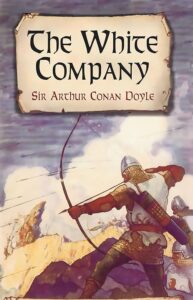
5. The White Company by Arthur Conan Doyle
What Is The White Company About?
Published in 1891, The White Company by Arthur Conan Doyle is a classic medieval adventure novel set during the early years of the Hundred Years’ War. Long before fantasy novels dominated stories about knights and battles, Doyle created an exciting and romantic vision of medieval warfare filled with camaraderie, honor, and dangerous journeys.
The story follows Alleyne Edricson, a young man raised in a monastery who leaves religious life behind in order to experience the world. Along the way, he joins a legendary mercenary group known as The White Company, eventually becoming involved in military campaigns connected to Edward the Black Prince.
As the group travels through England and France, the novel delivers tournaments, battles, archery contests, sieges, and encounters with knights and soldiers from different backgrounds. The story combines adventure and humor while still capturing the brutality and uncertainty of medieval warfare.
Why You Should Read It
- It is one of the most entertaining classic medieval adventure novels
- The camaraderie between characters makes the story highly engaging
- The battle scenes are vivid and exciting without becoming overly complicated
- Arthur Conan Doyle’s writing style keeps the story accessible and fast-paced
- The novel captures the romantic spirit of medieval knighthood beautifully
One of the reasons The White Company remains enjoyable today is its sense of adventure. The novel embraces the excitement of medieval storytelling with heroic journeys, dangerous missions, sword fights, and colorful personalities.
Unlike darker or more realistic medieval fiction, Doyle’s novel leans into the idealized image of the Middle Ages. Honor, bravery, friendship, and chivalry are central themes throughout the story, giving it an almost legendary atmosphere.
Arthur Conan Doyle Beyond Sherlock Holmes
Although Arthur Conan Doyle is best known for creating Sherlock Holmes, he personally considered many of his historical novels among his finest works. In fact, Doyle reportedly valued The White Company more highly than some of his detective fiction.
His passion for medieval history is evident throughout the novel. The detailed descriptions of armor, warfare, archery, and knightly culture reveal how deeply fascinated he was by the period.
For readers looking for a fun, adventurous, and classic journey into the medieval world, The White Company remains a fantastic choice.
Bonus: The Warlord Chronicles by Bernard Cornwell
What Are The Warlord Chronicles About?
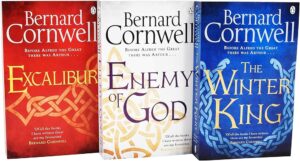
Published between 1995 and 1997, The Warlord Chronicles by Bernard Cornwell is widely considered one of the greatest modern retellings of the Arthurian legend ever written. The trilogy consists of The Winter King, Enemy of God, and Excalibur.
Rather than portraying King Arthur as a perfect legendary hero surrounded by fantasy and magic, Cornwell presents a darker and far more realistic version of post-Roman Britain. The story is narrated by Derfel Cadarn, an aging warrior and former companion of Arthur who recounts the violent rise and fall of the legendary warlord.
Britain in these novels is fractured, politically unstable, and constantly threatened by Saxon invasions. Kings betray each other, alliances collapse, druids manipulate rulers, and survival often depends on brutality rather than honor. Magic exists mostly through superstition and belief, giving the series a grounded historical atmosphere despite its legendary origins.
Why You Should Read It
- It is one of the most realistic and emotionally powerful Arthurian retellings ever written
- The battle scenes are brutal, immersive, and unforgettable
- Arthur feels human, charismatic, flawed, and believable
- The political intrigue constantly keeps the story tense and unpredictable
- Derfel Cadarn is one of the strongest narrators in historical fiction
What makes The Warlord Chronicles stand out from many other Arthurian stories is its grounded approach. Bernard Cornwell removes much of the romanticized fantasy commonly associated with Camelot and instead portrays a harsh world where loyalty, religion, and power collide constantly.
Even famous characters such as Merlin, Guinevere, Lancelot, and Mordred receive more complex and morally ambiguous portrayals than readers may expect. Heroes make terrible decisions, villains sometimes appear sympathetic, and political necessity often matters more than idealism.
Why Bernard Cornwell’s Version Feels Different
Many Arthurian adaptations focus heavily on magic and destiny, but Cornwell emphasizes warfare, leadership, tribal politics, and the fragile nature of kingdoms. His Britain feels dirty, violent, and historically believable.
At the same time, the trilogy never loses the emotional power and mythic atmosphere that make Arthurian stories so enduring. Arthur himself remains inspiring precisely because he struggles to create peace and unity in a world that constantly resists both.
For readers who enjoy medieval fiction filled with war, political intrigue, flawed heroes, and emotional intensity, The Warlord Chronicles is an essential series.
Looking For An Even Better Arthurian Story?
If the bonus recommendation on this list caught your attention, then you should absolutely read our full article about The Warlord Chronicles by Bernard Cornwell. In that post, we explore why many readers consider this trilogy one of the greatest and most realistic retellings of King Arthur ever written.
From brutal shield-wall battles and political betrayals to unforgettable characters like Arthur, Merlin, Derfel, and Guinevere, this series transforms Arthurian legend into something dark, emotional, and shockingly believable.
If you enjoy medieval fiction filled with war, strategy, loyalty, and tragedy, this is a series you do not want to miss.
Read the full article here: Is The Warlord Chronicles Good?
Why Medieval Fiction Continues To Be Popular
Medieval fiction continues to captivate readers because the Middle Ages represent a world that feels both distant and strangely familiar. These stories explore timeless human struggles such as ambition, faith, love, war, survival, betrayal, and the search for meaning in unstable times.
Some readers are drawn to the mystery and intellectual atmosphere of novels like The Name of the Rose. Others prefer the large-scale political drama of The Pillars of the Earth or the adventurous spirit of Ivanhoe and The White Company. Meanwhile, books like Kristin Lavransdatter show the deeply personal and emotional side of medieval life.
Together, these novels demonstrate just how flexible and fascinating medieval fiction can be. Whether the setting involves monasteries, battlefields, castles, or ancient legends, the genre continues to offer some of the richest and most immersive experiences in literature.
For anyone interested in historical fiction, these books are an excellent place to begin exploring the medieval world.

Leave a Reply