
For decades, the legend of King Arthur has been retold through romantic fantasy, noble knights, magical destinies, and shining kingdoms. But The Warlord Chronicles by Bernard Cornwell takes the Arthurian myth in a completely different direction — one that feels darker, more brutal, and shockingly believable.
Instead of presenting Arthur as a perfect medieval king, Cornwell imagines him as a weary warlord struggling to hold together a collapsing Britain after the fall of the Roman Empire. The result is a trilogy that blends historical fiction, political intrigue, realistic warfare, and mythological mystery into one of the most respected reinterpretations of Arthur ever written.
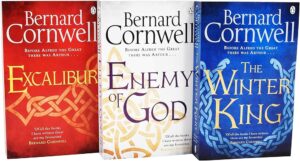
The trilogy consists of three novels:
- The Winter King (1995)
- Enemy of God (1996)
- Excalibur (1997)
What makes these books so fascinating is the way they balance realism and legend. Magic exists, but rarely in obvious ways. Merlin is mysterious and manipulative. The old pagan gods seem both terrifying and uncertain. Battles are chaotic, savage, and exhausting. Heroes make terrible mistakes. Even Arthur himself often feels trapped by the impossible dream he is trying to protect.
Over the years, countless readers have come to see The Warlord Chronicles as one of the greatest works of historical fantasy ever written. Some even consider it Bernard Cornwell’s masterpiece, surpassing famous series like The Last Kingdom.
But is The Warlord Chronicles actually worth reading today?
Absolutely — especially if you enjoy emotionally powerful stories, morally complex characters, realistic medieval settings, and tragic legends that feel deeply human.
The Dark and Brutal World of The Warlord Chronicles
Post-Roman Britain and the Fall of Civilization
One of the greatest strengths of The Warlord Chronicles is its setting. Bernard Cornwell does not portray Britain as a land of shining castles and elegant knights. Instead, he takes readers back to the chaotic years after the Roman Empire abandoned Britain — a time when civilization itself felt fragile and temporary.
The world of the trilogy is violent, divided, and constantly on the verge of collapse. Small kingdoms fight endlessly for survival while Saxon invaders slowly consume the land. Roads built by the Romans are crumbling. Old loyalties disappear overnight. Kings rise and fall through betrayal, marriage, or war. Survival often matters more than honor.
This realism gives the series an atmosphere that feels incredibly immersive. Villages are poor and muddy. Armies are little more than exhausted warriors carrying shields and spears. Battles are brutal walls of screaming men crashing into each other in desperate struggles for survival. There is no glamorous fantasy version of war here — only exhaustion, fear, blood, and loss.
Cornwell’s Britain feels alive because it feels believable. You can almost feel the cold rain, the smoke from campfires, and the tension of kingdoms barely holding themselves together.
A Different Version of King Arthur
Readers expecting the traditional version of King Arthur may be surprised by Cornwell’s interpretation. This Arthur is not a crowned ruler sitting proudly in Camelot surrounded by polished knights. He is a military leader — a warlord trying desperately to preserve peace in a broken land.
Arthur is charismatic, intelligent, and honorable, but he is also deeply human. He makes mistakes. He trusts the wrong people. He struggles between duty and personal happiness. More importantly, he feels trapped by the impossible burden of trying to unite Britain while surrounded by enemies on every side.
This is one of the reasons so many readers become emotionally attached to him. Cornwell removes the mythological distance that often surrounds Arthur and transforms him into a tragic man fighting for a dream that may never survive.
The result is a version of Arthur that feels far more emotional and believable than many traditional retellings.
The Perfect Blend of Myth and Realism
Although the trilogy is grounded in realism, it never loses the mystical atmosphere that makes Arthurian stories so captivating. Instead of using obvious fantasy magic, Cornwell creates a world where mythology and superstition constantly blur together.
Merlin plays a major role in this atmosphere. He is clever, manipulative, unpredictable, and sometimes terrifying. Throughout the trilogy, readers are never completely sure whether Merlin truly possesses magical power or whether he simply understands how to control fear, belief, and human imagination.
That ambiguity is one of the most fascinating aspects of the series.
The old pagan gods still seem present in Britain, but Christianity is rapidly spreading across the land. Druids perform rituals in forgotten places. Ancient prophecies influence political decisions. Characters fear curses, omens, and divine punishment. Yet the story never fully confirms what is real and what is superstition.
Because of this, The Warlord Chronicles feels magical without ever becoming traditional high fantasy. It creates mystery and wonder while still remaining grounded in a harsh historical world.
That balance between realism and myth is one of the main reasons the trilogy continues to stand out even decades after its release.
The Winter King: Why the First Book Is So Addictive
What The Winter King Is About
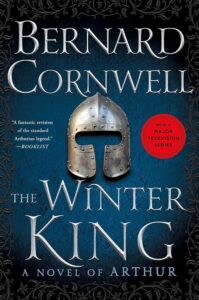
The Winter King, the first novel in The Warlord Chronicles, introduces readers to a Britain torn apart by war, betrayal, and political instability. The story is narrated by Derfel Cadarn, an old monk and former warrior who once fought beside Arthur himself. Through Derfel’s memories, the legend of Arthur is retold not as myth, but as history.
At the center of the story is the kingdom of Dumnonia, ruled by the weak and ineffective King Mordred. Although Mordred is technically the rightful ruler, he is still a child, forcing others to govern in his place while rival kingdoms and Saxon invaders threaten to destroy Britain piece by piece.
Arthur, despite being one of the greatest warriors in Britain, is not king. Instead, he becomes the kingdom’s protector — a man constantly sacrificing his own ambitions in order to preserve peace and stability. Around him are dangerous allies, ambitious nobles, religious conflict, and fragile political agreements that could collapse at any moment.
At the same time, Derfel slowly rises from an abandoned orphan into one of Arthur’s most trusted warriors. Through his eyes, readers experience friendship, loyalty, love, warfare, and the slow destruction of innocence in a brutal world.
Although the novel contains battles and political intrigue, much of its power comes from atmosphere and character development. Cornwell carefully builds tension chapter by chapter until the story becomes almost impossible to put down.
Why The Winter King Is Worth Reading
The first reason The Winter King works so well is its incredible atmosphere. From the very beginning, the novel feels cold, dangerous, and alive. Cornwell creates a version of Britain that feels ancient and unstable, where every alliance feels temporary and every victory comes with consequences.
Unlike many fantasy novels that rely heavily on exposition, the world here feels natural. Readers learn about kingdoms, religions, traditions, and politics organically through the characters themselves. This makes the setting feel immersive instead of overwhelming.
Another major strength is the way Cornwell handles his characters. Arthur quickly becomes one of the most compelling figures in modern Arthurian fiction because he feels genuinely human. He is honorable without being naïve, inspiring without being perfect, and heroic without ever feeling invincible.
Derfel is equally important to the novel’s success. His narration gives the story emotional weight and authenticity. He is not simply observing history — he is living through it, suffering through it, and remembering it many years later with both admiration and regret. Readers become attached to him very quickly because his perspective feels honest and deeply personal.
The supporting cast is also exceptional. Merlin is eccentric, manipulative, and endlessly entertaining whenever he appears. Guinevere is intelligent and ambitious rather than simply romantic. Even secondary characters often feel layered and memorable.
The battle scenes deserve special praise as well. Cornwell writes combat with an intensity that feels raw and realistic. Shield walls crash together in violent chaos. Spears splinter. Men panic. Victories often feel exhausting rather than triumphant. These battles are not glamorous fantasy spectacles — they feel desperate and terrifying.
What truly makes The Winter King addictive, however, is the slow-building emotional tension. Every chapter deepens the reader’s attachment to Arthur’s dream of peace while simultaneously hinting that the dream may ultimately fail. That growing sense of tragedy gives the novel enormous emotional power.
By the time the book reaches its final chapters, many readers realize they are no longer simply reading another fantasy novel. They are witnessing the rise of a legend that already feels doomed from the very beginning — and that is exactly what makes it unforgettable.
Enemy of God: Why Many Fans Consider It the Best Book
What Enemy of God Is About
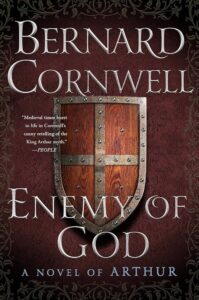
If The Winter King introduces Arthur’s dream, then Enemy of God shows that dream beginning to fall apart.
The second book in The Warlord Chronicles takes everything that made the first novel compelling — political tension, emotional conflict, brutal warfare, and complex relationships — and pushes it to a much darker level. Britain becomes increasingly unstable as old alliances weaken, enemies grow stronger, and religious conflict spreads across the land.
Arthur still fights desperately to preserve peace between the British kingdoms, but the forces working against him become impossible to ignore. Saxon invasions continue to threaten Britain while internal betrayals slowly destroy trust among Arthur’s allies.
At the same time, the growing conflict between Christianity and the old pagan religion becomes one of the novel’s central themes. Druids, priests, prophecies, and ancient beliefs all collide in a society that feels caught between two different worlds.
Derfel once again serves as the emotional center of the story. As Arthur’s closest companion, he witnesses not only great victories, but also devastating personal losses that permanently change the characters around him.
The result is a novel that feels larger, darker, and far more tragic than the first book.
Why Enemy of God Is Worth Reading
Many fans consider Enemy of God the best novel Bernard Cornwell has ever written — and it is not difficult to understand why.
One of the biggest reasons is the emotional intensity of the story. While The Winter King slowly builds Arthur’s world, this second novel begins tearing it apart piece by piece. Friendships are tested, loyalties collapse, and characters are forced into impossible decisions that leave lasting emotional scars.
The tragedy surrounding Arthur becomes especially powerful here. Cornwell portrays him as a man trying to preserve honor and unity in a world that increasingly rewards cruelty, ambition, and betrayal. The more Arthur sacrifices for Britain, the more readers begin to fear that his dream can never truly survive.
This emotional conflict gives the novel an atmosphere of constant tension. Even during moments of peace, readers feel that disaster is approaching.
The religious themes also become far more fascinating in this book. Cornwell avoids presenting Christianity or paganism as completely right or wrong. Instead, both sides are shown as powerful forces shaping Britain’s future. The old gods feel like they are fading away, yet their influence still lingers through fear, rituals, and prophecy.
Merlin becomes one of the novel’s greatest highlights because of this conflict. He is manipulative, brilliant, mysterious, and often morally questionable. Every scene involving Merlin carries an unpredictable energy that makes him impossible to ignore. Many readers consider this version of Merlin one of the best reinterpretations of the character ever written.
Another reason the novel stands out is the way Cornwell handles betrayal. The betrayals in Enemy of God do not feel shocking simply for the sake of surprise. They feel tragic because they emerge naturally from human weakness, fear, pride, jealousy, and political desperation.
This realism makes the emotional impact much stronger.
The battle scenes are also even more intense than before. Cornwell writes warfare with incredible clarity and brutality. The violence feels exhausting and personal rather than heroic. Every victory carries consequences, and every defeat leaves emotional wounds that remain long after the fighting ends.
Perhaps the greatest achievement of Enemy of God is the feeling that history itself is slipping away from the characters. The old Britain Arthur wants to protect already seems doomed, and everyone in the story can feel that darkness approaching even if they refuse to admit it.
That mixture of emotional tragedy, political realism, mythology, and human conflict is why so many readers finish this book convinced that The Warlord Chronicles is something far greater than ordinary historical fantasy.
Excalibur: Why the Ending of the Trilogy Is So Powerful
What Excalibur Is About
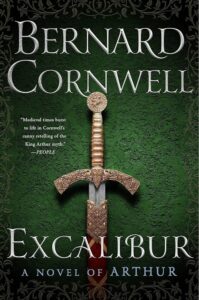
By the time readers reach Excalibur, the final novel in The Warlord Chronicles, the world Arthur fought so hard to protect is already beginning to collapse around him.
The fragile alliances that once held Britain together continue to weaken while Saxon invasions grow more dangerous than ever. Old friendships become strained by betrayal, ambition, revenge, and exhaustion. The dream of unity that once seemed possible now feels painfully fragile.
Arthur himself remains one of the few men still trying to hold the kingdoms together, but the burden he carries becomes heavier with every passing chapter. Enemies close in from every direction, political stability disappears, and even those closest to him begin making choices that slowly destroy everything he hoped to build.
At the center of the story once again is Derfel, now older, wiser, and emotionally scarred by years of war and loss. Through his narration, the final downfall of Arthur’s Britain feels deeply personal rather than simply historical. Readers do not merely witness the end of a kingdom — they experience the emotional destruction of people they have followed across the entire trilogy.
More than any other book in the series, Excalibur feels haunted by inevitability. From the very beginning, there is a constant sense that legends are dying and an entire world is disappearing.
Why Excalibur Is Worth Reading
One of the greatest strengths of Excalibur is the emotional payoff it delivers after everything established in the previous books. Every friendship, betrayal, sacrifice, and battle throughout the trilogy finally reaches its conclusion here, giving the novel enormous emotional weight.
What makes the ending so powerful is that Bernard Cornwell never abandons the realism that made the series special from the beginning. There are no easy victories, magical solutions, or perfect heroic endings. Instead, the novel embraces the tragic nature of Arthurian legend while still preserving the humanity of its characters.
Arthur himself becomes even more compelling in this final installment because readers fully understand the impossible burden he carries. He is still honorable, loyal, and inspiring, but years of war and disappointment have left visible scars on him. Watching Arthur continue fighting for peace despite knowing how fragile his dream has become is one of the trilogy’s most heartbreaking elements.
Derfel’s narration also reaches its emotional peak in this book. Throughout the trilogy, he has served as both warrior and witness, but in Excalibur his reflections carry a sense of sorrow and maturity that makes the story feel almost painfully real. He remembers Arthur not as a mythical king, but as a flawed man who tried to build something better in a brutal world.
The battle scenes are some of the best Bernard Cornwell has ever written. Every confrontation feels desperate because readers understand what is truly at stake. These are not battles fought for glory — they are battles fought for survival, memory, and the last remains of a dying dream.
Another reason the novel works so well is the atmosphere of inevitable tragedy surrounding every major event. Readers constantly feel that the old Britain of druids, warriors, and ancient gods is vanishing forever. Christianity continues spreading across the land while older beliefs slowly fade into memory and legend.
This creates one of the trilogy’s most beautiful themes: the transformation of history into myth.
By the end of the novel, readers understand how stories about Arthur became legends told for centuries afterward. Cornwell shows the painful human reality hidden beneath those myths — the sacrifices, betrayals, losses, and impossible hopes that created the legend in the first place.
That is why the ending of The Warlord Chronicles remains so unforgettable. It is tragic without feeling meaningless, emotional without becoming sentimental, and deeply human despite the legendary scale of the story.
Many readers finish Excalibur with the feeling that they have not simply completed a fantasy trilogy, but experienced the rise and fall of an entire civilization.
Looking for More Books Like The Warlord Chronicles?
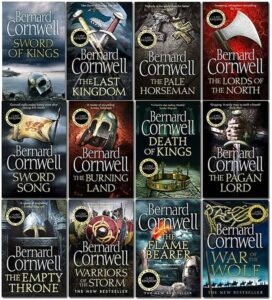
If Bernard Cornwell’s brutal battles, tragic heroes, and realistic medieval atmosphere left you wanting more, there are plenty of incredible novels that capture the same spirit of dark historical fantasy.
From ancient wars and legendary warriors to political intrigue and morally complex heroes, these books deliver the same immersive feeling that made The Warlord Chronicles unforgettable.
The Influence of The Warlord Chronicles on Modern Historical Fantasy
A More Realistic Approach to Arthurian Legends
Before The Warlord Chronicles, many versions of the Arthurian legend focused heavily on romance, chivalry, magical prophecy, and idealized heroism. Bernard Cornwell changed that perspective by presenting Arthur’s world as harsh, unstable, and historically grounded.
Instead of portraying Camelot as a shining fantasy kingdom, Cornwell imagined Britain during the violent years after Rome abandoned the island. His version of Arthur felt less like a mythical king and more like a military leader desperately trying to prevent civilization from collapsing.
This realistic interpretation had a major influence on how many readers and writers approached Arthurian fiction afterward. Modern audiences increasingly became interested in darker and more believable retellings of classic myths rather than traditional heroic fantasy.
Even today, many readers still consider The Warlord Chronicles the definitive “realistic Arthur” story because of how successfully it balances historical realism with legendary atmosphere.
Influence on Medieval and Historical Fantasy
The trilogy also helped popularize many elements that later became common in historical and dark fantasy fiction.
Its morally gray characters, political realism, brutal warfare, and tragic tone can be seen reflected in many later stories that focus on medieval conflict and realistic worldbuilding. Rather than presenting simple heroes and villains, Cornwell created characters driven by ambition, fear, loyalty, love, religion, and survival.
This approach strongly connects The Warlord Chronicles to modern works such as Game of Thrones, where political instability and human weakness matter just as much as battles themselves.
The trilogy also shares clear similarities with Cornwell’s own later series, The Last Kingdom. Both stories portray the chaos of early Britain through realistic warfare, divided kingdoms, and protagonists struggling to survive in violent historical periods.
However, many readers argue that The Warlord Chronicles feels even more emotional and tragic because of its mythological foundation. Arthur’s story already carries a sense of inevitable loss, and Cornwell uses that tragedy to give the trilogy extraordinary emotional depth.
The series also influenced the popularity of “grounded fantasy” — stories that contain mythological or supernatural elements while still feeling realistic and historically believable.
Why Readers Still Talk About These Books Today
Decades after their release, these novels continue to attract passionate readers because they offer something many fantasy stories struggle to achieve: emotional authenticity.
Readers remember Arthur not simply because he is heroic, but because he feels human. They remember Derfel because his narration feels personal and honest. They remember Merlin because he remains mysterious and unpredictable long after the story ends.
More importantly, readers remember the emotional experience of the trilogy itself. The rise and slow destruction of Arthur’s dream leaves a lasting impact that stays with many people years after finishing the books.
This emotional power is one of the main reasons discussions about The Warlord Chronicles still appear constantly in fantasy communities online. New readers continue discovering the trilogy and reacting to it with the same excitement as readers did decades ago.
For many fans of historical fantasy, these books are no longer simply another Arthurian retelling — they have become one of the genre’s defining classics.

Why The Entire Trilogy Is Worth Reading
There are many fantasy and historical fiction series that begin strongly but lose momentum over time. The Warlord Chronicles is remarkable because all three books consistently build toward something larger, darker, and more emotionally powerful.
By the end of the trilogy, readers are not simply attached to the characters — they feel as though they have lived beside them through years of war, sacrifice, betrayal, and loss. That emotional investment is one of the main reasons the series remains so beloved among fantasy readers.
One of the greatest reasons to read the entire trilogy is the atmosphere Bernard Cornwell creates. Few authors manage to make the medieval world feel this immersive. Britain in these novels feels cold, unstable, and dangerous, yet also strangely beautiful in its mixture of ancient mythology and historical realism.
The trilogy also succeeds because of its characters. Arthur is one of the most human versions of the legendary king ever written — honorable and inspiring, yet flawed and tragically burdened by impossible responsibilities. Derfel serves as the emotional heart of the story, allowing readers to experience both the glory and heartbreak of Arthur’s world through deeply personal memories.
Even secondary characters leave strong impressions. Merlin is fascinating from beginning to end because readers never fully understand whether he is truly magical or simply brilliant at manipulating belief and fear. Guinevere feels ambitious and politically intelligent rather than simply romantic. Lancelot becomes one of the most surprising reinterpretations in modern Arthurian fiction.
Another major reason the trilogy stands out is Cornwell’s writing style. His prose is direct, fast-moving, and highly visual without ever becoming simplistic. Battle scenes feel chaotic and terrifying, political conversations feel tense, and emotional moments carry enormous weight because the characters feel believable.
The realism of the series also gives it a unique identity. These books do not romanticize war or heroism. Victories come with terrible costs. Good people make destructive decisions. Loyalty is constantly tested by fear, religion, ambition, and survival.
At the same time, the trilogy never loses the mythic atmosphere that makes Arthurian stories so compelling. Ancient gods, prophecies, druids, sacred rituals, and legendary symbols remain present throughout the narrative, creating a world that feels mystical without fully becoming fantasy.
That balance between realism and legend is incredibly difficult to achieve, yet Cornwell handles it masterfully.
Perhaps most importantly, the trilogy delivers an emotional experience that stays with readers long after the final page. Arthur’s dream of unity, peace, and stability feels noble precisely because the world surrounding him is so brutal and hopeless. Watching that dream slowly rise and collapse gives the trilogy its tragic power.
Many readers finish The Warlord Chronicles feeling emotionally exhausted in the best possible way. It is the kind of story that lingers in memory for years because it feels less like escapist fantasy and more like witnessing the rise and fall of a real legend.
For readers who enjoy historical fantasy, morally complex characters, realistic medieval settings, political intrigue, and emotionally powerful storytelling, this trilogy is absolutely worth reading.
In many ways, The Warlord Chronicles is not simply a great Arthurian story — it is one of the greatest reinterpretations of myth and history ever written in modern fantasy literature.
Who Is Bernard Cornwell?
A Brief Biography of Bernard Cornwell
Bernard Cornwell is one of the most respected and successful historical fiction writers in modern literature. Born on February 23, 1944, in London, England, Cornwell became famous for combining detailed historical research with fast-paced storytelling, memorable characters, and realistic battle scenes.
Unlike many fantasy authors who rely heavily on magic and fictional worlds, Cornwell built his reputation by grounding his stories in real historical periods and conflicts. His novels often focus on war, loyalty, political instability, and the harsh realities of survival during violent periods of history.
What makes his writing especially admired among readers is the way he transforms historical settings into deeply immersive experiences. His battles feel chaotic and believable, his protagonists feel flawed and human, and his stories rarely romanticize violence or heroism.
Over the course of his career, Bernard Cornwell has written dozens of bestselling novels and has become one of the defining authors of modern historical fiction.

Other Famous Books Written by Bernard Cornwell
Although The Warlord Chronicles is often considered his masterpiece, Cornwell is also famous for several other highly successful series and standalone novels.
One of his best-known works is The Saxon Stories, the series that inspired Netflix’s The Last Kingdom. These novels follow Uhtred of Bebbanburg during the Viking invasions of England and became hugely popular because of their realistic warfare, political intrigue, and memorable protagonist.
Cornwell is also widely known for the Sharpe series, which follows British soldier Richard Sharpe during the Napoleonic Wars. The books became internationally famous after being adapted into a television series starring Sean Bean.
Some of his other notable works include:
- Stonehenge
- Agincourt
- Azincourt
- The Grail Quest series
- 1356
Despite the success of all these books, many longtime readers still believe The Warlord Chronicles represents the peak of Cornwell’s writing because of its emotional depth, tragic atmosphere, and unforgettable interpretation of Arthurian legend.
Why Readers Respect Cornwell So Much
One reason Bernard Cornwell remains so respected is his ability to make history feel exciting without sacrificing realism. His novels never feel like dry historical lessons. Instead, they feel immediate, dangerous, and emotionally alive.
Readers also admire the way Cornwell writes combat. His battle scenes are often praised as some of the best in historical fiction because they focus on fear, confusion, exhaustion, and survival rather than glamorous heroics.
Another major strength of his writing is character development. Cornwell’s protagonists are rarely perfect heroes. They are flawed, conflicted, ambitious, loyal, and deeply human, which makes readers emotionally invested in their struggles.
Perhaps most importantly, Cornwell understands how to balance entertainment with emotional storytelling. His novels are highly addictive and fast-paced, but they also carry emotional weight that stays with readers long after the story ends.
That combination of realism, atmosphere, historical detail, and emotional power is exactly why The Warlord Chronicles continues to be recommended as one of the greatest historical fantasy trilogies ever written.

Leave a Reply