
Why The Warlord Chronicles Became So Beloved Among Historical Fiction Fans
Few historical fiction series have managed to reinvent the legend of King Arthur as successfully as The Warlord Chronicles by Bernard Cornwell. Instead of presenting Arthur as a shining medieval hero surrounded by fantasy and idealism, Cornwell created a darker and more believable version of Britain after the fall of the Roman Empire.
The trilogy became beloved among readers because it feels grounded and realistic. The battles are brutal, politics are dangerous, and the world itself feels unstable and violent. Kingdoms constantly rise and collapse while warlords, druids, and invading Saxons struggle for power across Britain.
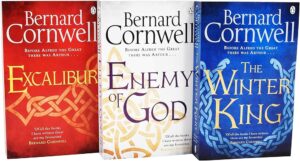
The realistic portrayal of King Arthur
One of the most fascinating aspects of the series is the way Cornwell transforms Arthur into a human figure rather than a mythological icon. His Arthur is not a perfect king chosen by destiny, but a military leader trying to keep Britain united during one of the most chaotic periods in history.
This realistic interpretation makes the story feel far more immersive than many traditional fantasy novels. Readers experience the exhaustion of war, the fragility of alliances, and the constant fear of betrayal that surrounds Arthur’s dream of peace.
The brutal atmosphere of post-Roman Britain
Unlike romanticized medieval fiction, The Warlord Chronicles embraces the harshness of the Dark Ages. Britain feels cold, dangerous, and divided. Villages burn during raids, armies clash in muddy battlefields, and survival often matters more than honor.
This atmosphere is one of the main reasons why readers continue searching for books similar to Cornwell’s trilogy. Many fans are drawn to medieval stories that feel historical and raw rather than overly fantastical.
The mixture of history, mythology, and war
Another reason for the trilogy’s popularity is the balance between historical realism and ancient mythology. Merlin, druids, prophecies, and pagan rituals exist in the story, but Cornwell often presents them in ambiguous ways that make readers question whether magic is truly real or simply part of the beliefs of the time.
This combination creates a unique tone where myth and history coexist naturally. The result is a version of Arthurian Britain that feels legendary while still remaining believable.
Why readers still search for books similar to Bernard Cornwell’s trilogy
Readers who finish The Warlord Chronicles often struggle to find other books that capture the same atmosphere. Many fantasy novels focus heavily on magic and heroic adventure, while Cornwell’s work stands out because of its realism, emotional depth, and historical tone.
Fortunately, there are several classic medieval novels and Arthurian stories that share similar themes. Some focus on the political collapse of Britain, others explore the tragic fall of Camelot, while some emphasize the tension between pagan traditions and Christianity.
The following books are some of the best choices for readers looking to experience that same mixture of myth, war, tragedy, and medieval realism.
Still Wondering If The Warlord Chronicles Is Worth Reading?
Before searching for books similar to Bernard Cornwell’s legendary trilogy, you may want to discover why so many readers consider The Warlord Chronicles one of the greatest Arthurian series ever written.
In our full review, we explore the brutal realism of post-Roman Britain, the unforgettable version of King Arthur created by Cornwell, the dark political atmosphere of the trilogy, and why these books continue to stand out among historical fiction fans.
Read our full article about why The Warlord Chronicles is worth reading.
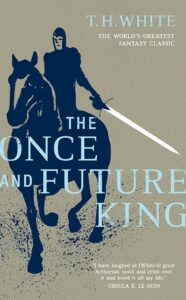
1. The Once and Future King — T. H. White
Originally published in the mid-20th century, The Once and Future King by T. H. White remains one of the most influential interpretations of the Arthurian legend ever written. The novel follows Arthur from his childhood to the tragic collapse of Camelot, exploring themes of leadership, justice, war, and human failure.
Although the book contains more fantasy elements than Bernard Cornwell’s trilogy, it shares the same emotional core that made The Warlord Chronicles so memorable. Both stories portray Arthur not simply as a legendary ruler, but as a man trying to create order in a violent and divided Britain.
What the book is about
The story begins with the young Arthur, known as Wart, being educated by Merlin before eventually becoming king. As the novel progresses, readers witness the creation of the Round Table, the relationships between Arthur, Lancelot, and Guinevere, and the gradual destruction of Camelot through betrayal, war, and political conflict.
T. H. White mixes adventure, philosophy, tragedy, and medieval mythology in a way that deeply influenced modern fantasy literature.
Similarities with The Warlord Chronicles
Like Cornwell’s trilogy, this novel focuses heavily on the human side of Arthurian mythology. Arthur’s dream of unity constantly clashes with the brutal reality of power, violence, and ambition.
Both books also share a melancholic tone. Readers know from the beginning that Camelot is doomed, which gives every victory and moment of hope a tragic weight.
Another major similarity is the importance of political tension and personal relationships. The emotional conflicts between the main characters eventually become just as destructive as the wars themselves.
Why You Should Read It
If you enjoyed the tragic atmosphere and emotional depth of The Warlord Chronicles, this book is an essential read. It presents one of the most iconic and influential versions of King Arthur ever written while still maintaining a surprisingly human and emotional perspective on the legend.
For many readers, The Once and Future King is the perfect balance between medieval fantasy, historical tragedy, and Arthurian mythology.
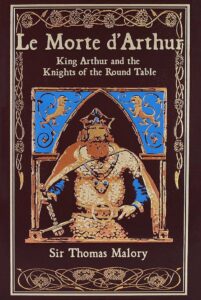
2. Le Morte d’Arthur — Sir Thomas Malory
Few books are more important to Arthurian literature than Le Morte d’Arthur by Sir Thomas Malory. First published in 1485, this legendary work became one of the definitive versions of the King Arthur myth and influenced countless medieval stories that came after it.
While Bernard Cornwell reimagines Arthurian Britain with gritty realism and historical brutality, Malory embraces the grand mythology of knights, honor, romance, and heroic destiny. Even so, readers of The Warlord Chronicles will immediately recognize many of the characters, conflicts, and legendary moments that inspired Cornwell’s trilogy.
What the book is about
Le Morte d’Arthur tells the story of King Arthur from the moment he pulls the sword from the stone to the final destruction of Camelot. Along the way, the book explores the adventures of the Knights of the Round Table, the rise of Lancelot, the love triangle involving Guinevere, and the search for the Holy Grail.
The novel combines warfare, medieval romance, political conflict, betrayal, and religious symbolism into one massive Arthurian epic.
How it shaped modern Arthurian fiction
Many of the most famous elements associated with King Arthur became popular largely because of Malory’s work. Modern readers often imagine Camelot, Excalibur, Merlin, and the Round Table through the lens created by Le Morte d’Arthur.
Even Bernard Cornwell’s darker interpretation draws heavily from the foundation established by Malory. The difference is that Cornwell strips away much of the idealism and asks what these legends might have looked like in a more historically believable Britain.
Why fans of Bernard Cornwell may love it
Readers who enjoyed the political tensions and tragic downfall of Arthur’s kingdom in The Warlord Chronicles will appreciate seeing the older and more mythological version of the same story.
Many scenes and characters that appear in Cornwell’s trilogy gain additional meaning when readers understand their original medieval interpretations.
The contrast between Malory’s romanticized Camelot and Cornwell’s brutal Britain also makes both versions more fascinating when read together.
Why You Should Read It
This book is essential for anyone interested in Arthurian fiction. It is not only one of the most influential medieval works ever written, but also the foundation upon which many modern retellings of King Arthur were built.
For fans of Bernard Cornwell, reading Le Morte d’Arthur feels like discovering the ancient mythology hidden beneath the realism of The Warlord Chronicles.
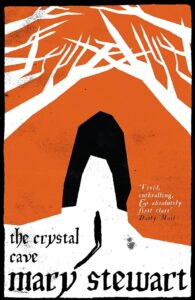
3. The Crystal Cave — Mary Stewart
Among the many reinterpretations of Arthurian mythology, few are as respected and atmospheric as The Crystal Cave by Mary Stewart. Instead of focusing primarily on Arthur himself, the novel tells the story through the eyes of Merlin, offering a unique perspective on the rise of legendary Britain.
Much like Bernard Cornwell’s work, this novel attempts to ground Arthurian mythology in a more believable historical setting. The Britain portrayed here feels ancient, politically unstable, and deeply shaped by the collapse of Roman power.
Merlin as the protagonist
One of the most interesting aspects of The Crystal Cave is its portrayal of Merlin. Rather than presenting him as a traditional fantasy wizard, Mary Stewart reimagines him as an intelligent, mysterious, and highly observant man living during a chaotic period of British history.
The novel follows Merlin from childhood through his rise as an influential figure connected to the future of Arthur and Camelot.
This perspective gives the story a more intimate and thoughtful tone compared to many action-focused medieval novels.
The balance between realism and mysticism
Like The Warlord Chronicles, this novel creates ambiguity around magic and prophecy. Merlin’s visions and abilities may appear supernatural, but they are often described in ways that leave room for interpretation.
This balance between mythology and realism creates a believable atmosphere where ancient beliefs feel natural rather than exaggerated.
The result is a version of Arthurian Britain that feels mystical without abandoning historical immersion.
Connections to Cornwell’s version of Arthurian Britain
Readers who enjoyed the druidic atmosphere and political tension of Cornwell’s trilogy will find many familiar elements here. Roman influence still lingers across Britain, tribal rulers compete for power, and the future of the island feels uncertain.
Both authors also portray Merlin as one of the most compelling figures in Arthurian mythology, though Stewart’s version is generally calmer and more reflective than Cornwell’s cunning and manipulative druid.
Another major similarity is the sense that legends are being born from real historical events.
Why You Should Read It
If your favorite parts of The Warlord Chronicles involved Merlin, ancient Britain, and the mixture of realism with mythology, The Crystal Cave is an excellent choice.
Mary Stewart’s writing is elegant, immersive, and filled with atmosphere, making this novel one of the finest classic Arthurian books ever written.
Looking For Something Completely Different?
If ancient wars and medieval legends are not enough to satisfy your sense of adventure, why not trade knights and kingdoms for dinosaurs and scientific disasters?
Our list of books similar to Jurassic Park explores terrifying creatures, deadly experiments, isolated jungles, and survival stories filled with tension and suspense. From brutal dinosaur horror to action-packed prehistoric chaos, these novels capture the same thrilling atmosphere that made Michael Crichton’s classic unforgettable.
Read our list of 5 books like Jurassic Park here.
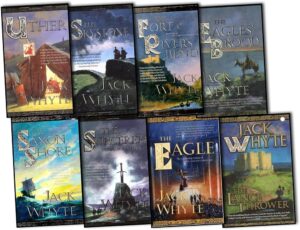
4. The Camulod Chronicles — Jack Whyte
For readers searching for books that truly capture the historical realism of Bernard Cornwell’s Arthurian trilogy, The Camulod Chronicles by Jack Whyte is often considered one of the closest matches.
Rather than embracing high fantasy, Whyte imagines the Arthurian legend as a believable continuation of Roman Britain after the empire’s collapse. The result is a grounded and mature series filled with military strategy, political tension, warfare, and the slow creation of the world that would eventually become Camelot.
A grounded and historical interpretation of Arthur
One of the defining characteristics of this series is its commitment to realism. Magic and fantasy elements are heavily reduced, allowing the story to focus instead on leadership, survival, and the cultural transformation of Britain during a dangerous historical period.
The characters feel practical and human, shaped by war, politics, and the harsh realities of life after Rome abandoned the island.
This realistic tone makes the series especially appealing to fans of Bernard Cornwell’s style of storytelling.
The military and political atmosphere of post-Roman Britain
Like The Warlord Chronicles, these books emphasize the instability of Britain during the Dark Ages. Rival factions compete for territory while invading forces threaten the fragile remnants of civilization.
Military organization, defensive strategy, and political alliances play major roles throughout the series, creating a strong historical atmosphere that feels believable and immersive.
Readers who enjoyed Cornwell’s battle scenes and tactical conflicts will likely appreciate the detailed military focus present in Whyte’s novels.
Why this series is constantly recommended to Cornwell fans
Whenever readers discuss books similar to Bernard Cornwell’s Arthurian trilogy, The Camulod Chronicles appears repeatedly because both series share many of the same strengths.
Both authors treat Arthur as a figure who could have realistically existed in post-Roman Britain rather than as a purely mythical king. Both worlds also feel dangerous, politically unstable, and historically grounded.
The mature tone and emphasis on realism help create the same sense of immersion that made Cornwell’s trilogy so memorable.
Why You Should Read It
If you are specifically searching for another Arthurian series that feels realistic, historical, and politically complex, this is probably one of the best choices available.
The Camulod Chronicles delivers many of the same elements that made The Warlord Chronicles so compelling while still building its own unique interpretation of Arthurian Britain.
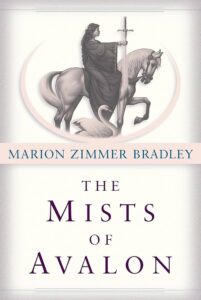
5. The Mists of Avalon — Marion Zimmer Bradley
While many Arthurian stories focus on knights, battles, and kings, The Mists of Avalon by Marion Zimmer Bradley approaches the legend from an entirely different perspective. The novel retells the rise and fall of Camelot primarily through the eyes of its female characters, especially Morgaine.
Although the book contains stronger mystical and spiritual elements than Bernard Cornwell’s trilogy, it shares many of the same themes that made The Warlord Chronicles so captivating: political conflict, the collapse of ancient traditions, religious tension, and the tragic downfall of Arthur’s kingdom.
The Arthurian legend through a different perspective
Instead of focusing mainly on Arthur and his warriors, this novel explores the experiences of women who influence the destiny of Camelot from behind the scenes.
Morgaine becomes one of the central figures of the story, transforming from a character often portrayed as a villain into a far more complex and sympathetic figure.
This different perspective allows the novel to explore the emotional and cultural dimensions of Arthurian mythology in greater depth.
Paganism, religion, and the fall of Camelot
One of the strongest connections between this novel and Cornwell’s trilogy is the conflict between pagan traditions and the spread of Christianity across Britain.
The story constantly explores the fading influence of ancient Celtic spirituality while Christian institutions grow stronger and more politically dominant.
This religious tension creates a tragic atmosphere throughout the novel, reinforcing the idea that Camelot’s destruction is tied not only to war and betrayal, but also to major cultural change.
The darker and emotional tone of the novel
Despite its mystical atmosphere, The Mists of Avalon is often surprisingly dark and emotionally intense. Relationships are filled with manipulation, sacrifice, ambition, and sorrow.
The novel presents Camelot less as a glorious fantasy kingdom and more as a fragile dream destined to collapse under the weight of politics, religion, and human weakness.
That sense of inevitable tragedy is one of the reasons why the book resonates so strongly with many fans of Bernard Cornwell.
Why You Should Read It
If you enjoyed the tragic and politically complex nature of The Warlord Chronicles, this novel offers one of the richest and most emotional interpretations of Arthurian mythology ever written.
Its focus on religion, culture, and personal conflict makes The Mists of Avalon a fascinating companion piece to Cornwell’s darker vision of Britain and Camelot.
Why Arthurian Literature Continues to Fascinate Readers
Few legends in literature have remained as influential and enduring as the story of King Arthur. For centuries, writers have continued to reinterpret Camelot, Merlin, Excalibur, and the fall of Arthur’s kingdom in completely different ways.
Some versions embrace fantasy and magic, while others attempt to recreate a more realistic and historical Britain after the collapse of the Roman Empire. This flexibility is one of the reasons why Arthurian fiction continues to attract new generations of readers.
The timeless appeal of King Arthur stories
At the center of nearly every Arthurian story is the dream of building a better world. Arthur often represents unity, justice, and hope during periods of chaos and violence.
Even though Camelot almost always falls in the end, readers remain fascinated by the attempt itself. The tragedy of watching an idealistic kingdom collapse gives these stories emotional power that continues to resonate centuries later.
The blend of myth, war, politics, and tragedy
Arthurian literature combines many of the elements readers love most about medieval fiction. These stories feature massive wars, political betrayals, forbidden love, ancient prophecies, religious conflict, and legendary heroes struggling against impossible odds.
At the same time, the best Arthurian novels balance mythological grandeur with deeply human emotions. Characters are often flawed, conflicted, and consumed by ambition, loyalty, jealousy, or regret.
This combination of mythology and human drama helps make the legend feel timeless.
Why historical Arthurian fiction remains popular today
Modern readers are especially drawn to versions of Arthurian Britain that feel realistic and historically grounded. Books like The Warlord Chronicles prove that the legend can still feel fresh when authors treat the setting as a believable historical world rather than a traditional fantasy kingdom.
The popularity of these novels also reflects a growing interest in darker and more mature medieval fiction. Readers often want stories that explore the brutality, uncertainty, and political instability of the Dark Ages while still preserving the mythic atmosphere of the original legends.
Whether through fantasy, historical realism, or tragic drama, Arthurian literature continues to survive because the fall of Camelot remains one of the greatest stories ever told.

Leave a Reply