
Few writers in history have shaped an entire literary genre the way Agatha Christie did. Known around the world as the legendary Queen of Crime, Christie transformed the landscape of detective fiction with ingenious plots, unforgettable detectives, and mysteries that continue to surprise readers even today. More than a century after her first novel was published, her stories still captivate millions of people who eagerly try to uncover the killer before the final page.
From luxurious trains crossing Europe to quiet English villages hiding dark secrets, Christie created some of the most iconic settings in all of murder mystery novels. Her books introduced readers to brilliant investigators like Hercule Poirot and the sharp-minded Miss Marple, characters who became cultural icons far beyond literature. Whether through psychological manipulation, carefully hidden clues, or shocking plot twists, Christie mastered the art of keeping readers constantly guessing.
What makes Agatha Christie especially remarkable is how timeless her work feels. While many classic novels become difficult for modern audiences to approach, Christie’s stories remain surprisingly accessible, fast-paced, and addictive. New generations continue discovering her novels every year, proving that a well-crafted mystery never truly grows old.
Her influence can be seen everywhere in modern crime fiction, from bestselling thriller novels to films like Knives Out and countless detective television series. In many ways, the modern fascination with “whodunit” stories exists because Christie perfected the formula decades ago.
In this article, we will explore the life, legacy, and genius of Agatha Christie, including her most famous books, her legendary detectives, the real-life mystery surrounding her disappearance, and the reasons why her stories remain some of the greatest classic mystery books ever written.
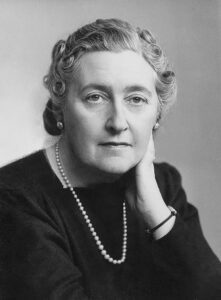
Who Was Agatha Christie?
Early Life and Childhood
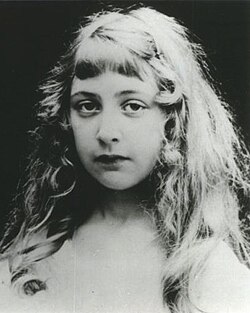
Agatha Christie was born as Agatha Mary Clarissa Miller on September 15, 1890, in the seaside town of Torquay, England. Raised in an upper-middle-class family, she grew up in a comfortable environment surrounded by books, imagination, and creativity. Unlike many children of her time, Christie was educated primarily at home by her mother, who encouraged curiosity and independent thinking from an early age.
Her childhood played a major role in shaping the atmosphere found in many of her future mystery novels. The quiet English towns, elegant houses, family secrets, and social observations that appear throughout her stories were heavily inspired by the world she experienced growing up. Christie herself later described her childhood as extremely happy, filled with storytelling, games, and vivid imagination.
Interestingly, her mother initially believed children should not learn to read too early. However, young Agatha quickly proved impossible to stop. Fascinated by stories and language, she taught herself to read at a very young age and soon developed a deep love for literature. Authors like Arthur Conan Doyle and Wilkie Collins would later influence her passion for detective fiction.
Even as a child, Christie enjoyed creating imaginary characters and inventing stories. Although nobody at the time could have predicted it, the foundations of the future Queen of Crime were already beginning to emerge.
How Agatha Christie Started Writing
The path that led Agatha Christie to become one of the most successful authors in history began during World War I. While working as a nurse and later in a pharmacy dispensary, she gained valuable knowledge about medicines and poisons — details that would later become famous elements in many of her crime fiction stories.
According to Christie herself, her writing career started almost as a challenge. Her sister claimed that writing a good detective story was extremely difficult, and Agatha decided to prove otherwise. Inspired by her love of mystery stories, she began working on her first novel, The Mysterious Affair at Styles.
Published in 1920, the novel introduced readers to the brilliant Belgian detective Hercule Poirot. With his extraordinary attention to detail, obsession with order, and unique personality, Poirot quickly became one of the most recognizable characters in literary history.
Although Christie’s early success was modest at first, readers soon became fascinated by her clever plots and unexpected endings. Unlike many traditional mysteries of the time, her stories invited readers to actively participate in solving the crime, carefully planting clues throughout the narrative while still managing to surprise audiences in the final chapters.
This innovative storytelling style would eventually redefine murder mystery novels forever.
The Creation of Hercule Poirot
When creating Hercule Poirot, Agatha Christie wanted a detective who would stand apart from the classic British investigators already popular in literature. Instead of a cold action-driven hero, Poirot relied almost entirely on psychology, logic, and observation. Christie described him as a former Belgian police officer who had fled to England during World War I.
Poirot’s appearance immediately made him unforgettable. His perfectly groomed mustache, elegant clothing, obsession with symmetry, and theatrical personality gave him a unique charm that readers quickly adored. Yet beneath his sometimes amusing behavior was an exceptionally intelligent mind capable of solving even the most impossible crimes.
One of Poirot’s most famous ideas was his use of the “little grey cells,” his term for the power of human intellect and reasoning. Rather than depending on physical evidence alone, Poirot focused on understanding people, motives, lies, and psychological weaknesses.
Over time, Hercule Poirot became the central figure in many of Christie’s greatest classic mystery books, including Murder on the Orient Express, Death on the Nile, and The ABC Murders. His popularity became so enormous that he eventually overshadowed almost every fictional detective of his era.
Marriage, Travels, and Archaeology
The personal life of Agatha Christie was filled with experiences that deeply influenced her writing. In 1914, she married Archibald Christie, a military officer and aviator. Although the marriage initially appeared happy, it eventually became emotionally difficult, especially after the death of Christie’s mother and the growing tensions between the couple.
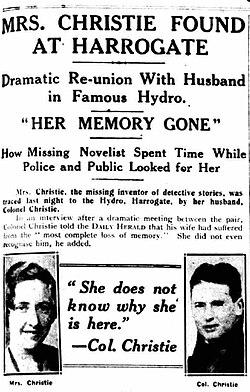
During this challenging period came one of the most mysterious events of her entire life: her famous disappearance in 1926. The incident shocked the British public and transformed Christie herself into the center of a real-life mystery. While this extraordinary episode would later become one of the most discussed moments of her biography, her life would eventually take a new direction after her divorce.
In 1930, Christie married archaeologist Max Mallowan, a relationship that would profoundly shape many of her future mystery novels. Through her husband’s work, she traveled extensively across the Middle East, visiting locations such as Iraq and Syria. These journeys exposed her to ancient ruins, excavation camps, exotic landscapes, and diverse cultures that later inspired some of her most famous stories.
Novels like Death on the Nile, Murder in Mesopotamia, and Appointment with Death showcase Christie’s fascination with travel and archaeology. Unlike many writers who relied entirely on imagination, Christie often based her settings on places she had personally experienced, giving her stories an authentic atmosphere that readers still love today.
Her travels also helped distinguish her work from other detective fiction authors of the era. Christie transformed trains, cruises, archaeological digs, and luxury hotels into perfect stages for suspense, betrayal, and murder. The contrast between beautiful locations and shocking crimes became one of her signature storytelling techniques.
Beyond literature, Christie actively participated in archaeological expeditions alongside her husband. She even helped clean and restore ancient artifacts, showing genuine passion for the field. This side of her personality is often overlooked, yet it played a major role in expanding the scope and richness of her crime fiction.
By combining her sharp understanding of human behavior with experiences gathered from travel and history, Agatha Christie created mysteries that felt both intellectually satisfying and vividly alive.
If You Love Agatha Christie, Read These Mysteries Next
Finished exploring the brilliant world of Agatha Christie and looking for more unforgettable mysteries? We’ve selected a list of modern and classic novels that capture the same atmosphere of suspense, clever plot twists, psychological tension, and addictive “whodunit” storytelling that made Christie the legendary Queen of Crime.
From dark intellectual mysteries to elegant detective stories filled with secrets and shocking revelations, these books are perfect for readers who love classic mystery books and smart detective fiction.
Read our list of the best books like Agatha Christie here
Why Agatha Christie Became the “Queen of Crime”
Her Revolutionary Mystery Formula
Long before modern thrillers dominated bookstores and streaming platforms, Agatha Christie perfected the formula of the modern mystery story. While many early detective novels relied heavily on action or coincidence, Christie elevated detective fiction into an intellectual game between the writer and the reader.
Her stories followed a structure that appeared simple on the surface: a murder occurs, several suspects emerge, clues are revealed, and a detective uncovers the truth. However, beneath that structure was an extraordinary level of narrative manipulation. Christie carefully controlled information, directing readers toward false conclusions while subtly placing the real solution in plain sight.
One of her greatest strengths was misdirection. Readers often became convinced they had solved the mystery, only to discover that Christie had anticipated every assumption they would make. This ability to surprise audiences without cheating made her novels feel uniquely satisfying.
Unlike many modern thrillers that depend on graphic violence or nonstop action, Christie understood that suspense comes primarily from psychology and uncertainty. Her mysteries focused on secrets, motives, relationships, jealousy, greed, revenge, and human weakness. In many ways, the crimes themselves were less important than the emotional tensions surrounding them.
This approach allowed her books to remain timeless. Even readers who already know many mystery conventions can still be fooled by Christie’s storytelling techniques. That is one of the main reasons her murder mystery novels continue attracting new generations of fans.
Perhaps most importantly, Christie respected her audience. She rarely hid crucial information unfairly. Instead, she challenged readers to observe carefully, think critically, and notice details others ignored. This interactive quality transformed her novels into experiences rather than simple stories.
It is precisely this brilliant balance between fairness, suspense, psychology, and surprise that earned Agatha Christie her legendary title as the Queen of Crime.
The Art of the Perfect Plot Twist
If there is one element that truly defines the genius of Agatha Christie, it is her extraordinary mastery of the plot twist. Long before shocking endings became common in movies and modern thrillers, Christie was already astonishing readers with conclusions that felt both impossible and completely logical at the same time.
Many authors attempt to surprise their audience by hiding information or introducing unexpected revelations without preparation. Christie approached mystery writing differently. Her twists worked because the clues were always present — readers simply failed to interpret them correctly. This created a rare sense of satisfaction where the ending felt surprising yet believable.
One of the clearest examples can be found in The Murder of Roger Ackroyd, often considered one of the most revolutionary works in the history of crime fiction. The novel challenged traditional storytelling conventions so boldly that it permanently changed the expectations readers had for mystery novels. Even today, the book is regularly discussed as one of the greatest plot twists ever written.
Christie also understood the psychology of assumptions. She knew readers naturally trusted certain characters, ignored specific details, or followed familiar narrative patterns. By exploiting these expectations, she turned ordinary observations into powerful tools of deception.
Another reason her twists remain effective is pacing. Christie rarely rushed toward the solution. Instead, she carefully built tension through conversations, hidden motives, conflicting testimonies, and subtle inconsistencies. By the time the final revelation arrived, readers were completely immersed in the mystery.
This storytelling technique became one of the foundations of modern detective fiction. Countless authors, filmmakers, and screenwriters later borrowed elements of Christie’s style, from isolated groups of suspects to dramatic final explanations where the detective gathers everyone together to reveal the truth.
Even modern productions like Knives Out clearly show the influence of Agatha Christie. The combination of intellectual puzzles, hidden motives, eccentric suspects, and carefully structured twists remains deeply connected to the literary formula she perfected decades ago.
More than simply writing mysteries, Christie created experiences designed to outsmart readers. That unique ability is one of the biggest reasons her classic mystery books continue to feel fresh and addictive today.
How She Made Readers Feel Like Detectives
One of the greatest reasons behind the lasting popularity of Agatha Christie is the way she transformed readers into active participants in the mystery. Her novels were never meant to be passively consumed. Instead, they invited audiences to analyze clues, question suspects, and attempt to solve the crime before the detective revealed the answer.
This interactive quality became one of the defining characteristics of her murder mystery novels. Christie carefully distributed information throughout the story, allowing attentive readers to piece together the truth themselves. Every conversation, object, contradiction, or strange behavior potentially mattered.
Unlike some mystery writers who relied heavily on technical evidence or obscure details, Christie focused on human psychology. Readers were encouraged to observe lies, emotions, jealousy, greed, fear, and manipulation. Solving the mystery often depended more on understanding people than examining physical clues.
Her detectives reflected this philosophy perfectly. Hercule Poirot, for example, frequently emphasized that the solution to a crime could be found by studying the personalities and motives of those involved. Miss Marple approached mysteries in a similar way, using her understanding of small-town social behavior to recognize patterns others overlooked.
Christie also excelled at creating closed environments filled with suspicion. Trains, mansions, isolated islands, archaeological sites, and country villages became perfect arenas where every character seemed capable of murder. Readers naturally began forming theories, choosing suspects, and constantly changing their minds as new information appeared.
This structure made her books deeply addictive. Each chapter encouraged readers to continue searching for answers, often creating the irresistible feeling of “just one more chapter.” It is no coincidence that many fans describe Christie’s novels as impossible to put down.
In many ways, Agatha Christie helped popularize the modern “whodunit” experience that still dominates much of today’s detective fiction. Whether in novels, films, games, or television series, the pleasure of trying to solve a mystery before the final reveal owes a tremendous debt to the storytelling techniques she perfected.
The Global Success of Her Books
The extraordinary success of Agatha Christie is almost impossible to overstate. Over the course of her career, she became one of the best-selling authors in human history, with estimated sales surpassing two billion copies worldwide. Only the Bible and the works of William Shakespeare are believed to have sold more copies than her books.
What makes this achievement even more remarkable is the universal appeal of her stories. Christie’s mystery novels have been translated into more than 100 languages, allowing readers from completely different cultures and generations to enjoy the same suspense, puzzles, and unforgettable endings.
Part of this success comes from the timeless simplicity of her writing style. Unlike some classic authors whose prose can feel distant or overly complex to modern readers, Christie wrote with clarity, rhythm, and accessibility. Her books are easy to begin but incredibly difficult to stop reading.
Another major reason behind her global popularity is the emotional satisfaction of her storytelling. Readers are naturally drawn to mysteries because they create tension, curiosity, and anticipation. Christie understood this perfectly and mastered the balance between suspense and resolution better than almost any other writer in crime fiction.
Her influence also expanded far beyond books. Many of her stories became highly successful stage plays, films, television series, radio dramas, and streaming adaptations. The Mousetrap, for example, became the longest-running play in theater history, continuing to attract audiences decades after its debut.
Meanwhile, adaptations of Murder on the Orient Express, Death on the Nile, and other famous novels introduced new audiences to the world of Agatha Christie. Each generation seems to rediscover her work in different ways, helping maintain her relevance even in the modern entertainment landscape.
The enduring popularity of detectives like Hercule Poirot and Miss Marple also contributed enormously to Christie’s success. These characters became cultural icons whose personalities remain instantly recognizable even to people who have never read the original books.
Today, Christie’s stories continue dominating bestseller lists, inspiring modern filmmakers, and influencing contemporary detective fiction. More than simply a successful author, she became a permanent pillar of literary culture whose mysteries still entertain millions around the world every year.
Hercule Poirot vs Miss Marple: Christie’s Greatest Detectives
Who Is Hercule Poirot?
Among all the characters created by Agatha Christie, none became more iconic than Hercule Poirot. Introduced in The Mysterious Affair at Styles in 1920, Poirot quickly established himself as one of the greatest detectives in the history of detective fiction.
Poirot is a former Belgian police officer known for his extraordinary intelligence, attention to detail, and unmistakable personality. Everything about him feels carefully controlled: his elegant suits, perfectly polished shoes, symmetrical habits, and, most famously, his magnificent mustache. Christie intentionally designed him to stand out from traditional English detectives.
What truly makes Poirot fascinating, however, is his investigative method. Unlike detectives who rely primarily on physical evidence or action, Poirot solves crimes through logic and psychology. He frequently speaks about using his “little grey cells,” believing that understanding human behavior is the key to solving any mystery.
Poirot often appears theatrical, vain, and overly confident, yet these qualities hide a deeply observant and analytical mind. He notices tiny inconsistencies in behavior, language, emotions, and relationships that others completely ignore.
One of the reasons readers love Poirot is the intellectual elegance he brings to each investigation. His cases rarely depend on violence or dramatic chases. Instead, the suspense comes from unraveling lies, motives, hidden connections, and psychological manipulation.
Some of Christie’s greatest classic mystery books feature Poirot at the center of the story, including:
- Murder on the Orient Express
- Death on the Nile
- The ABC Murders
- Evil Under the Sun
- The Murder of Roger Ackroyd
Over time, Hercule Poirot became far more than a fictional detective. He evolved into a symbol of the entire “whodunit” genre and remains one of the most beloved characters ever created in crime fiction.
Who Is Miss Marple?
While Hercule Poirot became famous for his theatrical personality and brilliant logic, Miss Marple represented a very different type of detective. Created by Agatha Christie in the late 1920s, Jane Marple appeared to be nothing more than a quiet elderly woman living in a peaceful English village. Beneath that harmless appearance, however, was one of the sharpest minds in all of detective fiction.
Miss Marple solves crimes not through dramatic interrogations or scientific methods, but through observation and deep understanding of human nature. Living in the small village of St. Mary Mead taught her that people behave similarly everywhere, regardless of wealth, status, or appearance. According to Miss Marple, even the darkest crimes often grow from ordinary human flaws such as jealousy, greed, pride, fear, or resentment.
This perspective made her investigations feel remarkably realistic. Unlike many fictional detectives who possess almost superhuman intelligence, Miss Marple relies on patience, intuition, memory, and social observation. She notices subtle behaviors, contradictions, gossip, and emotional reactions that others dismiss as unimportant.
One of the most fascinating aspects of the character is how often people underestimate her. Criminals rarely see her as a threat, which allows her to gather information naturally and quietly. Christie cleverly used society’s assumptions about elderly women to create one of the most effective detectives in literary history.
The atmosphere of Miss Marple stories also differs significantly from Poirot’s adventures. While Poirot frequently investigates murders in luxurious or exotic environments, Miss Marple’s cases usually unfold in quiet villages, family homes, or close social circles. This creates a different kind of tension, where shocking crimes emerge from seemingly ordinary communities.
Some of the most beloved mystery novels featuring Miss Marple include:
- The Murder at the Vicarage
- A Murder Is Announced
- The Body in the Library
- 4:50 from Paddington
- Sleeping Murder
Although she is less flamboyant than Poirot, Miss Marple became equally important to the legacy of Agatha Christie. Many readers appreciate her warmth, wisdom, and quiet intelligence, qualities that continue making her one of the most beloved characters in crime fiction.
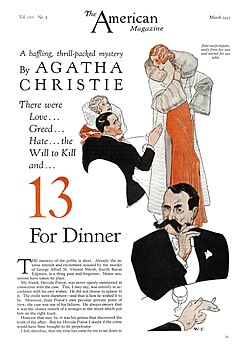
The Biggest Differences Between Poirot and Miss Marple
Although both detectives were created by Agatha Christie, Hercule Poirot and Miss Marple approach mysteries in completely different ways. Their contrasting personalities and investigative methods helped Christie keep her murder mystery novels fresh and unpredictable across decades of writing.
Poirot is highly intellectual, dramatic, and methodical. He enjoys attention, values order and precision, and often dominates the room with his confidence. His investigations usually focus on logical analysis, psychological games, and carefully structured interrogations.
Miss Marple, on the other hand, appears humble, quiet, and almost invisible. Rather than controlling conversations, she listens carefully and studies people naturally. Her strength lies in recognizing behavioral patterns and understanding the hidden darkness beneath ordinary social life.
Their stories also create very different atmospheres. Poirot’s cases often involve international travel, wealthy suspects, luxurious settings, or highly unusual crimes. Miss Marple stories feel smaller and more intimate, usually centered around villages, families, friendships, and community secrets.
Despite these differences, both detectives share one essential characteristic: a profound understanding of human nature. Christie believed crimes are ultimately rooted in universal emotions and weaknesses, and both Poirot and Miss Marple solve mysteries by uncovering those hidden motivations.
- Poirot relies on logic, structure, and psychological deduction.
- Miss Marple relies on intuition, observation, and social understanding.
- Poirot’s stories often feel grand, complex, and theatrical.
- Miss Marple’s stories usually feel intimate, quiet, and deeply human.
- Poirot enjoys being recognized for his brilliance.
- Miss Marple prefers to remain underestimated.
This contrast is one of the reasons Agatha Christie became so successful. Instead of repeating the same detective formula endlessly, she created two iconic investigators capable of offering completely different reading experiences within the world of classic mystery books.
Which Detective Is More Popular?
The debate between Hercule Poirot and Miss Marple has existed for decades among fans of Agatha Christie. Both detectives became legendary figures in crime fiction, yet they attract readers for very different reasons.
Historically, Poirot is usually considered the more famous of the two. He appeared in more novels, became internationally recognizable through film and television adaptations, and developed one of the most distinctive personalities in literary history. His dramatic style, brilliant deductions, and unforgettable mustache helped transform him into a true cultural icon.
Miss Marple, however, possesses a different kind of appeal. Many readers find her more relatable, comforting, and emotionally realistic. Her understanding of ordinary human behavior gives her stories a subtle psychological depth that continues resonating with modern audiences.
Interestingly, Christie herself sometimes expressed frustration with Poirot, describing him as egotistical and exhausting to write. In contrast, she often seemed to enjoy Miss Marple’s quieter and more observant nature. Despite this, Poirot remained overwhelmingly popular with readers throughout Christie’s career.
Ultimately, choosing between the two detectives often depends on personal taste. Readers who enjoy intellectual puzzles, dramatic reveals, and intricate plotting frequently prefer Poirot. Those who appreciate atmosphere, psychology, and social observation often gravitate toward Miss Marple.
The truth is that both characters played an enormous role in making Agatha Christie the undisputed Queen of Crime. Together, they helped define what modern detective fiction could become.
The Best Agatha Christie Books to Read
And Then There Were None
Among all the works written by Agatha Christie, few have achieved the legendary status of And Then There Were None. Frequently considered the greatest of all her mystery novels, the book remains one of the best-selling works of fiction ever published.
The story begins when ten strangers are invited to a remote island mansion under mysterious circumstances. Once isolated from the outside world, the guests discover that each of them hides a dark secret connected to a past crime. Soon, people begin dying one by one according to the verses of a chilling nursery rhyme.
What makes the novel so extraordinary is its atmosphere of paranoia and psychological tension. Unlike many traditional detective stories, there is no central detective figure like Hercule Poirot or Miss Marple guiding the investigation. Instead, readers experience the fear and confusion directly alongside the characters.
Christie masterfully creates a sense of claustrophobia and distrust, where every remaining survivor becomes both a potential victim and a possible murderer. As the number of suspects decreases, the mystery only grows more impossible.
The novel is widely praised for its ingenious structure, relentless suspense, and unforgettable conclusion. Even readers familiar with modern thrillers are often surprised by how intense and unpredictable the story feels today.
For many fans of crime fiction, And Then There Were None represents the perfect example of Christie’s genius: simple premise, brilliant execution, psychological tension, and a shocking final reveal.
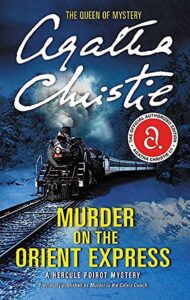
Murder on the Orient Express
Few classic mystery books are as iconic as Murder on the Orient Express. Published in 1934, the novel became one of the defining works of Agatha Christie and one of the most famous detective stories ever written.
The story follows Hercule Poirot aboard the luxurious Orient Express train as it travels across Europe. During the journey, a wealthy passenger is found murdered inside his locked compartment while the train remains trapped by heavy snow. With the killer clearly still on board, Poirot must interrogate the passengers and uncover the truth before the murderer strikes again.
What makes this novel especially fascinating is its brilliantly constructed setting. The confined environment of the train creates immediate tension, forcing suspects and detective alike into close proximity. Every passenger appears suspicious, and every conversation hides potential deception.
The novel also demonstrates Christie’s exceptional talent for misdirection. Readers constantly shift between suspects as Poirot gradually uncovers hidden relationships, secrets, and contradictions.
Of course, the book is perhaps most famous for its astonishing ending, widely considered one of the greatest twists in the history of detective fiction. The solution challenged traditional mystery conventions and became one of the main reasons the novel achieved worldwide acclaim.
Beyond its mystery, Murder on the Orient Express also explores themes of justice, morality, and revenge, giving the story an emotional complexity that continues resonating with readers decades later.
Today, the novel remains one of the best entry points into the world of Agatha Christie, especially for readers looking to experience her most famous and influential work featuring Hercule Poirot.
The Murder of Roger Ackroyd
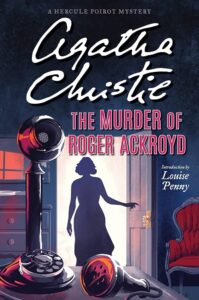
When discussing the most influential novels in the history of detective fiction, The Murder of Roger Ackroyd is almost always part of the conversation. Published in 1926, the book shocked readers and critics alike by completely redefining what a mystery story could accomplish.
The novel follows Hercule Poirot, who has supposedly retired to a quiet English village. His peaceful life is interrupted when wealthy businessman Roger Ackroyd is murdered shortly after receiving a deeply troubling piece of information.
At first glance, the story appears to follow the classic structure of a traditional murder mystery novel. A wealthy victim, multiple suspects, hidden motives, and a brilliant detective investigating the crime. However, Christie carefully manipulates reader expectations in ways that were almost unprecedented at the time.
The brilliance of the novel lies in how fairly the clues are presented while still managing to completely deceive readers. Christie understood exactly how audiences interpreted stories and used those assumptions against them with remarkable precision.
The ending became one of the most famous twists ever written and remains heavily discussed even today. Many critics consider the novel one of the boldest achievements in all of crime fiction.
What truly elevates The Murder of Roger Ackroyd is not simply its surprise ending, but the technical mastery behind its construction. Christie demonstrated complete control over narration, pacing, perspective, and psychological manipulation.
For readers interested in understanding why Agatha Christie became the undisputed Queen of Crime, this novel is absolutely essential.
Death on the Nile
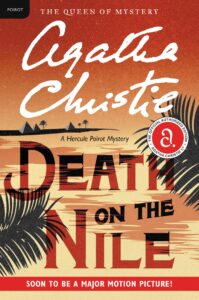
Among the many unforgettable novels written by Agatha Christie, Death on the Nile stands out as one of the most atmospheric and emotionally complex. Published in 1937, the book combines luxury, romance, jealousy, and murder into one of the finest examples of classic detective fiction.
The story follows Hercule Poirot during a vacation aboard a luxurious cruise ship traveling along the Nile River in Egypt. What begins as a glamorous journey quickly turns deadly when a wealthy young woman is murdered under mysterious circumstances. Surrounded by passengers filled with secrets, resentments, and hidden motives, Poirot must uncover the truth before more violence occurs.
One of the novel’s greatest strengths is its vivid setting. Inspired by Christie’s own travels through the Middle East, the book captures the beauty and mystery of Egypt with remarkable detail. Ancient temples, exotic landscapes, elegant hotels, and river cruises create an atmosphere unlike almost any other murder mystery novel of its era.
At the same time, the novel explores deeply human emotions. Love, obsession, betrayal, envy, and revenge all play central roles in the story. Christie demonstrates her exceptional understanding of psychology by showing how intense emotional conflicts can slowly lead people toward tragedy.
The mystery itself is carefully constructed, filled with misleading clues, complicated relationships, and unexpected revelations. Poirot once again relies on his famous “little grey cells” to untangle the lies and uncover the hidden truth behind the murder.
Many readers consider Death on the Nile one of the most balanced works in Christie’s entire career because it successfully combines:
- A fascinating setting
- Strong emotional drama
- A complex mystery
- Memorable characters
- An intelligent final twist
Even decades after its publication, the novel remains one of the most beloved books in all of crime fiction and an essential read for anyone exploring the world of Agatha Christie.
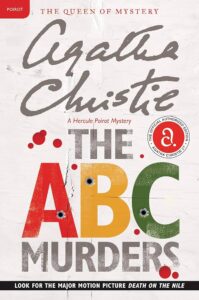
The ABC Murders
While many of Agatha Christie’s novels focus on isolated murders and closed groups of suspects, The ABC Murders introduced a much darker and more unsettling type of mystery. Published in 1936, the novel follows Hercule Poirot as he faces what appears to be a terrifying serial killer.
The story begins when Poirot receives anonymous letters warning him about upcoming murders. Soon afterward, victims begin dying in different towns across England, each crime following a disturbing alphabetical pattern. The killer seems to be deliberately challenging Poirot while creating confusion and fear across the country.
This premise allowed Christie to explore suspense on a much larger scale than usual. Instead of a small circle of suspects trapped in a mansion or train, the novel creates the frightening sensation that danger could appear anywhere at any moment.
At first, the crimes seem random and impossible to connect beyond the alphabetical clues. However, Poirot suspects there is a deeper psychological strategy hiding beneath the surface. As always, Christie carefully layers the mystery with false leads, hidden motives, and subtle manipulations designed to deceive both the detective and the reader.
One of the most impressive aspects of the novel is how modern it feels. The concept of a serial killer taunting investigators later became extremely common in thrillers, films, and television series, but Christie was already experimenting with those ideas decades earlier.
The book also highlights the intellectual duel between Poirot and the murderer. Rather than relying purely on physical evidence, Poirot focuses on understanding the killer’s psychology, intentions, and hidden patterns.
For many fans of detective fiction, The ABC Murders represents one of Christie’s most suspenseful and innovative novels. It combines the classic “whodunit” structure with the tension of a psychological thriller, creating a story that still feels remarkably engaging today.
Interesting Facts About Agatha Christie
Even beyond her legendary mystery novels, the life of Agatha Christie was filled with fascinating experiences, surprising talents, and unusual adventures. Many readers know her as the Queen of Crime, but few realize just how interesting her real life truly was.
- She worked with medicines and poisons during World War I
Before becoming famous, Christie worked as a nurse and later in a pharmacy dispensary during World War I. This experience gave her extensive knowledge of chemicals and poisons, which later became one of the most distinctive elements of her crime fiction. Many of her murder methods were based on real medical substances and were described with remarkable accuracy. - She disappeared mysteriously for eleven days
In 1926, Agatha Christie vanished without explanation, creating one of the most famous real-life mysteries in literary history. Her abandoned car was discovered, but Christie herself remained missing for eleven days before finally being found in a hotel under a different name. The true reason behind her disappearance remains debated even today. - She wrote romance novels under another name
Although best known for detective fiction, Christie also wrote several romantic novels using the pseudonym Mary Westmacott. These books focused more on relationships and emotional drama than murder mysteries, revealing a completely different side of her writing. - She loved archaeology
After marrying archaeologist Max Mallowan, Christie traveled extensively through the Middle East and actively participated in archaeological expeditions. Her fascination with ancient history inspired several famous novels, including Death on the Nile and Murder in Mesopotamia. - She helped clean ancient artifacts
Christie was not merely accompanying her husband on expeditions. She genuinely enjoyed archaeological work and often helped restore delicate historical objects. Surprisingly, she sometimes used her own face cream to carefully clean ancient artifacts. - She was one of the best-selling authors in history
The books of Agatha Christie have sold more than two billion copies worldwide. Her works have been translated into over 100 languages, making her one of the most translated authors of all time. - She created the longest-running play ever
Christie’s play The Mousetrap became the longest-running theatrical production in history. Premiering in London in 1952, it continued running for decades and became one of the greatest achievements in modern theater. - She disliked public attention
Despite her enormous fame, Christie was naturally shy and uncomfortable with celebrity culture. She disliked interviews and public appearances, preferring a quiet private life away from excessive attention. - She surfed in Hawaii before surfing became popular
During her travels in the 1920s, Christie learned how to surf in Hawaii. At the time, surfing was still relatively unknown to most Europeans, making her one of the earliest British women known to practice the sport. - Hercule Poirot received an obituary in The New York Times
When Christie published Poirot’s final case, Curtain, in 1975, Hercule Poirot became so culturally important that The New York Times published an official obituary for the fictional detective.
These fascinating details help explain why Agatha Christie remains such an enduring cultural icon. Her life was almost as intriguing as the mysteries she created, and many of her personal experiences directly shaped the unforgettable world of her murder mystery novels.
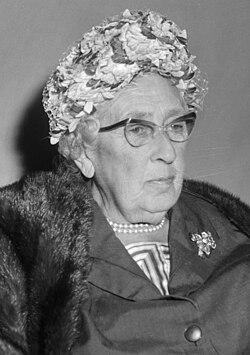
How many books did Agatha Christie write?
Throughout her extraordinary career, Agatha Christie wrote an impressive total of 66 detective novels and 14 short story collections, making her one of the most productive authors in the history of crime fiction.
In addition to her famous mystery novels, Christie also wrote:
- Several successful stage plays
- Romance novels under the pseudonym Mary Westmacott
- Autobiographical works
- Poetry collections
- Numerous short stories featuring Hercule Poirot and Miss Marple
Her literary output becomes even more impressive when considering the consistent quality and creativity of her stories. Unlike many authors who repeat similar formulas endlessly, Christie continuously experimented with narrative structures, psychological twists, settings, and investigative styles throughout her career.
Among her most famous creations are the legendary detectives Hercule Poirot and Miss Marple, who appeared across dozens of novels and became two of the most iconic characters in all of detective fiction.
Christie’s influence extended far beyond books. Her stories inspired countless films, television adaptations, theater productions, and modern mystery writers. Her play The Mousetrap alone became the longest-running theatrical production in history.
Even decades after her death in 1976, the books of Agatha Christie continue selling millions of copies every year, proving that her mastery of suspense, psychology, and storytelling remains timeless.

Leave a Reply