
What Is It Like to Read Dostoevsky?
Reading Fyodor Dostoevsky for the first time can feel strangely intense. His novels are not the kind of books most people read casually before bed and immediately forget the next morning. Instead, they tend to stay in your mind for days, sometimes even years, because of how deeply they explore guilt, morality, loneliness, suffering, and the darker corners of human psychology.
That reputation is also what intimidates many new readers. People often hear that Dostoevsky is “difficult,” overly philosophical, or emotionally exhausting. While some of his novels are certainly dense, the truth is that his stories are usually far more emotional and gripping than many readers expect. In fact, some of the best Dostoevsky books for beginners feel surprisingly modern despite being written in the nineteenth century.
One of the reasons his work still feels so powerful today is because Dostoevsky understood human contradiction better than almost any other writer. His characters are rarely simple heroes or villains. They are insecure, obsessive, emotional, self-destructive, compassionate, arrogant, desperate, and painfully human all at the same time.
Is Dostoevsky More Philosophy or Fiction?
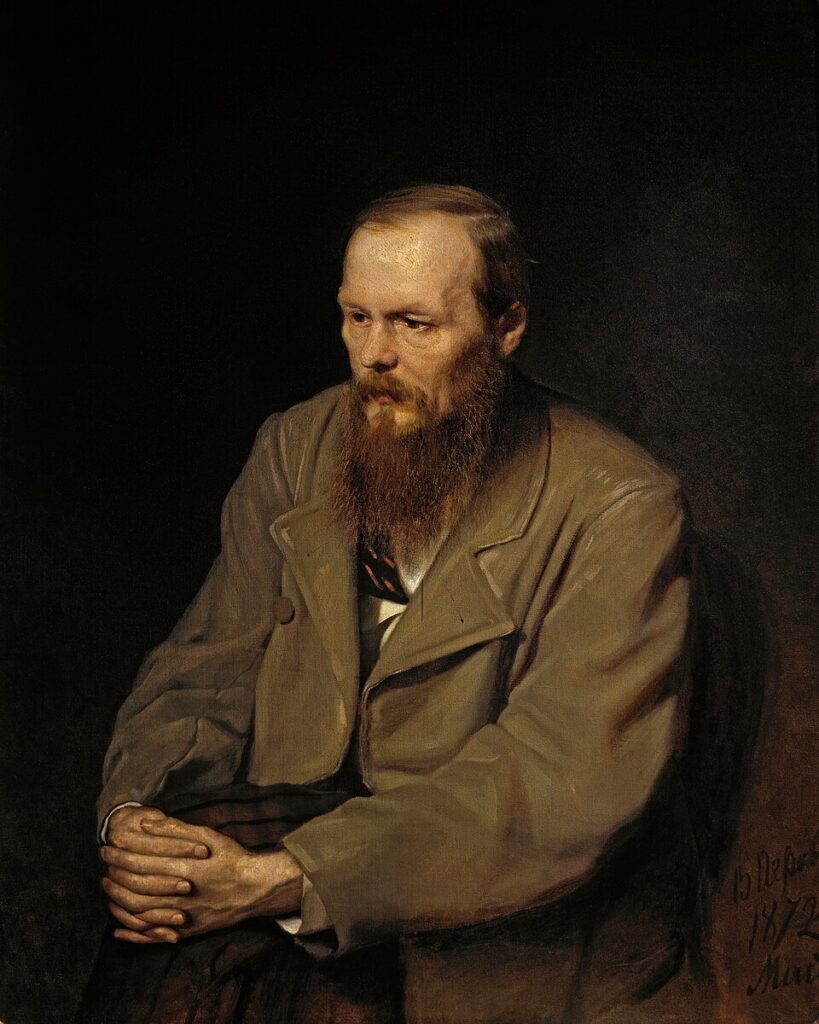
This is one of the most common questions new readers ask before starting Fyodor Dostoevsky. The answer is: both. His novels combine psychological realism, philosophical reflection, crime stories, emotional drama, and even moments of dark humor in ways that still feel unique today.
Unlike purely philosophical books, Dostoevsky rarely explains ideas through abstract theories alone. Instead, he transforms philosophical conflicts into emotional experiences. His characters argue about morality, free will, religion, nihilism, and suffering while their lives slowly fall apart around them.
That is why reading Dostoevsky often feels so personal. Even when readers disagree with his characters, they usually recognize parts of themselves inside them. Few authors are as skilled at exposing the irrational and contradictory nature of the human mind.
Why His Books Feel So Psychological
Long before modern psychology became popular, Dostoevsky was already writing novels that explored anxiety, guilt, obsession, alienation, and emotional instability with incredible depth. This is one of the reasons many readers describe his work as some of the greatest psychological fiction ever written.
In novels like Crime and Punishment and Notes from Underground, the real conflict is often happening inside the character’s mind rather than in the external plot itself. His protagonists constantly question their own motives, justify terrible decisions, and struggle against their own conscience.
That psychological intensity is also what makes his books feel surprisingly modern. Even readers who are not usually interested in classic Russian literature often connect with the emotional honesty of his characters.
Who Will Enjoy Dostoevsky’s Novels?
Dostoevsky is usually a perfect author for readers who enjoy emotionally intense stories, philosophical discussions, morally complex characters, and introspective narratives. People who like existential themes or psychological thrillers often become deeply attached to his work.
Readers who enjoy authors like Franz Kafka, Albert Camus, George Orwell, or even modern psychological television dramas may find themselves surprisingly drawn to Dostoevsky’s novels.
However, his books may not appeal to readers looking only for fast action or simple escapism. His stories tend to focus heavily on internal conflict, emotional suffering, and philosophical tension rather than constant external events.
Why Some Readers Become Obsessed With His Work
For many people, reading Fyodor Dostoevsky feels less like reading fiction and more like confronting uncomfortable truths about human nature. His novels often create the strange feeling that the author understands fears and contradictions most people try to hide from themselves.
That emotional and philosophical depth is why so many readers become obsessed with his books after finishing their first Dostoevsky novel. His stories do not simply entertain readers — they challenge them, disturb them, and sometimes even change the way they think about morality, suffering, and human behavior.
And once readers experience that intensity for the first time, the next question becomes almost inevitable: where should you actually start with Dostoevsky?
Where Should You Start With Dostoevsky?
Choosing your first Fyodor Dostoevsky novel matters more than many readers realize. While some of his books are emotionally accessible and immediately engaging, others can feel overwhelming if you are completely new to his style. Starting with the right novel can be the difference between becoming fascinated by Dostoevsky’s world or feeling exhausted before truly understanding why so many readers consider him one of the greatest writers in literary history.
One of the biggest misconceptions about Dostoevsky for beginners is the idea that readers should immediately jump into his largest and most philosophical works. In reality, many experienced readers recommend beginning with novels that introduce his psychological style without demanding too much patience or historical context from the start.
The good news is that Dostoevsky wrote books for very different kinds of readers. Some are emotionally intimate and melancholic, others feel almost like psychological thrillers, while a few dive deeply into existential and religious questions. Because of this, the best starting point often depends on what kind of reading experience you personally enjoy most.
Why Choosing the Right First Book Matters
Dostoevsky’s novels are emotionally intense, but they are not all equally difficult. Some books, like White Nights, are short, emotional, and relatively easy to read. Others, like The Brothers Karamazov, are much denser and filled with philosophical discussions, complex relationships, and large casts of characters.
For many new readers, beginning with one of the shorter or more psychologically direct novels creates a much smoother introduction to Dostoevsky’s writing style. Once readers become comfortable with his pacing, emotional depth, and long internal monologues, his larger masterpieces become far easier to appreciate.
This is also why there is no single “correct” answer for where to start. A reader who enjoys philosophical fiction may fall in love with Notes from Underground, while someone who prefers suspense and tension may connect much more strongly with Crime and Punishment.
The Biggest Mistake New Readers Make
One of the most common mistakes beginners make is choosing a Dostoevsky novel based purely on reputation rather than personal interest. Many readers immediately start with whichever book is considered his “greatest masterpiece,” even if that particular novel is not the best match for their reading preferences.
Another challenge for beginners is adjusting to Russian naming conventions. Dostoevsky’s characters often have multiple names, nicknames, and patronymics, which can initially feel confusing. Fortunately, most readers adapt to this surprisingly quickly after spending some time with the characters.
It is also important to understand that Dostoevsky’s novels are not fast-paced in the modern sense. The tension in his stories usually comes from psychological conflict rather than constant external action. His characters think obsessively, question themselves endlessly, and often spiral emotionally before making important decisions.
But that psychological intensity is exactly what makes his books unforgettable. Once readers adjust to his rhythm, many discover that Dostoevsky’s novels become almost impossible to put down.
So with that in mind, let’s begin with the novel most readers consider the perfect introduction to Dostoevsky’s world: Crime and Punishment.
1. Crime and Punishment — The Best First Dostoevsky Novel for Most Readers
If there is one book that consistently appears in discussions about the best place to start with Fyodor Dostoevsky, it is almost always Crime and Punishment. The novel combines psychological tension, philosophical depth, moral conflict, and emotional intensity in a way that feels surprisingly accessible even for readers who are completely new to classic Russian literature.
Unlike some of Dostoevsky’s denser works, Crime and Punishment immediately pulls readers into its atmosphere of anxiety, paranoia, and guilt. From the very beginning, the novel creates a feeling of psychological pressure that slowly becomes impossible to escape.
It is also one of the clearest examples of why Dostoevsky remains so influential today. The novel explores ideas about morality, justice, ego, suffering, and redemption while still functioning as an incredibly gripping story.

What Crime and Punishment Is About
The novel follows Rodion Raskolnikov, a poor former student living in Saint Petersburg who becomes convinced that certain extraordinary individuals have the moral right to commit terrible acts if those actions ultimately serve a greater purpose.
Driven by this dangerous philosophy, Raskolnikov commits a brutal crime that he believes he can intellectually justify. However, instead of freeing himself from guilt, he slowly becomes consumed by paranoia, emotional instability, fear, and psychological torment.
Without relying heavily on action scenes, Dostoevsky transforms the internal collapse of Raskolnikov’s mind into one of the most suspenseful experiences in all of psychological fiction.
Why This Is the Most Recommended Starting Point
One of the biggest reasons Crime and Punishment works so well for beginners is that it balances philosophy with narrative tension extremely well. The novel constantly explores deep moral questions, but it does so through suspense, emotional conflict, and strong character interactions rather than abstract discussions alone.
Compared to books like Notes from Underground, which can feel more introspective and philosophically dense, Crime and Punishment gives readers a clearer external story to follow. That structure makes the novel much easier to navigate for people who are reading Dostoevsky for the first time.
It also contains many of the themes that define Dostoevsky’s later masterpieces:
- guilt and conscience;
- moral ambiguity;
- psychological suffering;
- religion and redemption;
- isolation and alienation;
- the conflict between logic and emotion.
Because of this, many readers consider the novel the perfect introduction to Dostoevsky’s larger philosophical world.
Raskolnikov and Dostoevsky’s Obsession With Guilt
More than almost any other Dostoevsky character, Raskolnikov represents the author’s fascination with guilt and self-destruction. What makes the novel so powerful is that the true punishment is not simply legal consequences — it is the unbearable psychological weight created by the crime itself.
Dostoevsky repeatedly explores the idea that human beings cannot escape their own conscience forever. Even when characters attempt to justify cruelty intellectually, emotional suffering eventually begins to destroy them from within.
This obsession with inner conflict appears throughout Dostoevsky’s work, especially in Notes from Underground and later in The Brothers Karamazov. However, Crime and Punishment presents these themes in a much more emotionally direct and accessible way.
How It Compares to Notes from Underground
Readers who enjoy the philosophical and psychological aspects of Crime and Punishment often continue with Notes from Underground afterward. Both books explore alienation, ego, irrationality, and self-destructive behavior, but they approach these themes very differently.
While Crime and Punishment functions partly as a suspenseful narrative, Notes from Underground is far more introspective and fragmented. The Underground Man is less concerned with external events and far more obsessed with analyzing his own bitterness, insecurity, and contradictions.
For this reason, many readers find Crime and Punishment emotionally easier to connect with at first, even though both novels explore similar existential questions.
Who Will Love This Book
This novel is usually the ideal starting point for readers who enjoy psychological thrillers, morally complex characters, dark philosophical themes, and emotionally intense stories.
Fans of existential literature, crime dramas, or deeply character-driven narratives often become immediately attached to Dostoevsky after reading this book.
It is especially recommended for readers who want a balance between philosophy and plot rather than a purely abstract or heavily intellectual reading experience.
Difficulty Level and Reading Experience
Although Crime and Punishment is not a short novel, it is generally considered one of Dostoevsky’s most accessible major works. The pacing can occasionally feel slow, especially during long psychological conversations, but the constant emotional tension keeps the story engaging.
New readers may initially struggle with Russian names and the emotional intensity of the characters, but most adapt fairly quickly after the first few chapters.
For many people, this is the novel that transforms Dostoevsky from an intimidating literary figure into an unforgettable reading experience.
2. Notes from Underground — The Most Philosophical Introduction to Dostoevsky
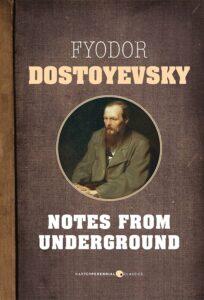
While Crime and Punishment is usually considered the safest starting point for beginners, many readers who are especially interested in philosophy and psychology find themselves completely fascinated by Notes from Underground. Despite being much shorter than Dostoevsky’s major novels, this book contains some of his most important and influential ideas.
In many ways, Notes from Underground feels shockingly modern. The narrator’s insecurity, bitterness, self-awareness, loneliness, and emotional contradictions still feel painfully recognizable today, which is one of the reasons the novella continues to resonate with modern readers.
It is also one of the clearest examples of why Fyodor Dostoevsky is often associated with existentialism, even though the movement itself would only become formally popular decades later.
What Notes from Underground Is About
The novella follows an unnamed narrator commonly referred to as the Underground Man, a bitter and isolated former civil servant living in Saint Petersburg. Deeply cynical and emotionally unstable, he spends much of the story analyzing his own thoughts, humiliations, resentments, and contradictions.
Unlike traditional novels, Notes from Underground focuses far less on plot and external events. Instead, the book dives directly into the narrator’s psychological chaos and philosophical reflections about free will, rationality, suffering, and human behavior.
The result is a deeply uncomfortable but incredibly fascinating reading experience. Few books capture self-destructive thinking with such honesty and intensity.
Why This Book Feels So Modern
One of the reasons modern readers connect so strongly with Notes from Underground is because the narrator often feels psychologically contemporary. His anxiety, overthinking, social alienation, and emotional self-sabotage resemble struggles that many people still experience today.
The Underground Man constantly analyzes himself to the point of paralysis. He desires connection but pushes people away. He wants dignity but repeatedly humiliates himself. He craves meaning while simultaneously mocking everything around him.
That emotional contradiction is what makes the novella feel timeless. Even readers who dislike the narrator often recognize parts of their own fears or insecurities within him.
The Underground Man and Existentialism
Long before existentialism became a major philosophical movement, Dostoevsky was already exploring many of its central themes through the Underground Man.
The narrator rejects the idea that human beings are purely rational creatures who will always act in their own best interest. Instead, he argues that people often make irrational, destructive, and self-defeating choices simply to prove their freedom.
This idea became enormously influential in later existential literature. Philosophers and writers would continue exploring these same tensions between freedom, suffering, individuality, and meaning throughout the twentieth century.
In many ways, the Underground Man feels like an early prototype for countless modern antiheroes.
How It Influenced Nietzsche and Existentialist Philosophy
Many scholars and readers see Notes from Underground as one of the foundational texts of existentialist thought. Although philosophers like Jean-Paul Sartre and Albert Camus would come much later, the novella already explores themes that became central to existential philosophy.
The book also strongly influenced thinkers like Friedrich Nietzsche, who admired Dostoevsky’s psychological insight. Nietzsche famously referred to Dostoevsky as “the only psychologist from whom I had anything to learn.”
What makes the novella so intellectually powerful is that Dostoevsky never presents these philosophical questions in a cold academic way. Instead, he transforms them into emotional suffering, humiliation, and internal conflict.
How It Compares to Crime and Punishment
Readers who start with Crime and Punishment often notice that many of Raskolnikov’s inner struggles already exist inside the Underground Man. Both characters are isolated, proud, emotionally unstable, and obsessed with their own ideas.
However, the reading experience itself is very different. Crime and Punishment balances philosophy with suspense and external conflict, while Notes from Underground is far more introspective and psychologically claustrophobic.
Because of this, some beginners may find the novella slightly more challenging emotionally, even though it is much shorter. Readers looking for action or traditional storytelling may prefer starting with Crime and Punishment first.
Who Should Start Here
This book is often the perfect starting point for readers who already enjoy philosophy, introspective narratives, existential themes, or psychologically complex characters.
Fans of writers like Franz Kafka, Albert Camus, or Jean-Paul Sartre frequently connect deeply with Notes from Underground. It is also ideal for readers who prefer shorter books but still want an intellectually intense experience.
For many people, this novella becomes the moment they realize that Dostoevsky was not simply writing stories — he was dissecting the human mind itself.
3. White Nights — The Most Emotional and Accessible Dostoevsky Story
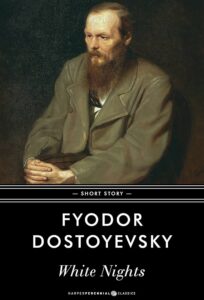
Not every Fyodor Dostoevsky story is filled with murder, existential despair, or psychological collapse. In fact, one of the best introductions to his writing is also one of his gentlest and most emotionally vulnerable works: White Nights.
Compared to darker novels like Crime and Punishment or Notes from Underground, this short story feels softer, more romantic, and deeply melancholic. Yet beneath its emotional simplicity lies many of the same themes that would later define Dostoevsky’s larger masterpieces — loneliness, isolation, idealism, fantasy, and the painful gap between imagination and reality.
Because of its short length and emotional accessibility, White Nights is often one of the easiest entry points into classic Russian literature.
What White Nights Is About
The story follows a lonely young man living in Saint Petersburg who describes himself as a dreamer disconnected from the real world. One night, he meets a young woman named Nastenka, and over the course of several evenings the two develop a fragile emotional connection.
As they share their fears, hopes, and loneliness with each other, the narrator slowly becomes emotionally attached to her while struggling to separate fantasy from reality.
Although the plot itself is relatively simple, Dostoevsky transforms the emotional atmosphere into something incredibly intimate and human.
Why Modern Readers Love This Story
In recent years, White Nights has become especially popular among younger readers online, partly because of how emotionally relatable the story feels. The narrator’s loneliness, romantic idealism, emotional vulnerability, and tendency to escape into fantasy resonate strongly with many modern readers.
Unlike some of Dostoevsky’s heavier novels, this story can often be read in a single sitting, making it far less intimidating for beginners.
At the same time, the emotional sincerity of the writing still carries the psychological depth that defines Dostoevsky’s work. Even though the story is smaller in scale, it never feels emotionally shallow.
Loneliness, Romance, and Escapism in Dostoevsky
One of the most fascinating aspects of White Nights is how it explores emotional isolation. The narrator spends much of his life trapped inside his own imagination, creating fantasies and emotional scenarios instead of fully participating in reality.
This tension between fantasy and reality appears throughout Dostoevsky’s work, although usually in much darker forms. In Notes from Underground, isolation becomes bitterness and psychological self-destruction. In Crime and Punishment, it becomes paranoia and alienation.
But in White Nights, loneliness is portrayed with tenderness and emotional fragility rather than violence or despair. That softer emotional tone makes the story especially memorable for readers who are less interested in heavy philosophical conflict.
How White Nights Differs From His Darker Novels
Readers who only know Dostoevsky through books like Crime and Punishment are often surprised by how emotional and delicate White Nights feels.
There are still psychological themes and emotional suffering, but the story focuses much more on longing, hope, romantic idealism, and human connection than on morality or existential philosophy.
Because of this, White Nights can serve as a wonderful introduction for readers who are curious about Dostoevsky’s writing style but are not yet ready for the intensity of his larger novels.
It also proves that Dostoevsky’s emotional power did not depend entirely on darkness or philosophical complexity. Sometimes his simplest stories are also his most human.
Who Will Enjoy This Book the Most
This story is especially perfect for readers who enjoy melancholic romance, introspective characters, emotional realism, and reflective narratives about loneliness and human connection.
It is also an excellent starting point for readers who usually avoid long classics but still want to experience why Fyodor Dostoevsky remains one of the most beloved authors in literary history.
For many people, White Nights becomes an emotional gateway into Dostoevsky’s darker and more philosophical works later on.
4. The Gambler — A Fast-Paced Psychological Novel
Among all of Fyodor Dostoevsky’s major works, The Gambler is probably one of the most chaotic, emotionally impulsive, and surprisingly entertaining. While many readers associate Dostoevsky with slow philosophical novels and emotionally tortured intellectuals, this book reveals a much more frantic and addictive side of his writing.
Unlike the heavy moral atmosphere of Crime and Punishment or the introspective bitterness of Notes from Underground, The Gambler moves quickly, driven by obsession, emotional instability, financial desperation, and reckless desire.
It is also one of Dostoevsky’s most personal novels, heavily inspired by his own gambling addiction and financial struggles during one of the most turbulent periods of his life.

What The Gambler Is About
The novel follows Alexei Ivanovich, a young tutor working for a wealthy Russian family traveling through Europe. As tensions surrounding money, inheritance, social status, and romantic obsession intensify, Alexei becomes increasingly consumed by roulette gambling.
What begins as fascination slowly transforms into addiction. The emotional highs and crushing lows of gambling start controlling not only Alexei’s finances, but also his relationships, self-worth, and psychological stability.
Although the novel is shorter and faster-paced than many other Dostoevsky books for beginners, it still explores familiar themes of obsession, humiliation, irrationality, and self-destruction.
Dostoevsky’s Real Gambling Addiction
One of the reasons The Gambler feels so emotionally convincing is because Dostoevsky was writing from personal experience. During the 1860s, he developed a severe gambling addiction that left him drowning in debt and constantly struggling financially.
In fact, the novel itself was written under intense pressure. Dostoevsky had signed a brutal publishing contract and risked losing the rights to his future works if he failed to deliver a manuscript on time.
Desperate for money, emotionally exhausted, and battling his addiction, he dictated The Gambler at remarkable speed with the help of his stenographer Anna Snitkina, who would later become his wife.
That chaotic emotional energy can be felt throughout the novel itself.
Why This Is One of His Most Addictive Reads
Compared to Dostoevsky’s more philosophical novels, The Gambler feels unusually immediate and emotionally volatile. The pacing is faster, the dialogue more impulsive, and the emotional swings more dramatic.
The constant uncertainty surrounding gambling creates a sense of tension that keeps readers engaged almost from beginning to end. Even readers who are not normally interested in classic Russian literature often find themselves unexpectedly absorbed by the novel’s psychological intensity.
At its core, the book captures the dangerous thrill of self-destruction — the irrational belief that one more risk, one more victory, or one more emotional gamble might completely change everything.
The Psychological Chaos of Obsession and Desire
Like many of Dostoevsky’s protagonists, Alexei is emotionally contradictory and deeply unstable. He swings rapidly between confidence and humiliation, passion and resentment, hope and despair.
Dostoevsky was fascinated by how human beings often sabotage themselves even when they fully understand the consequences of their actions. This same psychological conflict appears throughout his work, especially in characters like Raskolnikov from Crime and Punishment and the Underground Man from Notes from Underground.
However, in The Gambler, these emotional contradictions are expressed through addiction and emotional dependency rather than philosophical isolation.
The result is one of Dostoevsky’s most emotionally chaotic and strangely entertaining novels.
How It Compares to Crime and Punishment
Although both novels explore self-destructive behavior, The Gambler feels much lighter and more energetic than Crime and Punishment. Raskolnikov’s suffering is slow, philosophical, and morally crushing, while Alexei’s downfall feels impulsive, emotional, and almost manic.
Because of this, many readers find The Gambler easier to read despite its psychological complexity.
The novel also contains less philosophical discussion than many of Dostoevsky’s other major works, making it an excellent option for readers who want emotional intensity without extremely dense existential debates.
Who Should Read This First
This book is often perfect for readers who enjoy emotionally unstable characters, fast-paced psychological tension, stories about addiction, or dramatic interpersonal conflict.
It is also a great starting point for readers who are curious about Dostoevsky but feel intimidated by the size and philosophical density of novels like The Brothers Karamazov.
For many readers, The Gambler reveals an important side of Dostoevsky that is sometimes overlooked — beneath the philosophy and existential themes was also a writer capable of creating intensely entertaining emotional drama.
5. The Brothers Karamazov — Dostoevsky’s Greatest Masterpiece
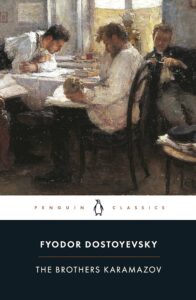
For many readers, scholars, and philosophers, The Brothers Karamazov is not only the greatest novel written by Fyodor Dostoevsky, but one of the greatest achievements in all of literature. Deeply philosophical, emotionally devastating, spiritually complex, and psychologically rich, the novel brings together nearly every major theme Dostoevsky explored throughout his career.
At the same time, it is also one of his most demanding books. While some readers do begin their journey with The Brothers Karamazov, many find the experience far more rewarding after first becoming familiar with Dostoevsky’s style through novels like Crime and Punishment or Notes from Underground.
This is not simply a novel about one family. It is a massive exploration of morality, faith, free will, suffering, human nature, and the search for meaning itself.
What The Brothers Karamazov Is About
The novel centers around the deeply dysfunctional Karamazov family, particularly the relationships between the father, Fyodor Pavlovich Karamazov, and his three sons: Dmitri, Ivan, and Alyosha.
Each brother represents different emotional, intellectual, and spiritual perspectives. Dmitri is passionate and impulsive, Ivan is intellectual and skeptical, while Alyosha embodies compassion and spiritual faith.
As tensions surrounding money, inheritance, resentment, and morality intensify, the family becomes entangled in a devastating crime that forces each character to confront their own beliefs and inner conflicts.
What follows is not only a family drama, but also one of the most profound philosophical explorations in classic Russian literature.
Why Many Readers Consider It His Best Work
What makes The Brothers Karamazov so extraordinary is the sheer depth of its ideas combined with emotional realism. The novel constantly moves between intimate human suffering and enormous philosophical questions without ever losing its emotional power.
Dostoevsky explores topics such as:
- faith and doubt;
- free will;
- morality and justice;
- human cruelty;
- forgiveness and redemption;
- the existence of God;
- the meaning of suffering.
Yet despite its intellectual complexity, the novel never feels emotionally detached. Every philosophical conflict emerges directly from the characters’ personal pain, fears, desires, and relationships.
That emotional intensity is one of the reasons the novel continues to influence philosophers, psychologists, theologians, and writers more than a century after its publication.
Faith, Morality, and Human Nature
More than any other Dostoevsky novel, The Brothers Karamazov openly confronts spiritual and moral questions. Through the different personalities and beliefs of the brothers, Dostoevsky creates a conflict between faith, skepticism, rationality, and emotional compassion.
One of the most famous sections of the novel, “The Grand Inquisitor,” remains one of the most discussed passages in literary and philosophical history because of how powerfully it examines freedom, religion, and human weakness.
Unlike the more psychologically isolated suffering found in Notes from Underground, the moral and spiritual struggles in The Brothers Karamazov feel universal in scale.
The novel asks enormous questions about what it truly means to live morally in a world filled with suffering and uncertainty.
Why Beginners Should Not Start Here Immediately
Although many readers eventually consider The Brothers Karamazov their favorite Dostoevsky novel, it can be challenging for complete beginners.
The book is long, emotionally intense, philosophically dense, and filled with complex conversations about morality, religion, and human behavior. It also contains a large cast of characters and multiple Russian naming variations that may initially overwhelm new readers.
For readers already comfortable with introspective literature and philosophical novels, this may not be a major problem. However, many beginners have a better experience approaching the novel after first reading shorter or more accessible works like White Nights, The Gambler, or Crime and Punishment.
Once readers understand Dostoevsky’s style and rhythm, the emotional and intellectual depth of The Brothers Karamazov becomes far easier to appreciate.
How This Novel Connects All of Dostoevsky’s Major Themes
In many ways, The Brothers Karamazov feels like the culmination of everything Dostoevsky spent his life exploring.
The psychological suffering of Crime and Punishment, the existential conflict of Notes from Underground, the emotional vulnerability of White Nights, and the destructive obsession of The Gambler all echo through this novel in different forms.
That is why so many readers view the book not only as Dostoevsky’s greatest masterpiece, but also as the ultimate expression of his understanding of the human condition.
For readers willing to embrace its complexity, The Brothers Karamazov can become a genuinely unforgettable literary experience.
Books You Should Probably Avoid as Your First Dostoevsky Read
One of the most common mistakes new readers make when approaching Fyodor Dostoevsky is assuming that they should begin with his most famous or intellectually ambitious novels immediately. While some readers certainly can, others end up feeling overwhelmed and mistakenly conclude that Dostoevsky simply is not for them.
The truth is that several of his books become much more rewarding after readers first become comfortable with his writing style, psychological intensity, and philosophical pacing.
This does not mean these novels are bad starting points for everyone. Rather, they tend to require more patience, concentration, and familiarity with Dostoevsky’s themes than books like Crime and Punishment, White Nights, or The Gambler.
Why Demons Can Be Difficult for Beginners
Among Dostoevsky’s major novels, Demons — sometimes translated as The Devils or The Possessed — is often considered one of the most politically and philosophically complex.
The novel explores radical political ideology, nihilism, manipulation, extremism, and social chaos within nineteenth-century Russia. Unlike the more emotionally direct psychological conflicts found in Crime and Punishment, the tension in Demons is often intellectual, political, and ideological.
For readers deeply interested in political philosophy or Russian history, this complexity can be fascinating. However, complete beginners may initially struggle with the novel’s large cast of characters, slower pacing, and heavy philosophical discussions.
Many readers appreciate Demons far more after already becoming familiar with Dostoevsky’s worldview through his more accessible works.

Why The Idiot Is More Complex Than It Seems
At first glance, The Idiot may appear easier than some of Dostoevsky’s darker novels because its central character, Prince Myshkin, is compassionate, emotionally sincere, and morally gentle.
However, the novel itself is emotionally and psychologically complicated in ways that can surprise new readers.
Unlike the constant suspense of Crime and Punishment or the shorter emotional intimacy of White Nights, The Idiot unfolds more slowly and focuses heavily on social dynamics, emotional tension, and philosophical ideas about innocence, morality, and human corruption.
The emotional instability of the characters, combined with long conversations and shifting interpersonal relationships, can make the novel feel more demanding than many beginners expect.
For this reason, many readers prefer approaching The Idiot after already becoming comfortable with Dostoevsky’s pacing and emotional intensity.

The Challenge of Dostoevsky’s Long Russian Names
One obstacle that surprises many first-time readers of Russian literature is the naming system itself. Dostoevsky’s characters often have formal names, nicknames, patronymics, and affectionate variations that may initially seem confusing.
For example, a single character may be referred to by several different versions of their name depending on the emotional context of the conversation.
This confusion is completely normal at first, especially in larger novels like The Brothers Karamazov or Demons. Fortunately, most readers adapt much faster than they expect once they become emotionally invested in the characters.
In fact, after finishing their first Dostoevsky novel, many readers realize that the intimidating reputation surrounding his books was far worse than the actual reading experience itself.
And once readers overcome that initial fear, the next question becomes much more personal: which Dostoevsky book best matches your own personality and reading style?
Which Dostoevsky Book Should You Read Based on Your Personality?
One of the reasons Fyodor Dostoevsky continues to attract such different kinds of readers is that his books do not all feel the same emotionally. Some are philosophical and psychologically exhausting, others are melancholic and intimate, while a few are surprisingly suspenseful and emotionally chaotic.
Because of this, the best place to start often depends less on difficulty level and more on what kind of emotional or intellectual experience you personally enjoy most.
If you choose the Dostoevsky novel that best matches your interests and personality, there is a much greater chance that you will immediately connect with his writing style instead of feeling intimidated by it.
If You Enjoy Psychological Thrillers
Your best starting point is almost certainly Crime and Punishment.
The novel combines suspense, moral tension, guilt, paranoia, and psychological conflict in a way that feels surprisingly modern. Readers who enjoy intense character-driven stories, crime narratives, or emotionally stressful psychological dramas usually become attached to Dostoevsky very quickly through this book.
It is also one of the easiest novels for beginners to emotionally engage with because the narrative tension constantly pushes the story forward.
If You Love Philosophy and Existential Questions
Then Notes from Underground may be the perfect introduction for you.
This novella focuses heavily on introspection, free will, alienation, irrationality, and emotional contradiction. Rather than external suspense, the book creates tension through the narrator’s fractured psychology and philosophical reflections.
Readers interested in existentialism, psychology, or intellectually intense literature often find this to be one of Dostoevsky’s most fascinating works despite its relatively short length.
It is especially appealing to readers who enjoy authors like Franz Kafka, Albert Camus, or Jean-Paul Sartre.
If You Prefer Emotional and Melancholic Stories
In that case, White Nights is probably the ideal starting point.
The story is short, emotional, romantic, and deeply human. Rather than focusing on philosophical debates or moral collapse, it explores loneliness, idealism, emotional vulnerability, and the desire for human connection.
Readers who enjoy reflective emotional narratives or melancholic romance often connect very strongly with this side of Dostoevsky’s writing.
It is also one of the least intimidating entry points into classic Russian literature.
If You Enjoy Fast-Paced Emotional Chaos
Then The Gambler may surprise you.
Compared to many other Dostoevsky novels, this book moves quickly and feels emotionally impulsive. Gambling addiction, obsession, romantic desperation, and reckless decision-making create a constant sense of instability and tension.
Readers who enjoy emotionally volatile characters and dramatic psychological conflict often find The Gambler incredibly entertaining.
It is also one of the best examples of how Dostoevsky transformed his own personal struggles into fiction.
If You Want Deep Spiritual and Philosophical Discussions
Eventually, you will probably want to read The Brothers Karamazov.
This novel contains some of Dostoevsky’s deepest reflections about morality, suffering, religion, faith, doubt, and human nature. Many readers consider it the ultimate expression of his philosophical and emotional vision.
However, because of its size and complexity, most beginners have a much better experience reading it after already becoming familiar with Dostoevsky’s style through his shorter or more accessible works first.
For many readers, discovering the right Dostoevsky novel is less about following strict reading rules and more about finding the book that speaks most directly to their own emotional and intellectual curiosity.
Best Reading Order for Dostoevsky Beginners
There is no single perfect way to read Fyodor Dostoevsky, but some reading orders tend to create a much smoother experience for beginners than others. Because his novels vary greatly in emotional intensity, philosophical complexity, and narrative structure, gradually building familiarity with his style often makes his larger masterpieces far more rewarding.
Many readers who struggle with Dostoevsky begin with one of his most difficult books too early. On the other hand, readers who slowly adapt to his pacing, psychological depth, and Russian naming conventions usually find themselves becoming more and more fascinated with each new novel.
The reading order below is designed to introduce Dostoevsky’s themes progressively — starting with his more emotionally accessible works before moving into his densest philosophical novels.
- White Nights
Starting with White Nights allows readers to experience Dostoevsky’s emotional sensitivity and introspective style without immediately facing the complexity of his larger novels.
Because the story is short and emotionally direct, it works as a gentle introduction to his atmosphere, themes of loneliness, and psychological realism.
- Crime and Punishment
After becoming familiar with Dostoevsky’s emotional style, Crime and Punishment introduces readers to the darker psychological and philosophical aspects of his work while still maintaining strong narrative tension and suspense.
This is usually the moment when many readers fully understand why Dostoevsky remains one of the most influential authors in literary history.
- Notes from Underground
At this point, readers are usually more prepared for the introspective and philosophical intensity of Notes from Underground.
The novella deepens many themes already introduced in Crime and Punishment, especially alienation, irrationality, ego, and existential conflict.
Its fragmented psychological structure also becomes much easier to appreciate after readers are already comfortable with Dostoevsky’s style.
- The Gambler
After the heavier existential tone of Notes from Underground, The Gambler offers a faster-paced and emotionally chaotic reading experience.
The novel explores obsession, addiction, impulsiveness, and emotional instability while revealing a more energetic and dramatic side of Dostoevsky’s writing.
It also provides valuable insight into the author’s own life and personal struggles.
- The Idiot
By this stage, readers are usually ready for one of Dostoevsky’s more emotionally and philosophically layered novels.
The Idiot explores innocence, morality, emotional suffering, and social corruption through the unforgettable character of Prince Myshkin.
Its slower pacing and complex emotional dynamics become much easier to appreciate after gaining experience with Dostoevsky’s narrative style.
- Demons
Once readers are fully comfortable with Dostoevsky’s philosophical intensity, Demons becomes a much richer and more understandable experience.
The novel dives deeply into political extremism, nihilism, ideology, and social chaos, making it one of Dostoevsky’s most intellectually demanding works.
Many readers consider it one of his most brilliant novels, but also one of the least beginner-friendly.
- The Brothers Karamazov
For many readers, The Brothers Karamazov is the final destination of the Dostoevsky experience.
By the time readers reach this novel, they are already familiar with his psychological conflicts, philosophical themes, emotional intensity, and narrative rhythm. That familiarity allows the enormous emotional and intellectual depth of the novel to fully unfold.
Although some readers begin here successfully, many discover that reading Dostoevsky progressively makes this masterpiece infinitely more rewarding.
And once readers become invested enough to explore multiple novels, another important question naturally appears: which English translation should you actually choose?
Best English Translations of Dostoevsky
For many English-speaking readers, choosing the right translation can completely change the experience of reading Fyodor Dostoevsky. Because his novels are emotionally intense, philosophically layered, and filled with psychological nuance, different translators can make the same book feel either beautifully immersive or unexpectedly difficult.
This is one reason why discussions about Dostoevsky translations are so common among readers of classic Russian literature. Some translations prioritize readability and flow, while others focus more heavily on preserving the exact rhythm and structure of the original Russian text.
Fortunately, there is no universally “correct” translation. The best version often depends on what kind of reading experience you personally prefer.
Pevear and Volokhonsky
Richard Pevear and Larissa Volokhonsky are probably the most famous modern translators of Dostoevsky in English today. Their translations are often praised for staying very faithful to the emotional tone, rhythm, and structure of the original Russian texts.
Many readers appreciate how their versions preserve the psychological intensity and awkward emotional energy of Dostoevsky’s characters rather than smoothing everything into elegant literary prose.
However, some beginners find these translations slightly more demanding because the dialogue and sentence structure can occasionally feel rougher or less fluid than other English versions.
For readers who want a translation that feels extremely close to Dostoevsky’s original voice, Pevear and Volokhonsky are often considered an excellent choice.
Constance Garnett
Constance Garnett was one of the first translators responsible for introducing many Russian authors to English-speaking audiences in the early twentieth century.
Her Dostoevsky translations remain extremely popular because they are generally smooth, readable, and accessible. Many readers first discover Crime and Punishment, The Brothers Karamazov, or Notes from Underground through Garnett’s versions.
Some critics argue that her translations occasionally soften the emotional chaos and stylistic roughness that make Dostoevsky unique. Even so, many readers still prefer her work precisely because it feels easier and more natural to read.
For complete beginners, Garnett can often be one of the most approachable entry points.
Oliver Ready
Oliver Ready’s translation of Crime and Punishment has received enormous praise for feeling modern, energetic, and emotionally immersive while still preserving Dostoevsky’s psychological complexity.
Many readers who previously struggled with older translations found Ready’s version much more engaging and accessible.
His translation captures the tension, paranoia, and emotional instability of Raskolnikov particularly well, making it one of the strongest recommendations for readers starting with Crime and Punishment.
For readers worried that nineteenth-century Russian novels might feel too distant or outdated, this translation can feel surprisingly contemporary.
Which Translation Is Best for Beginners?
For most beginners, the “best” translation is usually the one that makes them want to keep reading.
Readers who prioritize readability and flow often enjoy Constance Garnett or Oliver Ready. Readers who want maximum textual fidelity and psychological intensity may prefer Pevear and Volokhonsky.
In reality, no translation can perfectly capture every nuance of Dostoevsky’s original Russian prose. Each version emphasizes slightly different aspects of his writing style.
The good news is that the emotional and philosophical power of Dostoevsky survives across nearly all major translations. Whether readers begin with White Nights, Crime and Punishment, or The Brothers Karamazov, the core psychological intensity of his work remains unmistakable.
And that psychological depth is exactly why Dostoevsky’s influence extends far beyond literature itself — reaching philosophy, psychology, theology, and modern existential thought.
Why Dostoevsky Influenced Philosophy and Psychology
Few novelists have influenced philosophy and psychology as deeply as Fyodor Dostoevsky. Although he is primarily remembered as a literary giant, his exploration of guilt, free will, suffering, morality, faith, and human contradiction shaped the thinking of philosophers, psychologists, theologians, and existential writers for generations.
What makes Dostoevsky’s influence so remarkable is that he did not present ideas as abstract academic theories. Instead, he transformed philosophical conflict into emotional experience. His characters suffer, contradict themselves, destroy their own happiness, question morality, and desperately search for meaning in ways that feel painfully real.
That psychological realism is one reason his novels still feel so modern despite being written in the nineteenth century.
Dostoevsky and Nietzsche
Among the many thinkers influenced by Dostoevsky, Friedrich Nietzsche is one of the most famous. Nietzsche deeply admired Dostoevsky’s psychological insight and reportedly described him as “the only psychologist from whom I had anything to learn.”
Both writers explored themes such as morality, suffering, individuality, freedom, and the dangers of nihilism. In novels like Crime and Punishment and Notes from Underground, Dostoevsky examined what happens when individuals attempt to place themselves above traditional morality or reject social and spiritual meaning entirely.
These same questions would later become central to existential and modern philosophical thought.
Even readers who are not especially interested in philosophy often notice how intellectually intense Dostoevsky’s novels feel compared to most fiction.
Dostoevsky and Freud
Dostoevsky’s influence also extends deeply into psychology and psychoanalysis. Long before modern psychology formally developed, his novels were already exploring repression, guilt, obsession, emotional trauma, irrational behavior, and subconscious self-destruction with extraordinary depth.
This is one reason why many readers consider his work some of the greatest psychological fiction ever written.
Sigmund Freud himself analyzed Dostoevsky’s writing and personal life, particularly his relationship with guilt, authority, suffering, and compulsive behavior.
Characters like Raskolnikov in Crime and Punishment or the Underground Man in Notes from Underground often behave irrationally even when they intellectually understand the consequences of their actions. This contradiction fascinated both Dostoevsky and later psychologists alike.
Rather than portraying human beings as rational creatures, Dostoevsky repeatedly showed how emotion, pride, fear, insecurity, and unconscious desires often control behavior far more powerfully than logic.
Existentialism Before Existentialism
Many readers and scholars view Dostoevsky as one of the earliest and most important precursors to existentialism.
Long before writers like Jean-Paul Sartre or Albert Camus became associated with existential philosophy, Dostoevsky was already exploring questions about freedom, isolation, meaning, suffering, identity, and moral responsibility.
In Notes from Underground, for example, the Underground Man openly rejects the idea that human beings are perfectly rational creatures who always act logically. Instead, he argues that people often choose suffering, irrationality, and even self-destruction simply to preserve their freedom and individuality.
This tension between freedom and suffering became one of the defining themes of existential thought in the twentieth century.
What makes Dostoevsky especially powerful is that these philosophical questions never feel emotionally detached from real life. His ideas emerge directly from loneliness, fear, humiliation, desire, guilt, and emotional pain.
That emotional realism is why his novels continue to resonate not only with philosophers and psychologists, but also with ordinary readers searching for stories that confront the deepest contradictions of human nature.
And perhaps no part of Dostoevsky’s life explains this understanding of suffering more clearly than the dramatic experiences he personally endured throughout his own life.

Who Was Fyodor Dostoevsky?
Few writers lived a life as dramatic, painful, and psychologically intense as Fyodor Dostoevsky. Many of the themes that define his novels — suffering, guilt, poverty, addiction, faith, emotional instability, and redemption — were not simply literary inventions. They were deeply connected to his own personal experiences.
Understanding Dostoevsky’s life helps explain why his books feel so emotionally authentic. His characters often struggle with despair, existential fear, humiliation, financial ruin, and spiritual conflict because Dostoevsky himself experienced many of those same realities throughout his life.
That connection between personal suffering and artistic depth is one of the reasons his novels continue to feel so emotionally powerful more than a century after his death.
Early Life and Childhood
Fyodor Dostoevsky was born on November 11, 1821, in Moscow, Russia. He grew up in a relatively strict and religious household, and from an early age he developed a deep love for literature, storytelling, and philosophy.
As a young man, Dostoevsky studied engineering in Saint Petersburg, but his passion for writing eventually pulled him away from a technical career. His first major novel, Poor Folk, gained immediate attention and briefly established him as a promising literary talent within Russian intellectual circles.
However, the success and stability of his early career would not last for long.
Prison, Exile, and Siberia
One of the most defining moments of Dostoevsky’s life occurred in 1849, when he was arrested for participating in intellectual discussions considered politically dangerous by the Russian government.
After months in prison, Dostoevsky and several others were taken to a public square where they believed they were about to be executed by firing squad. At the very last moment, the execution was canceled and replaced with a sentence of forced labor in Siberia.
This traumatic experience profoundly changed Dostoevsky’s worldview.
He spent years in prison camps surrounded by suffering, violence, poverty, and emotional despair. During this period, his understanding of faith, morality, human cruelty, and redemption became far more complex and spiritually intense.
Many readers and scholars believe that this period of suffering directly shaped the emotional and philosophical depth later found in novels like Crime and Punishment and The Brothers Karamazov.
His Gambling Addiction and Financial Problems
After returning from exile, Dostoevsky struggled constantly with financial instability. One of his biggest personal battles was a severe gambling addiction, particularly involving roulette.
His addiction frequently left him drowning in debt and under enormous emotional pressure. At times, he was forced to write rapidly simply to survive financially.
This chaotic period of his life directly inspired The Gambler, one of his most personal and psychologically revealing novels.
The emotional volatility, desperation, obsession, and impulsiveness found in the book reflect many of Dostoevsky’s own experiences during those years.
How His Life Changed His Writing
Few authors transformed personal suffering into literature as powerfully as Dostoevsky.
His experiences with imprisonment, poverty, illness, addiction, political fear, and emotional instability gave him an unusually deep understanding of desperation and psychological conflict.
Rather than writing idealized heroes, Dostoevsky created deeply flawed characters struggling with conscience, identity, pride, faith, shame, and emotional contradiction.
That emotional realism became one of the defining characteristics of his work and strongly influenced modern psychological fiction and existential literature.
Even today, many readers are surprised by how contemporary his understanding of human psychology still feels.
Dostoevsky’s Legacy in Literature and Philosophy
Today, Fyodor Dostoevsky is widely regarded as one of the greatest novelists ever to live. His influence extends far beyond literature into philosophy, psychology, theology, and modern existential thought.
Writers and thinkers such as Friedrich Nietzsche, Sigmund Freud, Albert Camus, Franz Kafka, and Jean-Paul Sartre were all influenced in different ways by Dostoevsky’s exploration of human suffering and psychological contradiction.
What makes his work timeless is not simply the philosophical depth of his ideas, but the emotional honesty with which he explored them. His novels confront fear, guilt, loneliness, faith, love, pride, and despair in ways that still feel intensely human today.
For many readers, discovering Dostoevsky becomes much more than simply reading classic literature — it becomes a deeply personal and unforgettable experience.
Final Thoughts: Which Dostoevsky Book Should You Start With?
Choosing your first Fyodor Dostoevsky novel ultimately depends on what kind of reading experience you are looking for. Some readers fall in love with his philosophical intensity immediately, while others connect first with his emotional vulnerability, psychological realism, or existential themes.
For most beginners, Crime and Punishment remains the safest and most rewarding starting point because it balances suspense, philosophy, emotional tension, and psychological depth exceptionally well.
However, readers who prefer shorter and more emotional stories may connect more strongly with White Nights, while those fascinated by existential questions and introspective narratives may find Notes from Underground unforgettable from the very first page.
Meanwhile, readers looking for emotional chaos and addictive pacing often enjoy The Gambler, and those willing to embrace a much larger philosophical challenge eventually discover why The Brothers Karamazov is considered one of the greatest novels ever written.
The most important thing to remember is that Dostoevsky is far more emotionally engaging than many people expect. Although his reputation can seem intimidating at first, his novels are ultimately driven by deeply human fears, desires, contradictions, and emotional struggles that still feel incredibly relevant today.
That is why so many readers become obsessed with his work after finishing just one book.
Whether you begin with guilt and paranoia in Crime and Punishment, existential isolation in Notes from Underground, romantic loneliness in White Nights, or philosophical depth in The Brothers Karamazov, reading Dostoevsky is rarely a passive experience.
His novels challenge readers emotionally, psychologically, and philosophically in ways few authors ever manage to achieve.
And once you enter Dostoevsky’s world, it becomes very difficult to forget it.

Leave a Reply